You used to be happy with a sedan. Or maybe a station wagon. The job was straightforward. Sleep in a motel. Watch the news. The anchors were always the same. It was safe. Boring, but safe.
Then you met them. The drifters.
They showed you how to live in metal. You learned that your home didn’t have to stay stationary. The highway became a street. You rolled through the night in a caravan of dust and diesel. Some were luxury Gulfstreams. Others were beat-up VW vans that smelled like old carpets and freedom. Fifth wheels. Camper shells. Converted buses.
It wasn’t just sleeping. It was movement.
Now you’re back. Your family is there. Your spouse finally gets it—they see that the world is bigger than a zip code. You need wheels. But the market is a minefield.
Class A? Class B? Fifth wheel? Travel trailer?
We aren’t tackling the motorhome wars today. That’s a different fight. Today, we look at why a towed RV might be the smarter, cheaper, and more flexible choice than driving your entire house down the interstate.
The Parking Problem
Here is the first hard truth about motorhomes. They are big.
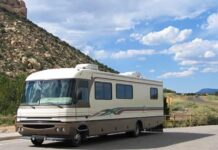
A Class A bus is a beast. It’s great for the open road. Try parking it at a grocery store. Or a campground with narrow lanes. Or a restaurant with tight spaces. You’re maneuvering a building with a steering wheel.
With a towable setup, you have an escape hatch.
When you arrive at a destination, you unhitch. You have a separate vehicle. A half-ton truck. A mid-size SUV. Even a compact crossover works if you’re careful. You can drive into a tight downtown. You can zip into a trailhead parking lot that would swallow a motorhome whole.
The towed RV gives you freedom on the ground. You aren’t stuck with one massive vehicle for every single task. You leave the house parked. You take the car out for the day.
Cost Is Not Just About the Purchase Price
Everyone looks at the sticker price first.
A decent motorhome starts around $75,000. A luxury model? That’s six figures easily. Add in the maintenance. These things have massive engines. Complex transmissions. Expensive repairs. If the engine blows, you’re stranded. Period.
Towables are different. The vehicle doing the pulling is separate.
You can buy a used truck or SUV. You can replace the tires on a towable trailer for a fraction of the cost of a Class A. If the trailer breaks down, you can still drive the truck home. Or call a tow truck. It’s less catastrophic.
Depreciation hits motorhomes harder. They lose value fast. A towable trailer holds its value better. You buy it. You use it. You sell it. You lose less money.
Maintenance and Repair Simplicity
Mechanics love motorhomes because they charge premium rates. These vehicles are complex ecosystems. Plumbing, electrical, slide-outs, roof vents. One thing leaks, and you’re paying for a specialist.
Towables are simpler.
There’s no engine in the living space. No transmission. No exhaust system to leak
You might be ready to cancel that quote for a Class A motorhome. Before you write off the towable lifestyle entirely, look at why a trailer often makes more sense. The biggest win isn’t just comfort. It’s mobility.
Park the rig. Unhook the hitch. Stabilize the jacks. Now you have a car.
You can run into town for steaks and milk without dragging a second vehicle. Motorhomes force you to tow a “dinghy” just for errands. That’s inefficient. It’s putting the cart before the horse.
Fuel Economy and Operating Costs
Gas mileage matters. A fuel-efficient pickup truck towing a travel trailer usually beats a motorhome on miles per gallon. The weight of a fifth wheel hurts, but not as much as carrying a massive diesel engine in your living room.
Take the Class A motorhome. This is the largest, priciest category.
– A new model gets about 10 MPG.
– A used, 10-year-old coach might drop to 5 MPG.
That’s a huge difference over long distances. Towed RVs don’t burn fuel to sit idle. They only consume it while being pulled by the tow vehicle.
Maintenance Is Easier
Imagine your RV breaks down.
If you own a travel trailer or fifth wheel, you drop the unit at the dealership. You drive your truck home. You sleep in your own bed.
If you own a motorhome, you’re stuck.
The coach vehicle is the RV. If it needs repairs, you lose both transport and lodging. You wait at the shop. You hope the mechanic is fast. If the job takes overnight, you book a hotel nearby.
The cost is also higher. Motorhomes have engines. Engines have moving parts. Moving parts break. Towed RVs lack engines. Fewer parts mean fewer things to replace. The purchase price is lower too. No engine cost. No transmission cost. Just a shell and a frame.
Space Maximization
Designers of towed RVs can use every inch. No engine bay. No cabin for the driver. The floorplan is all living space.
Motorhomes sacrifice space for the drivetrain. You pay more for less room. Or you accept tight quarters. With a towable, you get more square footage for the same price. Families can sleep comfortably. You have elbow room.
Still, don’t rush out to buy a fifth wheel yet. There are downsides to towing. They’re real. They’re annoying. But they exist.
Read on. The next section covers the disadvantages. You need to know them before you commit.
You liked the benefits. Good. Now let’s talk about why towed RVs can be a headache. It isn’t all roses and chicken soup. Before you sign the papers, you need to know the downsides.
The biggest issue? The separation.
Your coach and your fifth wheel or travel trailer are connected by a hitch. Just a hitch. This creates a vulnerability that motor homes simply don’t have.
Imagine someone tries to break into your rig. If you’re in a Class A, you just drive off. You’re gone. With a towed RV, you’re trapped. If a burglar is prying at your door, you have to climb out of your own car, get back to the coach, and hope you have the keys. Then you drive away. It’s a terrifying gap in security.
The “Bathroom Break” Reality Check
The physical separation gets even more painful when nature calls.
In a motor home, you can keep driving. Or at least, the separation between the driver and the toilet is minimal.
With a towed unit, if your bladder is full, you have to stop. Completely. You cannot climb out of your moving sedan to shimmy across the hitch to use the RV’s bathroom. Don’t even think about it. It’s dangerous. It’s insane. It’s also a common myth among clueless newbies. Just stop the vehicle. Use the restroom. Then get back in.
Climate Control Headaches
Towing an empty shell has consequences.
When you’re on the highway, the AC inside the fifth wheel is off. The trailer is just a box sitting in the sun or the freezing air. When you finally pull into your campsite and unhook, the interior might be stifling or bone-chilling.
You can’t just flip a switch. You need to connect to external power. You need a generator. You need time for the HVAC system to catch up. Until then? You stay in the coach vehicle. It’s air-conditioned there. The RV is just a hot, stuffy storage container until you fix that.
The Fifth Wheel Trap
Not all towed RVs are created equal. Travel trailers are easier. Any vehicle that can pull the weight works. You need a ball hitch. That’s it.
Fifth wheels are different. They require a special connection in the bed of a pickup truck.
This setup offers better stability. Less sway. Better control. But there’s a catch.
You need a pickup truck. Not just any pickup. Most fifth wheels are heavy. You need a heavy-duty truck. If you don’t have one, you’re looking at a massive upfront cost. Plus, you need a pricey fifth-wheel hitch installed in that truck bed.
Sway and Weight Distribution
The need for a separate coach vehicle introduces a new risk: sway.
If you don’t distribute the weight correctly in your tow vehicle, the trailer can start to fishtail. It’s dangerous. It’s scary. Motor homes don’t have this problem. There’s no hitch to act as a loose joint. The whole thing is one solid unit. Even if a Class A is hard to drive at first, it won’t sway like a separated towed rig.
So, do you have a handle on what you want now?
If you’re ready to pile the family into the rig and hit the road, go for it. Just keep your eyes open. And if you cross paths with other drifters, say hi.
More on Towing and RV Safety
For those who want to dig deeper into the mechanics of keeping your rig stable and secure:
Related HowStuffWorks Articles
- How RV Hitches Work
- How National Parks Work
- How to Turn While Towing
- How Backing Up Towed Vehicles Works
- Top 10 Towing Risks to Keep in Mind
- RV Towing Quiz
More Great Links
- RV Trader Online
- RV Net, Online RV Enthusiast Community
- Drifters Oasis, Online Fiction from Unpublished Authors
Sources
- Brown, Jerry. “Tow-able choices: travel trailer vs fifth wheel.” New RVer. Accessed October 23, 2008.
- Fairview, Frank. “4.5 secret reasons to buy a fifth wheel as your RV.” Ezine Articles. June 4, 2007.
- “Choosing a full-time RV.” Mac and Chris.com. Accessed October 23, 2008.
- “Everything you wanted to know about RVing.” Poulsbo RV. Accessed October 23, 2008.
- “The advantages and disadvantages of different RVs.” Online RV Trader Blog. October 22, 2008.
- “Why choose a Class A RV over all other types.” Bus For Sale Guide. Accessed October 23, 2008.