Your resignation letter is signed. The tearful goodbye at the local laundromat is done. Your mail is forwarding to a new zip code halfway across the country. Boxes are stacked. Movers are gone. You are standing in the driveway with one set of keys in your hand and another dangling from your belt. Your partner is already waiting at the destination. You have to drive both cars yourself.
It sounds simple. It isn’t.
You spent weeks in the empty parking lot of the high school practicing. You learned how to swing the trailer. You figured out how to back up without hitting the curb. You installed tow mirrors because looking over your shoulder isn’t enough when you’re hauling half your life behind you. You think you’re ready. You’re not. Not yet.
There are rules. Real ones. Enforced by people with clipboards and guns.
The Math Before You Move
Before you turn the key, you need to do some arithmetic. Not abstract math. Hard numbers.
You need to know the dimensions of what you’re pulling. Calculate the combined height and width of the lead vehicle and the towed car. Or the trailer. Whatever you’re dragging.
Then, look at the gross combination weight rating. This is the total weight of everything. Both vehicles. The fuel in the tanks. The passengers. The stuff you forgot you packed. If you exceed this number, you’re playing Russian roulette with your suspension and your insurance policy.
Knowing these numbers matters. It determines which state laws apply to you. It dictates where you can legally drive. It tells you if you’re allowed on certain interstates.
State Towing Regulations by State
You can’t just drive. You have to navigate a patchwork of state-specific rules. One state might let you tow a 20-foot trailer on a sunny Tuesday. The next state might ban it entirely. Or require a special permit. Or mandate specific lighting configurations.
Ignoring these rules isn’t just a nuisance. It’s a liability.
Read the regulations. All of them. From your current state to every state you’ll pass through, down to the one you’re moving into. You don’t want to get pulled over because your mirrors aren’t positioned correctly according to local statute. Or because your weight distribution is off by a few hundred pounds.
Next, we’ll look at insurance. Because if you crash, the state laws won’t pay for your new bumper. Your policy will. But only if you’re covered for towing. Only if you followed the rules.
This isn’t about being cautious. It’s about not losing everything you just packed.
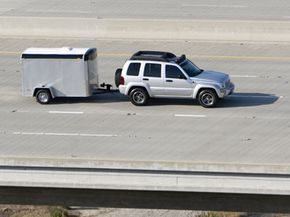
The Patchwork Quilt of Towing Regulations
Driving from the Rockies to the East Coast with a vehicle in tow isn’t just a test of mechanical endurance. It’s a legal minefield. The federal government didn’t write a single, unified rulebook for towing across state lines. Instead, they handed the gavel to the states. This means the rules change the moment you cross a state border.
Most drivers assume towing laws are universal. They aren’t. Some states prioritize strict safety protocols; others leave it to the driver’s discretion. The biggest common denominator? Breakaway braking systems.
Almost every state mandates these devices. Why? Because a detached car is a projectile. If the hitch fails, that trailer keeps going. A breakaway system uses an electronic tether. If the connection snaps, the tether pulls a pin or triggers a switch. The trailer’s brakes lock up automatically. Most systems hold the brakes for about 15 minutes. That’s enough time for you to notice your rear-view mirror is empty, pull over, and deal with the mess.
Not having one is risky. Even in states where the law is vague, a court will look unfavorably on negligence. It’s better to have the system and not need it than to lose control on the interstate.
Height Limits and the “Strictest State” Rule
Before you buy a trailer, check the dimensions. States disagree on maximum height. Some allow 14 feet. Others cap it at 13.5 feet. Drive a 14-foot trailer through Georgia, and you might get a ticket.
The safest bet? Build or buy for the strictest limit in your route. If you meet the 13.5-foot rule, you’ll be legal everywhere. This logic applies to width and weight too. Don’t assume your local trailer specs are interstate-compliant.
Speed Limits and License Requirements
Speed is another variable. In many states, you stick to the posted limit. In others, the limit drops when you’re towing. Weight matters here. Heavier tow loads often trigger lower speed caps.
Then there’s the license. You might need a special class endorsement. This isn’t just paperwork. It requires a test through your local DMV. Check your status before you hit the road. An invalid license can void your insurance if an accident occurs.
Insurance Implications
Thinking you’re covered? Check your policy. Standard auto insurance often excludes towing activities. You may need a rider or a separate commercial policy. Read the fine print. The next section details how to secure proper coverage.
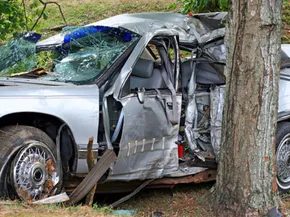
Does your policy cover a detached towed vehicle?
It’s a driver’s worst nightmare. The hitch fails. The safety chains snap. Suddenly, you’re watching your car careen through traffic like a runaway shopping cart. If that happens to you, the immediate question isn’t “how did this happen?” but “who pays for the wreckage?”
You need to ask your insurance agent specific questions before you even hook up the trailer. Whether you are hauling a boat, a lawn mower, or another vehicle, standard auto insurance doesn’t automatically grant blanket coverage for every scenario. Policies differ by carrier and state. But there are clear rules of thumb regarding auto insurance coverage for towing a car that you need to understand before hitting the road.
Two policies, two claims
Here is the grim reality of a collision involving a towed vehicle. If the car you are towing causes an accident—say, it swings wide and sideswipes a sedan in the next lane—you are likely looking at two separate insurance claims.
The first claim addresses the damage to the towed vehicle itself. This falls under the collision insurance policy attached to the car being towed. If you don’t have collision coverage on that specific vehicle, you are on your own. There is no standard policy where the lead vehicle’s insurance extends to cover physical damage to the towed car. You need two active policies to cover both sets of metal.
The second claim is a liability claim. This is filed by the innocent third party whose car got hit. Because hitting another vehicle with a towed car is typically viewed as an act of negligence by the lead driver, this claim will almost certainly target the lead vehicle’s insurance policy.
The premium trap
Damaging another car with your towed vehicle creates a financial headache. You are looking at two distinct claims. Both will likely go on your record. Both will drive up your monthly premiums.
The lesson is straightforward. Never tow a car without verifying you have the proper insurance coverage in place. And don’t assume you’re ready. Practice your maneuvers. Learn how the trailer behaves when you brake or turn. You might be surprised by how little skill you actually possess when dealing with a heavy mass behind you.
Verify before you venture
Coverage details vary wildly by company and state. Don’t rely on general advice. Call your agent. Get the specifics in writing. Once you have the coverage sorted and some practice miles logged, you can head out for that cross-country move with a bit more confidence.
For deeper dives into the mechanics of towing, look into how braking systems work for towed vehicles, the function of towing mirrors, and state-by-state towing laws.