The 1973 model year brought a quiet tragedy to the Pontiac Grand Prix. It was no longer a singular beast. The new generation shared its skeletal structure and much of its styling DNA with the broader fleet of General Motors intermediates. For a badge known for distinctiveness, this homogenization felt like a slap in the face.
But let’s be clear. It wasn’t fatal.
The Grand Prix didn’t die. It just got crowded. By sitting on the same GM A-body platform as the Cutlass, Firebird, and Chevelle, Pontiac sacrificed some unique flair for engineering efficiency. The result was a car that looked like it had been assembled in a committee meeting rather than a design studio.
Yet, the GP retained enough of its personality to survive the shift. It wasn’t the sharp, aggressive grand tourer of the late 60s anymore. It was softer. Rounder. More suburban. But under the hood, the spirit of performance lingered, even if the sheet metal told a different story.
“The GP was no longer a singular beast.”
This change marked the end of an era. The days of the Grand Prix standing alone in its segment were over. From here on out, it was just one of many.
The 1973 Grand Prix: Style Over Substance
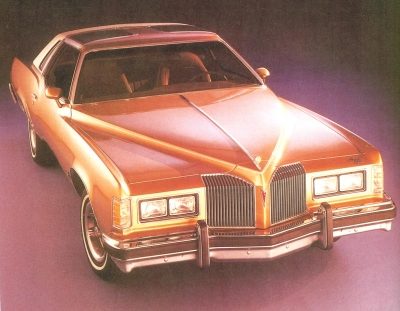
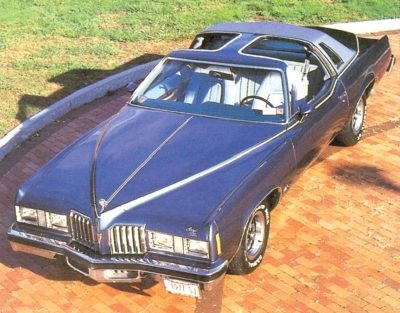
The T-top removable roof panels, opera windows, landau vinyl roof, and stand-up hood ornament on this 1976 Pontiac Grand Prix were typical trappings all U.S. carmakers were using to woo buyers in the mid-70s. Detroit’s confidence in its ability to master the public’s tastes and needs suddenly shattered. Whipsawed by strong foreign competition and new layers of domestic regulation, the Big Three struggled to adapt. Trying to squeeze life into existing platforms didn’t always yield happy results.
Tremendous gains in raw horsepower were swept away by rising tides of safety and exhaust emissions standards. With performance off the table, automakers turned to luxury. All kinds of cars were dolled-up in plush trappings. The trick worked especially well on mid-sized, two-door “personal” cars that sustained the industry. The Oldsmobile Cutlass became the country’s most popular nameplate, spurred by demand for its formal-roofed Supreme coupe. New designs launched in 1977 resulted in the best sales years ever for the Ford Thunderbird and Mercury Cougar XR-7. Chrysler, previously staunchly dedicated to nothing but full-sized cars, brought out the Cordoba in 1975. It was an instant hit.
That the 1973 Pontiac Grand Prix would also turn out to be one of these successes seems uncertain in retrospect. The car arrived under less than ideal circumstances. A series of delays triggered by the infamous General Motors strike in the fall of 1970 forced Pontiac to hold back the release. Instead of coming out for 1972, the all-new GP was delayed to 1973. Though it continued the Grand Prix tradition of personal luxury combined with sporty flair, it marked the beginning of GM’s homogenization of its mid-size car platforms. The bold individual statement the GP had previously made was being quieted.
The basic body was now shared with Chevrolet, Oldsmobile, and Buick. The new GP was forced into sharing a 116-inch wheelbase used by the Monte Carlo and all intermediate four-doors. For the GP, this represented a two-inch loss from 1972. Further watering down the unique flavor was the fact that the new G-body for “personal coupes” was quite similar to the redesigned A-body for mainline intermediates. The Buick Century Luxus and Regal, as well as the Olds Cutlass Supreme, were A/G-body crossbreeds that grafted the G-body roof onto the 112-inch-wheelbase platform used by A-body coupes. Adding to the confusion was the new Pontiac Grand Am, which also competed for the performance-oriented portion of the GP market. This overlapping marketing would gain momentum and come in for its share of blame for declining GM sales.
Colonnade Styling and Safety Compliance
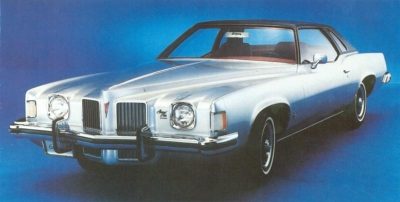
Like its corporate cousins, the 1973 Pontiac Grand Prix featured a new “colonnade” roof style that had fixed rear “opera” windows. With the onset of new government safety regulations, the roof design combined the graceful look of a hardtop with the additional rollover protection of a pillared coupe. Up front, the headlight and grille design recalled the look of the previous-generation GP, with its large vertical-slatted grille and dual headlamps finished off with squared bezels.
As on the earlier cars, the turn signals were cut into the leading edge of the front fenders. Suspended by energy absorbers that bounced back from minor impacts, the Grand Prix’s slim front bumper jutted ahead of the grille in another bow to the new safety standards.
1973 Pontiac Grand Prix Dimensions and Chassis Changes
The 1973 Pontiac Grand Prix arrived in showrooms with a chassis that had been subtly but significantly altered. The previous generation’s distinctive 118-inch wheelbase was scrapped for a shorter 116-inch stretch. This shift fundamentally changed the car’s profile. The super-long, almost exaggerated hood that defined the 1969-1972 models vanished. In its place was a more conventional take on the “long-hood/short-deck” styling theme, a look that was becoming standard across GM’s G-body lineup.
Despite the shorter wheelbase, the Grand Prix didn’t lose its identity. The hood retained the familiar “ironing board” sculpting that tapered sharply into the grille. The rear end underwent a similar evolutionary update. The iconic slotted taillamps were no longer embedded in the bumper, but the design still managed to integrate the protruding rear bumper as best as possible, maintaining a cohesive look.
SJ Trim and Suspension Upgrades
Buyers had two distinct choices for the 1973 model year: the base Grand Prix and the sportier, upscale SJ. The Model J designation, previously used for base models, was dropped entirely. The SJ wasn’t just a badge; it came with mechanical substance. Standard on the SJ was a larger engine and the “Radial Tuned Suspension.” This package featured specific coil springs, stiffer shock absorbers, and a thicker front sway bar to handle higher speeds and cornering forces.
Inside, both trims shared premium touches. A custom-padded steering wheel and African crossfire mahogany instrument panel inserts provided a level of luxury expected of a personal luxury coupe.
Weight and Length Trade-offs
The dimensional changes were contradictory in the best way. While the wheelbase shrunk by two inches, the overall length actually grew by three inches, reaching 216.6 inches. This extra length came primarily from federally mandated bumpers designed to absorb low-speed impact. However, the real story was in the mass.
The base Grand Prix saw a modest weight increase of 125 pounds over the previous year. The SJ, however, was a different beast. With its larger engine and heavier suspension components, a fully loaded SJ could tip the scales at 4,400 pounds. That is a gain of more than 500 pounds compared to its predecessor. Was the extra weight worth the added comfort? For many, yes.
1973 Pontiac Grand Prix Engines and Specifications
Powertrain options for the 1973 Pontiac Grand Prix remained virtually unchanged from the year before. The base model was powered by the familiar 400-cubic-inch Pontiac V-8. Equipped with a Rochester Quadrajet four-barrel carburetor, this engine produced 230 net horsepower at 4,400 rpm. Torque peaked at 325 pound-feet at 3,200 rpm. The compression ratio sat at a mild 8.0:1, suitable for the increasingly restrictive fuel quality of the era.
The SJ model exclusive engine was the four-barrel 455-cube V-8. It delivered 250 horsepower at 4,000 rpm and 370 pound-feet of torque at 2,800 rpm. Like its smaller sibling, it featured an 8.0:1 compression ratio. Transmission choices had narrowed significantly. Manual transmissions had been eliminated from the Grand Prix line back in March 1971. Consequently, the Turbo 400 automatic was the only gearbox available for either engine.
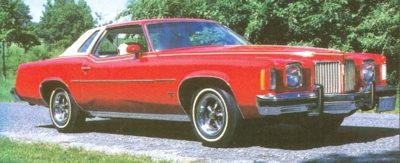
“The SJ differed from the entry-level Grand Prix by virtue of its larger standard engine and its ‘Radial Tuned Suspension,’ which included specific coil springs, stiffer shocks, and a larger front sway bar.”
1973 Pontiac Grand Prix Sales Surge
The 455 Super Duty V-8 wasn’t destined for the Grand Prix. You’ll find references to it in dealer catalogs from the era, but the option never made it into the production line for the GTO, Grand Am, or the GP itself. Pontiac reserved that high-performance mill exclusively for the 1973-1974 Firebird Formula and Trans Am.
But the Grand Prix didn’t need the Super Duty to dominate. Despite carrying extra weight and lacking that specific engine, the 1973 model was a runaway hit. The previous year, 1972, saw 91,961 units roll off the line. That was respectable. It was also dwarfed by the new car. Total production for the 1973 Pontiac Grand Prix skyrocketed to 153,899 units. That number includes 20,749 upscale SJ models.
The broader market backed this success. The mid-sized segment, specifically two-door variants, drove the 1973 automotive record. Within the G-body family, Chevy’s Monte Carlo led the pack with 290,693 sales. Oldsmobile’s Cutlass Supreme followed with 219,857 orders. Buick rounded out the top three with 163,269 Luxus and Regal coupes.
The 1974-1975 Impact of the Oil Crisis
The 1974 model year hit the ground running with a major obstacle. The 1973 oil embargo by OPEC shattered the intermediate car market. Fuel shortages arrived just as the 1974 GP was launching. Gas prices surged to new heights.
Buyers panicked. They abandoned larger vehicles for smaller, more fuel-efficient subcompacts—both domestic and foreign imports. The result was a sharp decline in demand.
1974 Grand Prix production dipped below the 100,000 mark, finishing at 99,817 cars. That was a 35 percent drop. Devastating? Yes. But it still ranked as the third-highest sales year for the Pontiac Grand Prix at the time. The market didn’t collapse. It just changed shape.
The 1973 oil embargo didn’t kill the Grand Prix. It just forced Pontiac to survive on existing momentum rather than expand it.
This shift set the stage for the following year. The same forces that hammered the 1974 numbers would continue to pressure the 1975 Pontiac Grand Prix, forcing a redesign that prioritized efficiency over sheer presence.
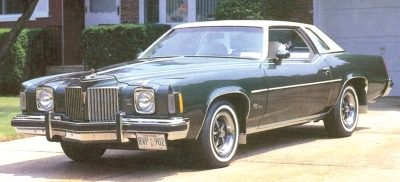
The entry price for the 1974 Pontiac Grand Prix sat at $4,936, but that sticker for the Model J base car was just the starting point. If you wanted any actual features beyond the bare essentials, you were paying extra. It was a classic dealer upsell scenario.
Visually, the year-over-year changes were subtle, yet they shifted the car’s presence significantly. Pontiac tweaked the grille, but the real story was the bumper. The front fascia now featured a thicker, heavier bumper that extended up to meet the revised grille. Large, upright guards flanked the front, adding bulk. The headlamp bezels followed suit, becoming taller and more rectangular than the previous year’s rounders. The result? The front end looked massive. Stiffer. More imposing.
Rear styling got a minor update too. The taillamps switched from whatever configuration they had before to paired vertical units. The body sides picked up new sculpting lines to break up the sheet metal. And yes, the “J” designation for the base Grand Prix was back in the fold.
Under the hood, things got interesting for the purists tracking horsepower figures. The standard engine remained the 400 cubic-inch V-8, but power took a tiny hit. It dropped five horses from the previous year, settling at 225 horsepower. That might not sound like much, but in an era of declining emissions regulations, every count mattered.
If you needed more oomph, the 455 cubic-inch V-8 was still available. It held steady at 250 horsepower and remained the standard powerplant for the uplevel SJ trim. No changes there. Just more displacement if you wanted it.
The 1974 Grand Prix wasn’t a revolution. It was an evolution wrapped in heavier bumpers and slightly lower output from the base engine. You bought it for the style, or you bought the SJ for the 455.
1975: The Slow Bleed
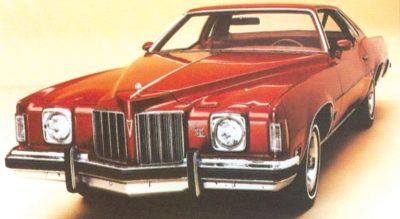
By 1975, Pontiac had run out of easy tricks for the Grand Prix. Styling updates were virtually non-existent, save for a subtle reshuffle of the grille slats and some vertical ribbing added to the taillamps. Inside, the cabin lost its touch of realness. Genuine mahogany inserts were stripped out, replaced by a plastic veneer that mimicked wood grain. It wasn’t much, but it was the only change the body needed to survive another year.
The trim lineup shifted from a binary choice to a three-tiered structure. The standard J coupe remained the entry point. The SJ held its ground as the sportier, more aggressive option. But the new arrival was the LJ, a luxury-focused variant that brought velour upholstery and two-tone paint schemes to the table. It was an attempt to soften the Grand Prix’s edge for buyers who cared more about comfort than cornering.
Under the hood, the era of raw power was officially over. Mandatory unleaded fuel and catalytic converters arrived in 1975, forcing Pontiac to rethink how its V-8s breathed. Every Pontiac engine got the new GM High Energy Ignition System. GM claimed this system tripled the firing power delivered to the spark plugs, allowing for a wider .060-inch gap. The idea was simple: more complete combustion meant better efficiency and lower emissions. It was a clever bit of engineering, but the laws of physics demanded a toll.
To meet stricter emission standards, compression ratios were dropped. The 400- and 455-cubic-inch engines saw their compression fall from 8.0:1 down to 7.6:1. The result was immediate. The base four-barrel 400, once a potent unit, now rated a lethargic 185 horsepower. That was a full 40-horsepower loss. A two-barrel version was also available, rated at just 170 horsepower. Even the big-block 455 V-8, which remained standard on the SJ, was down to 200 horsepower with its four-barrel carburetor.
Was the drop in horsepower as severe as the numbers suggested? Enthusiasts have debated this for decades. The reality is less important than the message it sent. Performance was no longer the priority. Production figures reflected the mood. Total Grand Prix production for 1975 fell to 86,582 units, with the basic J model accounting for 64,581 of them. It was a tough year for the industry, and the Grand Prix was feeling the pinch.
1976: A New Face
The stagnation ended with the 1976 model year. This was Pontiac’s 50th anniversary, and the company decided to shake things up. The 1973-vintage Grand Prix received a major facelift that broke with tradition. The familiar dual round headlights were gone, replaced by four rectangular units. The grille underwent a complete transformation, adopting a “waterfall” design that folded over the top of the header panel. It was a dramatic departure from the Duesenberg-inspired look that had defined the car since 1969. The update was cleverly executed, signaling a new direction for Pontiac’s flagship coupe.
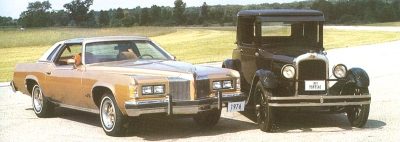
Pontiac celebrated its 50th anniversary with a significant facelift for the 1976 Grand Prix. To mark the occasion, they produced 4,807 special golden anniversary models. One of these rare units still exists, famously posed next to a 1926 Pontiac coupe.
The strategy for 1976 was clear: capture the lower end of the personal luxury market. With the Grand Am gone, Pontiac needed a value leader. They stripped back the Model J branding and dropped the base price by $500. Standard equipment was slightly reduced to hit that price point. The entry-level car got a 60/40 full-width bench seat with a fold-down center armrest.
Power came from a 160-horsepower, 350-cubic-inch V-8. It used a two-barrel carburetor, though California buyers got a four-barrel version. This engine was paired with a Turbo 350 automatic, both borrowed directly from the LeMans line. It was the smallest engine ever offered in a Grand Prix at that time.
Options and The Anniversary Special
If you wanted something more upscale, the SJ and LJ trim levels remained. They kept the similar luxury levels found in 1975. Pontiac also released a limited edition Grand Prix LJ for the 50th anniversary.
These special editions were all painted gold. They featured removable roof hatches. The hood ornament and trunk lock cover were unique to the anniversary. Pin-striping was applied specifically for the occasion. Only 4,807 were built. They were rare even when new. Today, they are nearly extinct. Few ever appear at car shows, making them a solid bet for future collectibility.
Engine Lineup Expansion
Alongside the base 350 V-8, the 1976 Grand Prix offered more power. The SJ came standard with a 185-horsepower, 400-cubic-inch four-barrel V-8. The 200-horsepower, 455-cubic-inch four-barrel became an option for all models.
Pontiac also built one unique 1976 Grand Prix equipped with the unreleased 301-cubic-inch V-8. This car, along with a companion 1976 Sunbird featuring the four-cylinder “Iron Duke,” was part of a publicity campaign. Sponsored by Pontiac and National Car Rental, the vehicles were driven around the world. The goal was to prove the reliability of National’s fleet, and Pontiac cars in particular.
Record-Breaking Production
The reshuffling of equipment and engines hit the mark. Pontiac set a new production record for the Grand Prix. This was notable because sales of larger cars were generally rebounding in that market segment.
Total production hit 228,091 units. The base and SJ series alone accounted for more assemblies than the entire 1975 Grand Prix line. It was a massive increase. Production jumped 163 percent by any measure.
It still fell short of the Chevrolet Monte Carlo. GM sold 353,272 Monte Carlos in 1976. But for Pontiac, the numbers were undeniable.
The Final Year of the G-Body
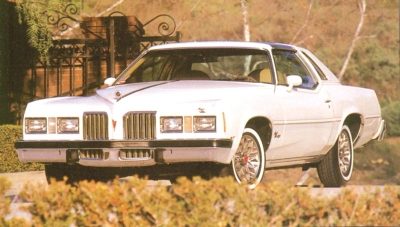
The 1977 model year would be the Grand Prix’s last on the second-generation G-body platform. The changes were minor but distinct. A new grille design replaced the 1976 vertical bar treatment. The new “waterfall” effect was more restrained. It featured five thick bars on each side instead of the finer vertical slats.
Taillamps received a slight update as well. The T-top option, which debuted on the anniversary edition, became a regular option for all Grand Prix models. The “honeycomb” wheels, an optional feature since 1971, were discontinued. They were replaced by a new “snowflake” aluminum wheel design.
The G-body was coming to an end. The Grand Prix had secured its legacy with record sales and anniversary prestige. But the platform itself was aging. What comes next for Pontiac’s personal luxury coupe remains to be seen.
The 1977 Pontiac Grand Prix Engine Roster Confusion
The 1976 50th Anniversary Package’s T-tops became standard fare for 1977, but under the hood, things got messy. California and federal emission standards were tightening fast. This created the most confusing engine lineup in Grand Prix history. You might have found a Pontiac V-8, a Chevrolet block, or an Oldsmobile motor depending on where you bought the car.
There was a 49-state lineup. Then there was a separate setup for California and high-altitude zones.
The base engine for 1977 was Pontiac’s new 301-cubic-inch (4.9-liter) V-8. It borrowed block dimensions from an experimental 303 Trans Am race engine from 1969. The production version was nowhere near as tough. The deck was one inch shorter than the larger Pontiac siblings. Connecting rods measured 6.05 inches versus 6.625 inches for its bigger brothers. Bore and stroke were 4×3 inches. Pistons and rods were shared with the new 151-cubic-inch “Iron Duke” four.
Main journal diameters stayed at three inches, same as the 350 and 400 V-8s. Castings for the block, heads, and intake manifold were lightweight. The crankshaft had counterweights only at each end to save weight.
The 301 was based on the proven Pontiac V-8 design. But differences were enough to stop most parts from swapping out.
Pound-shaving dropped the 301’s weight significantly. Larger Pontiac engines weighed 640 to 675 pounds. This new V-8 tipped the scales at a trim 452 pounds. That matched the weight of Buick’s 231-cubic-inch V-6.
Power output hit 135 horsepower at 3,800 rpm. Torque sat at 240 pound-feet at 2,000 rpm. Horsepower ranked mediocre against current four-cylinders. The power level matched other 5.0-liter V-8s of the period. The weight advantage remained.
Next up the option ladder was the “5.7 liter” V-8. Buyers might receive a 350-cubic-inch Pontiac, Olds, or Chevy engine. Timing, plant location, and delivery zone dictated what you got.
Two reasons drove this mix. First, the Pontiac 350 could not pass strict California and high-altitude emission standards. For those zones, the division substituted the Oldsmobile-designed 350.
Olds engines ran cleaner than other GM V-8s. Demand was huge. Shortages of Olds 350s meant even Oldsmobile lacked enough for its Cutlasses. Chevrolet’s 350 began filling the gap.
The top GP engine option was the “6.6-liter” V-8. It was standard in the SJ model. Delivery time and place determined if you got the 180-horsepower Pontiac 400 or the cleaner-burning 185-horsepower Oldsmobile 403.
Like the smaller-displacement Olds V-8, the 403 was in short supply. The 455 was discontinued at the end of 1976.
The 1977 Pontiac Grand Prix Production Fallout
The Pontiac Grand Prix and other GM cars suffered from engine shortages. Meeting emission standards caused the supply chain to fracture. Some buyers did not receive the engines they ordered.
This sparked a class-action suit against General Motors. Irate owners and consumer advocates sued.
Media coverage was quick. GM faced negative publicity over the incident.
Only dealers came out ahead. They took back the cars in question. They set a mileage charge that could cost the consumer up to $2,000. Then they had the chance to resell the low-mileage used car at a premium.
The End of an Era: Why 1977 Was the Grand Prix Peak
The sticker price for a base 1977 Grand Prix sat just under $5,500. But if you loaded it with every available option, the final tab could easily top $9,000. That premium got you a car that would define the end of an era.
1977 was the best sales year in Grand Prix history. Pontiac moved 288,430 units. Why the spike? The public knew it was the last year for the “big” Grand Prix. The 1978 model brought a smaller footprint, new V-6s, and smaller V-8s. GM sold it as a win for efficiency, space utilization, and gas mileage. Buyers sensed otherwise. They felt the soul of the intermediate lineup slipping away.
The 1978-1987 generation wasn’t bad. It was solid. Durable. Build quality was average at best, not spectacular. The real issue? Identity crisis. The new Grand Prix looked like a Monte Carlo. The Monte Carlo looked like a Buick Regal. The Regal looked like an Oldsmobile Cutlass. Generic. Blended in.
Sales dropped by nearly 60,000 units in 1978. The slide accelerated from there.
Something vanished when the last 1977 GP rolled off the line. Individuality. The second-generation G-body had been shedding weight and character, but there was still plenty left. Pontiac had nailed a specific blend of luxury and performance. The nameplate wouldn’t recapture that magic for another decade.
Isn’t that what owning a Grand Prix was supposed to be about?
1973-1977 Pontiac Grand Prix Specs and Sales Data
These five years saw ever-tightening emissions standards. Yet the cars sold well. The public praised them. Below are the weights, prices, and production numbers for the Pontiac Grand Prix from 1973 to 1977.
1973 Pontiac Grand Prix
(Wheelbase: 116 inches)
| Model | Weight | Price | Production |
|---|---|---|---|
| Coupe | 4,025 lbs | $4,583 | 133,150 |
| SJ Coupe | 4,400 lbs | $4,962 | 20,749 |
| Total | 153,899 |
1974 Pontiac Grand Prix
(Wheelbase: 116 inches)
| Model | Weight | Price | Production |
|---|---|---|---|
| J Coupe | 4,096 lbs | $4,936 | 85,976 |
| SJ Coupe | 4,300 lbs | $5,321 | 13,841 |
| Total | 99,817 |
1975 Pontiac Grand Prix
(Wheelbase: 116 inches)
| Model | Weight | Price | Production |
|---|---|---|---|
| J Coupe | 4,032 lbs | $5,296 | 64,581 |
| SJ Coupe | — | $5,573 | 7,146 |
| LJ Coupe | — | $5,995 | 14,855 |
| Total | 86,582 |
1976 Pontiac Grand Prix
(Wheelbase: 116 inches)
| Model | Weight | Price | Production |
|---|---|---|---|
| Coupe | 4,048 lbs | $4,798 | 110,814 |
| SJ Coupe | 4,052 lbs | $5,223 | 88,232 |
| LJ Coupe | — | — | 290,452 |
| Total | 228,091 |
Note: The 1976 LJ production figure appears unusually high in source data, likely reflecting a cumulative or corrected count, as it exceeds the total listed below.
1977 Pontiac Grand Prix
(Wheelbase: 116 inches)
| Model | Weight | Price | Production |
|---|---|---|---|
| Coupe | 3,804 lbs | $5,120 | 168,247 |
| LJ Coupe | 3,815 lbs | $5,483 | 66,741 |
| SJ Coupe | 3,976 lbs | $5,753 | 53,442 |
| Total | 288,430 |
For more on these machines, check out guides on muscle cars and sports cars, or use new and used car search tools to find surviving examples.