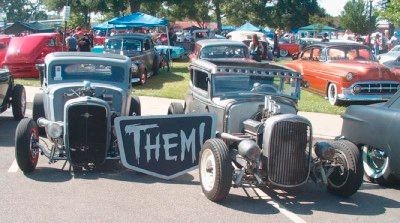
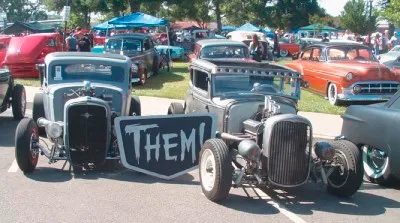
Paso Robles, California. It’s not just a dot on the map between San Luis Obispo and Santa Maria. It’s the Mecca. Every June, thousands of gearheads descend on this Central Valley town for one reason: The Best in Show. If you’ve spent any time in the custom car scene, you know the name. It’s the Super Bowl of chopped tops, lowered suspensions, and paint jobs so fresh they might hurt your eyes.
“Ready for a wild ride through the world of custom cars, then and now?”
That’s the promise. And it’s a heavy one. This isn’t your local car club meet with three hot rods and a guy selling t-shirts. This is the global standard. The cars here don’t just look good. They have to earn their keep. You want to know how it became the benchmark? You have to look at the history. The grit. The sheer volume of talent packed into one weekend.
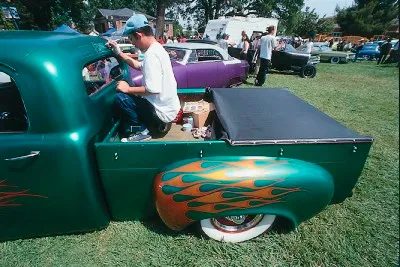
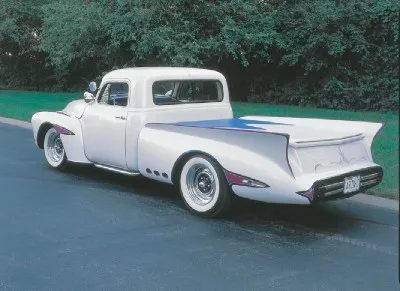
The Dream Truck and the 1950 Chevy Pickup
People call them custom cars. Purists know better. Often, the canvas of choice is a classic truck. Enter the Dream Truck.
Spencer Murray kicked off this project in 1953. He didn’t just want a modified hauler. He wanted a statement. The result was a custom 1950 Chevy pickup that still stops traffic.
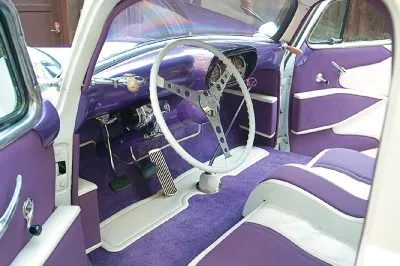
Walk inside. Forget what you know about factory interiors. Murray treated the cabin like a lounge. The fit and finish were obsessive. Every surface mattered.
“It wasn’t about utility anymore. It was about art on wheels.”
That’s the vibe. The 1950 Chevy frame provided the bones. Murray provided the soul. He stripped everything out. Then he put it back together with materials you wouldn’t find in a standard dealer showroom.
Why a Chevy? It was accessible. Parts were everywhere. But making it this good? That took years.
The interior details are where the real story lives. Custom upholstery. Hand-painted trim. A dashboard that looked like it belonged in a spaceship, not a farm vehicle.
Most customs of that era were rough around the edges. The Dream Truck wasn’t. It set a new bar for what a truck could be. Not a tool. A trophy.
You don’t see this level of craftsmanship often today. Maybe that’s why it sticks with us.
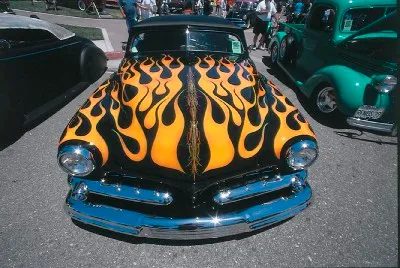
Why Flames Are Just One Step Below Afterglow
Fire is the default setting for hot rods. It’s predictable. Safe, even. You strip the paint, lay down the base, and let the airbrush bleed red into orange. It’s classic, sure. But it’s also everywhere.
The Afterglow trick? That’s the upgrade.
It swaps the literal fire for the heat shimmer left behind. Think of the air warping above a blacktop in July. That distortion. That’s what this paint job captures. It’s not about the flame itself. It’s about the energy radiating off the metal.
It looks like the car just burned out, but the fire never actually touched the surface. The colors bleed in gradients that mimic thermal distortion rather than combustion. It’s subtler. Harder to pull off. And honestly? Way cooler to look at than a cartoon fire breathing down your neck.
The best custom paint doesn’t shout. It hums.
You see the transition from deep midnight blues to violent violets, then fading into that hazy, hot orange at the edges. It creates depth that flat flames can’t touch. It makes the body panels look like they’re moving, even when the car is parked.
So yeah. Dreamy or nightmarish? It’s neither. It’s atmospheric. And if you’re building something that needs to stand out without looking like it rolled out of a 1950s diner, you skip the torches and go for the afterglow.
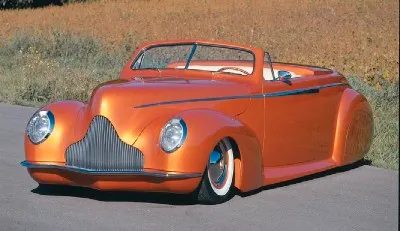
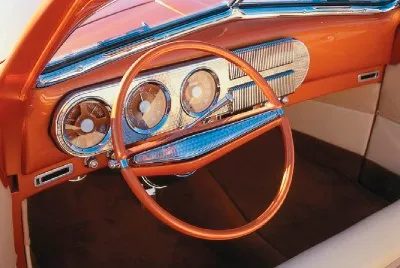
Afterglow Interior Details
Jimmy Summers’ Mercury lives on in spirit. The Afterglow pays direct tribute to that legendary build. But the real story starts when you open the door.
The cabin isn’t just retro styling pasted over modern components. It’s a deliberate recreation. Every gauge, every switch, every curve mimics the original intent. The design language stays true to the late-60s Mercury aesthetic while accommodating modern ergonomics.
Check the next photo for the full Marquis context.
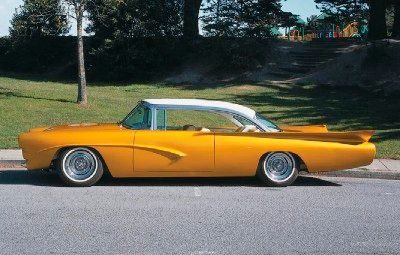
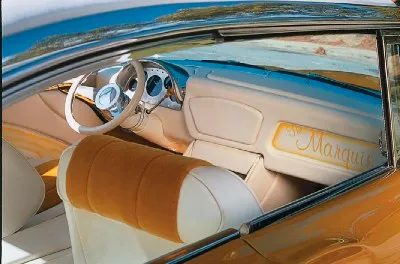
The Marquis Interior: Fabricated Perfection
Bill Cushenbery didn’t just assemble the Marquis. He built it. Mostly from scratch. While the exterior gets all the glory for its radical proportions, the cabin is where the sheer volume of fabricated parts hits you. It’s not a stock bucket job. It’s a bespoke environment tailored to a specific vision of hot rod luxury.
Every gauge, every switch, every curve of the dash panel was custom-welded, welded again, and finished to a standard that still feels absurd today. The seats aren’t just upholstered; they’re sculpted. The steering wheel? Likely one-off. The whole vibe is aggressive comfort. You sit low. You feel the metal. It’s intimate.
The interior proves that Cushenbery’s fabrication skills were just as sharp as his bodywork.
It’s impressive because it doesn’t rely on aftermarket catalogs. It relies on a welder’s torch and an artist’s eye. That’s the difference between a custom car and a Cushenbery.
Blurring the Line: Custom Car vs. Hot Rod
So where does that leave us? Right at the blurry line. The one everyone argues about at car meets.
What’s the difference between a custom car and a hot rod? Usually, it’s about the donor. Hot rods are pre-1949. Custom cars are anything after. But Cushenbery’s work? It breaks the rulebook. The Marquis sits right in the gray area. It has the soul of a hot rod—the stripped-down ethos, the focus on performance, the raw attitude—but it wears the body of a custom.
This is the controversial space. The zone where purists scratch their heads. Is it a hot rod because of the chassis and engine? Or is it a custom because of the body style and era?
The answer doesn’t matter. The car doesn’t care about the definitions. It just exists. And it exists beautifully.
Next up, we’re looking at a vehicle that pushes that boundary even further. One that might make you rethink what you’re calling a “custom.”
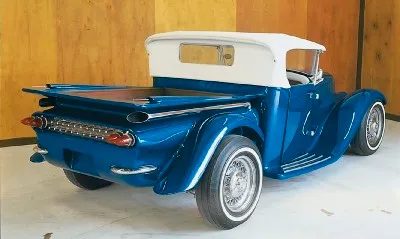
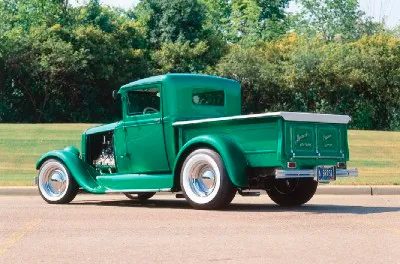
The Alexander Brothers’ Grasshopper: Detroit’s 1930s Pickup Revival
Ray Farhner’s Eclipse might have won awards, but it lived in a gray zone. Custom? Hot rod? Hard to say. Then came the Alexander Brothers. They didn’t want ambiguity. They wanted a statement.
The result was The Grasshopper.
Built in Detroit during the 1960s, this rig started life as a 1931 Model A pickup. That chassis was the foundation. The Alexander Brothers used it to showcase their specific take on customization. It wasn’t just about going fast. It was about looking like something that shouldn’t exist, but does.
Why the name?
“Grasshopper” implied a leap. A jump forward from traditional hot rod styling.
The car served as their calling card. A portfolio piece. When people saw the Grasshopper, they knew the Alexander Brothers were operating at a different level.
Interior Details and Custom Execution
Look inside. The interior tells the real story.
Most builders of that era slapped in a bench and called it done. The Alexanders didn’t. The cabin was tailored. Every gauge, every switch, every piece of trim was placed with intent.
- Minimalist layout. No clutter.
- Custom instrumentation. Likely period-correct but upgraded.
- Fabric and metal contrast. Typical of high-end Detroit shops.
The goal? Make the driver feel connected. Not isolated behind a wall of chrome.
This wasn’t a grocery getter. It was a showpiece. But one that drove.
The Grasshopper proved you could keep the soul of a ‘31 Model A while giving it the attitude of a mid-century custom. It bridged the gap. Farhner’s Eclipse blurred lines. The Grasshopper drew them in bold ink.
Detroit had its voice. And it sounded like a flathead V8 with a side of attitude.
The Grasshopper’s Interior and The Frankenstude’s Bulletnose
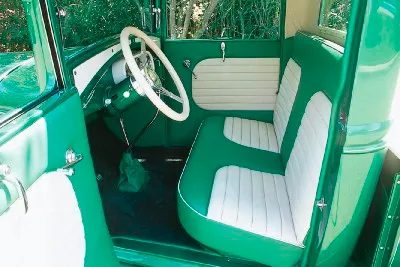
The Grasshopper isn’t just a shell. Inside, it’s fully customized. Every bit matches the exterior color scheme. It’s a coordinated look, down to the stitching. Not an afterthought. A deliberate choice.
Next up is the aerodynamic angle.
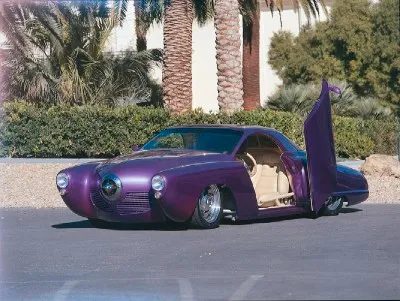
The Frankenstude takes that Studebaker DNA and twists it. Based on a bulletnose design drawn by Thom Taylor. It’s sharp. Pointed. Like it wants to slice the air rather than push it. A classic shape, but executed with a custom edge.
Then there’s the Nadean. New-wave style. Completely different vibe.
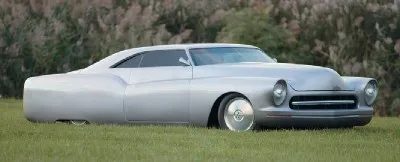
The rise of fiberglass customizers in the late 60s
The Nadean was a one-off beast. A 1953 Buick chopped and stretched to mirror the legendary CadZZillaTM. It showed what steel could do when pushed to the brink. But that era didn’t last.
By the late 1960s, the landscape shifted. Fiberglass kits didn’t just enter the scene—they muscled their way in. These weren’t subtle mods. They were aggressive, bodywork-heavy transformations that changed how we looked at custom cars. Steel wasn’t the only game in town anymore.
See a rare customization of one next.
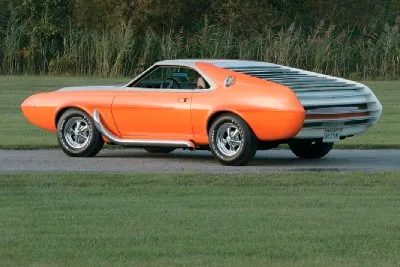
The AMX-400: A Rare Breed of Custom Muscle
Barris Kustom didn’t just tweak sedans. They went full throttle on the AMX-400. It’s a beast. A custom muscle car built by one of the industry’s heavyweights.
Most people think of customs as low-and-slow cruisers. Not this one. The AMX-400 was a rare experiment. High performance meets radical bodywork. It barely happened. Most shops stuck to safe bets. Barris didn’t.
The AMX-400 stands out as a unique fusion of raw power and extreme custom styling, a category few dared to enter.
So what made it tick? The muscle car heart. The custom shell. It’s a contradiction that actually worked.
But that was just one lane.
Lowriders Take the Stage
While the AMX-400 roared, another trend was rolling in slow motion.
Lowriders.
The next evolution in the scene wasn’t about speed. It was about style. Height. Attitude. The focus shifted from horsepower to hydraulics. From drag strips to street shows.
The AMX-400 was an outlier. The lowrider? It became a movement.
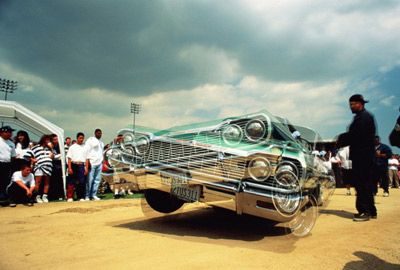
Why speed kills the lowrider vibe
“Lowrider drives a little slower.” You know the lyric. It isn’t just a catchy hook from a 1980s track. It’s the operating manual. These machines aren’t built for quarter-mile times or track day lap records. They are engineered for the hydraulic bounce. The glide. The way the chassis sits inches off the pavement while the crowd watches.
Speed ruins the suspension geometry. Go too fast and the hydraulics can’t keep up with the rhythm. The pose gets lost in the wind resistance. The point is to move slowly enough that people actually notice the pinstriping. To see the chrome catch the streetlights.
It’s a freewheeling attitude wrapped in sheet metal and wire wheels. You don’t race a lowrider. You parade it. The culture prioritizes visual impact over horsepower. If you’re blasting down the highway at 80 mph, you’re missing the entire point of the build. The custom car scene has plenty of speed demons. Lowriders occupy the other end of the spectrum. They demand patience. They demand respect for the craft.
See more custom cars in popular culture, next.
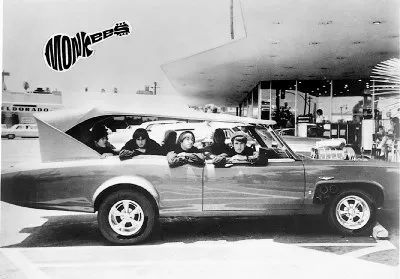
The TV Specials That Started It All
Before Instagram influencers were flexing modified Supras in parking lots, custom cars ruled the small screen. You didn’t need a garage full of parts to be famous. You just needed a script and a paint job that screamed “character.”
The Monkeemobile, Batmobile, and Black Beauty weren’t just props. They were icons. They taught a generation that cars could talk, fly, or just look absolutely ridiculous while doing it.
Take the Monkeemobile. It wasn’t fast. It wasn’t practical. It was a fiberglass dream machine built for the Monkees’ TV special Head. The design was wild—honeycomb patterns, bubble canopy, and enough color to make a rainbow jealous. It was less about horsepower and more about pure, unadulterated 60s psychedelia.
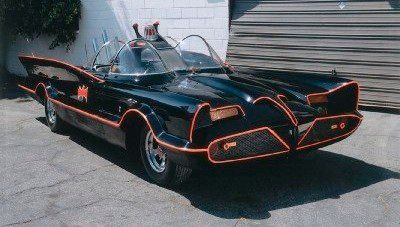
Then there’s the Batmobile. The original 1966 version wasn’t the sleek, armored beast from the Nolan films. It was a Lincoln Futura concept car, painted black, with jet intakes and a rocket launcher. It looked like a spaceship that decided to drive on roads. Fast, angular, and undeniably cool.
And Black Beauty. The Green Hornet’s ride was a modified 1949 Mercury. It had a hidden machine gun in the grille and a siren that sounded like doom. It was low-slung, aggressive, and proved that custom cars could be dangerous without even moving.
These shows didn’t just feature cars. They defined car culture for millions. Kids watched these episodes and started dreaming about their own rides. The influence is still here. Every time someone wraps a car in custom vinyl or adds LED lights, they’re chasing the same magic that those TV specials created.
The Monkeemobile wasn’t about driving. It was about arriving.
The Lincoln Futura: The Blueprint for Cool
George Barris didn’t just tweak a car. He took the 1955 Lincoln Futura and turned it into the Batmobile.
The Futura was already loud. Jet-age styling. Chrome everywhere. It screamed future. Barris added fins. Pointed them up. Slapped on the bat mask. Suddenly, the car wasn’t just a concept. It was an icon.
The Futura proved that a manufacturer’s vision could be twisted into pop culture gold.
But here’s the thing. Automakers watched this. They saw the cash. They saw the hype. Custom cars were no longer just garage projects. They were marketing goldmines.
Which brands tried to ride the wave?
Most failed. Some tried too hard. The industry wanted to capture that raw, rebellious energy but package it in a safe, sellable box. It rarely worked. The soul of custom culture was in the dirt. In the welds. In the mistakes.
Barris knew how to lean into the absurdity. The Batmobile wasn’t meant to be practical. It was meant to be seen.
The Lincoln Futura remains the crown jewel of that era. Not because it drove well. But because it looked like it came from tomorrow. And for a few years, Hollywood made tomorrow look really good.
Why the ’60s Custom Car Caravan Failed But The Scene Lives On
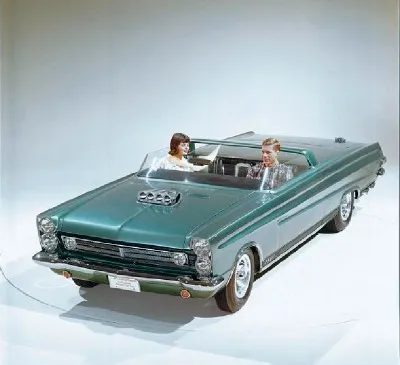
Ford tried to buy the culture. That was the mistake. The 1967 Custom Car Caravan wasn’t a show. It was a marketing stunt wrapped in a touring exhibition. Ford took seven radically modified Thunderbirds and Mustangs. Hauled them across the country. Parked them in front of dealerships. Told kids that this is how you customize.
It didn’t work.
The scene hated it. Not because the cars were bad. They were stunning. It was the corporate hand holding the leash. You can’t legislate rebellion. You can’t franchise a subculture. The Caravan was Ford’s answer to the custom car craze, but it missed the point entirely. The craze wasn’t about the metal. It was about the mess. The welds. The paint jobs done in a garage at 2 AM. The pride of ownership that no factory badge could replicate.
“The Caravan was a snapshot of what Ford thought custom meant, not what the kids actually did.”
Today? The script flipped. Enthusiasts aren’t just taking matters into their own hands. They’re holding the keys to the entire industry. The barrier to entry used to be a welding torch and a rusted shell. Now it’s a tablet, a 3D printer, and a willingness to learn code.
The tools changed. The spirit didn’t.
How Modern Fabrication Tools Changed The Game
Back then, you needed a machine shop. Now you need a laptop. The shift isn’t subtle. It’s geological.
Computer Numerical Control (CNC) milling used to cost six figures. Now a decent desktop unit fits on a desk. Laser cutters slice sheet metal like butter. You can design a bracket in CAD software at home. Print it or mill it by morning. Install it before lunch.
This democratization killed the gatekeepers. You don’t need to know a guy who knows a guy who owns a brake press. You need a subscription.
Why does this matter?
Because speed equals iteration. In the ’60s, if you cut a hole wrong, you were out fifty bucks and a day’s work. Today, you reprint the part. You try again. You fail faster. You succeed sooner. The feedback loop shrank from weeks to hours.
The result? A flood of unique builds. Not clones. Not “restomods” that look exactly like the factory car. Real deviations. Weird fender flares. Custom intakes. Parts that don’t exist on any catalog page.
Where The Money Goes: Parts vs. Process
The economics shifted too. In the Caravan era, the value was in the labor. The hours spent grinding, fitting, forcing. Today, the value is often in the design. The intellectual property.
A kid in Ohio can design a carbon fiber hood scoop. Sell the STL file on Etsy. A guy in Texas prints it. Installs it. Posts it on Instagram. The designer gets paid. The builder gets clout. The car gets cooler.
Ford’s Caravan tried to sell you the finished product. The modern scene sells you the ability to create it.
It’s a subtle difference. A massive one.
The ’60s kids wanted
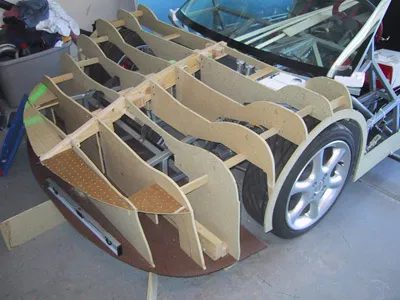
The La Bala Roadster: A One-Man Obsession
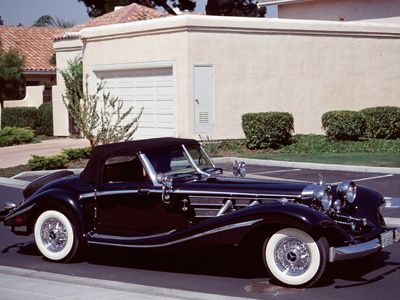
Most custom builds require a team. A welder. A painter. A fabricator who specializes in curves. The La Bala roadster defied that logic. One guy did it all. Designed it. Assembled it. The sheer scope of it feels almost impossible, but here we are.
This isn’t just another replica. It’s a Mercedes-Benz 500K replica built with a level of detail that borders on obsessive. You look at the lines, the proportions, the way the light hits the bodywork, and you realize this wasn’t slapped together. It was crafted.
“Would you believe that one man designed and assembled this Mercedes 500K replica?”
That question hits hard. Because the answer is yes. And the result is stunning.
From Blueprint to Reality
The process wasn’t linear. It was messy. Iterative. The builder had to solve problems as they appeared, often reinventing the wheel—literally and figuratively. Every panel had to fit. Every joint had to be flush. This is where the “replica” tag gets tricky. It captures the soul of the 1930s Mercedes-Benz 500K, but it breathes modern life into it.
The craftsmanship is the real story here. Not just the look, but the execution. How did he manage the complex curves without a full-scale mold? How did he source or fabricate the specific hardware needed to make it look authentic yet functional? These are the questions that keep gearheads up at night.
The Final Reveal
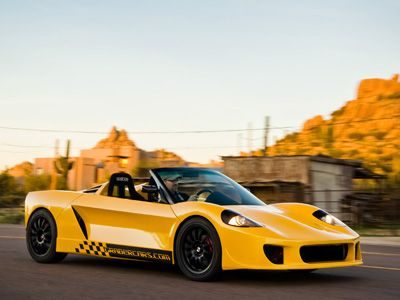
We teased the work-in-progress. We showed the skeleton. The bare metal. Now, we see the finished product. The final image tells the whole story.
The La Bala roadster stands as a testament to what one person can achieve with enough skill and stubbornness. It’s futuristic in its execution but classic in its form. A paradox on wheels.
Does it matter that it’s a replica? Not really. The art is in the making. The fact that one individual brought this vision to life, from concept to completion, makes it more impressive than any factory-built equivalent. It’s a reminder that in the world of custom cars, talent still beats budget. Every time.
The Final Lap: Building Your Own La Bala
So you’ve read the schematics. You’ve watched the welds bead up on Steve Graber’s custom-fabricated La Bala roadster. You’re staring at that thing and thinking, I could do that.
Could you?
Maybe.
It depends on what “do” means. If it means buying a kit, bolting it together with a socket set, and calling it a day—sure. That’s weekend warrior stuff. But Graber’s build isn’t a IKEA furniture assembly. It’s custom fabrication. That means cutting metal where no template exists. It means fitting panels by hand until the gaps are uniform enough to fool a judge at a concours event.
Most people underestimate the metalwork. They think the engine is the hard part. It’s not. The engine is a solved problem. You buy it. You bolt it in. The chassis is the puzzle. The body is the art.
Here’s the reality check. Building a true custom roadster like the La Bala requires three things most enthusiasts don’t have: time, space, and the willingness to ruin a sheet of aluminum three times before it fits right.
“Think you can do it yourself? Learn what it takes to assemble your own car!”
That’s the pitch. But the fine print is missing. It’s not just assembly. It’s engineering. It’s patience. It’s the ability to look at a twisted frame rail and know exactly how to straighten it without weakening the structure.
Graber’s La Bala works because he didn’t just follow instructions. He made them. He fabricated the suspension mounts. He shaped the fenders. He wired the harness. Every bolt has a story. Every weld has a scar.
You can buy a kit. You can’t buy that experience.
Check out the whole Custom Car Library if you want to see more examples of what happens when someone decides to build rather than buy. It’s a rabbit hole. A good one. But don’t go in expecting it to be easy. It’s never easy.
That’s the point. If it were easy, everyone would do it.