You know that feeling when you load a hatchback with a week’s worth of groceries and the rear end sags? The bumper kisses the asphalt. The front end rises. You realize your subcompact isn’t built to haul heavy loads.
It happens.
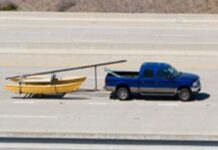
Even if you swap that sedan for a full-size pickup truck, the physics don’t change much. You just need more boxes of tile to make the rear suspension compress. The truck is stiffer. Stronger. But it still has limits.
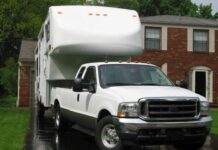
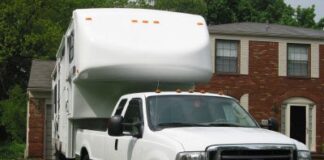
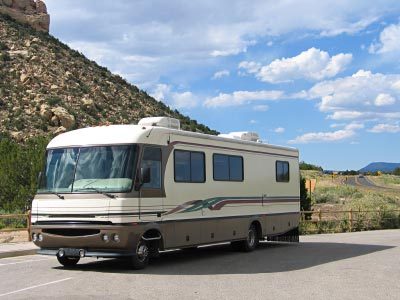
Now picture an RV. You load it with furniture, appliances, TVs, and six adults. It sits low to the ground. Nothing looks wrong. You don’t see the suspension straining. You don’t see the frame twisting. You just drive.
“The short answer to how much weight is too much is that you need to know your RV’s cargo carrying capacity.”
That’s the problem with big rigs. The margin for error is invisible until it’s too late. You might exceed the limit and not know it. And that is dangerous.
To stay safe, you need to calculate your cargo carrying capacity (CCC). It’s not a guess. It’s math. Simple, brutal math.
Here is the formula.
- Start with the GVWR. This is the Gross Vehicle Weight Rating. It’s the maximum safe weight of the vehicle, including everything inside it. Let’s say your RV has a GVWR of 20,000 pounds.
- Subtract the UVW. That’s the Unloaded Vehicle Weight. This is the manufacturer’s stated weight for the vehicle with a full tank of fuel, coolant, and oil. If your UVW is 14,500 pounds, you are already carrying nearly three-quarters of your limit in fluids and steel.
- Subtract the SCWR. Sleeping Capacity Weight Rating. The manufacturer assumes each sleeper weighs 154 pounds. If you have six bunks, that’s 924 pounds of “people” already deducted from your available payload.
- Subtract the Propane. LP gas weighs 4.2 pounds per gallon. A standard 12-gallon tank adds 50.4 pounds.
- Subtract the Fresh Water. Water weighs 8.3 pounds per gallon. A 25-gallon tank adds 207.5 pounds.
Do the math on those numbers:
20,000 (GVWR) – 14,500 (UVW) – 924 (SCWR) – 50.4 (LP) – 207.5 (Water) = 4,318.1 pounds.
That is your cargo carrying capacity.
That number is hard. It’s absolute. If you load 4,319 pounds of gear, you are overloading the RV. The manufacturer’s warranty likely voids the moment you cross that line. Safety margins disappear. Braking distance increases. The risk of a blowout spikes.
If you want to find this number for your own rig, don’t guess. The manufacturer provides this data. Check their website. Look at your window sticker. If you can’t find it, ask a dealer.
You can also look up historical data for passenger vehicles using the charts below. These lists show cargo volume in cubic feet for various makes and models from 2006 to 2009. Volume isn’t weight, but it helps you visualize space constraints.
Acura Cargo Carrying Capacity
| Year | Model | Cargo Capacity (ft³) |
|---|---|---|
| 2006 | MDX | 81.5 |
| 2006 | RL | 13.1 |
| 2006 | RSX | 25.3 |
| 2006 | TL | 12.5 |
| 2006 | TSX | 13.2 |
| 2007 | MDX | 83.5 |
| 2007 | RL | 13.1 |
| 2007 | RDX | 60.6 |
| 2007 | TL | 12.5 |
| 2007 | TSX | 13.2 |
| 2008 | MDX | 83.5 |
| 2008 | RL | 13.1 |
| 2008 | RSX | 60.6 |
| 2008 | TL | 12.5 |
| 2008 | TSX | 13.2 |
| 2009 | MDX | 83.5 |
| 2009 | RL | 13.1 |
| 2009 | RSX | 60.6 |
| 2009 | TSX | 12.6 |
Audi Cargo Carrying Capacity
| Year | Model | Cargo Capacity (ft³) |
|---|---|---|
| 2006 | A3 | 54.6 |
| 2006 | A4 | 13.4 |
| 2006 | A6 | 15.9 |
| 2006 | A8 | 14.6 |
| 2006 | S4 | 13.4 |
| 2006 | TT | 24.2 |
| 2007 | A3 | 54.6 |
| 2007 | A4 | 13.4 |
| 2007 | A6 | 15.9 |
| 2007 | A8 | 14.6 |
| 2007 | Q7 | 88.7 |
| 2007 | RS4 | 13.4 |
| 2007 | S4 | 13.4 |
| 2007 | S6 | 13.9 |
| 2007 | S8 | 14.6 |
| 2008 | A3 | 54.6 |
| 2008 | A4 | 10.2 |
| 2008 | A5 | 16.1 |
| 2008 | A6 | 15.9 |
| 2008 | A8 | 14.6 |
| 2008 | Q7 | 88.7 |
| 2008 | R8 | 3.5 |
| 2008 | RS4 | 13.4 |
| 2008 | S4 | 13.4 |
| 2008 | S5 | 16.1 |
| 2008 | S6 | 15.9 |
| 2008 | S8 | 14.6 |
| 2008 | TT | 8.8 |
| 2009 | A3 | 54.6 |
| 2009 | A4 | 10.2 |
| 2009 | A5 | 16.1 |
| 2009 | A8 | 14.6 |
| 2009 | Q7 | 88.7 |
| 2009 | R8 | 3.5 |
| 2009 | S4 | 10.2 |
| 2009 | S5 | 16.1 |
| 2009 | S8 | 14.6 |
| 2009 | TT | 8.8 |
BMW Cargo Carrying Capacity
| Year | Model | Cargo Capacity (ft³) |
|---|---|---|
| 2006 | 325 | 12 |
| 2006 | 330 | 12 |
| 2006 | 525 | 14 |
| 2006 | 530 | 14 |
| 2006 | 550 | 14 |
| 2006 | 650 | 13 |
| 2006 | 750 | 18 |
| 2006 | 760 | 18 |
| 2006 | M3 | 9.5 |
| 2006 | M5 | 14 |
| 2006 | M6 | 13 |
| 2006 | X3 | 71 |
| 2006 | X5 | 54.4 |
| 2006 | Z4 | 9.2 |
Buick Trunk: Mid-2000s SUVs and Sedans
Buick’s mid-2000s lineup was changing. There are both durable sedans and boxier SUVs that actually mattered for hauling. When tracking Buick cargo capacity, the data shows a clear divide between the demands of luxury and practicality.
LaCrosse and Lucerne didn’t try to be workhorses. Their bodies are tight. The LaCrosse offers 16 cubic feet of space. The Lucerne gave you 17. That’s barely enough for a set of golf clubs and a weekend bag. The differences are minimal.
SUVs tell a different story.
The Rainier was a rebadged GMT360 platform. The capacity is 80.1 cubic feet. Solid. However, it got dwarfed by the larger haulers. The Rendezvous was king in the early days at 108.9 cubic feet. And the Terraza? It’s huge. 136.5 cubic feet. It’s an SUV-style minivan designed to swallow everything from IKEA furniture to kayaks.
In 2008 and 2009 Terraza was gone. Enclave is introduced as a new flagship. In 2008, that number started strong at 116.2 cubic feet. Then in 2009 the number dropped slightly to 115. The LaCrosse and Lucerne are still 16 and 17 cubic feet. Buick no longer cares about Rainier. They focused on the Enclave and the sedans.
Cadillac luxury and heavy haulers
The Cadillacs of this era have played two games. Luxury sedans that didn’t care about your luggage, and a big truck can tow even a small house.
The CTS and CTS-V are rear-wheel drive platforms. Their trunks were shallow. In 2006 and 2007, it was 12.5 cubic feet. It then jumped to 13.6 cubic feet in 2008 and 2009. That’s a small gain at a big cost. The STS and STS-V have a volume of 13.8 cubic feet. Consistent. Barely useful for anything large.
The DTS is a large sedan. It has a capacity of 18.8 cubic feet. Still not great, but better than the CTS.
Then there are SUVs. Escalade and Escalade ESV were the volume kings. The 2006 Escalade had a volume of 104.6 cubic feet. ESV (Extra Short Wheelbase) is 131.6. By 2007, the Escalade had grown to 108.9. ESV rose to 137.4. They stayed there through 2008 and 2009. If you need to move a fridge, you can go for the ESV.
The Escalade EXT is listed with a dash. This means that either there is no free cargo space behind the seats in standard trim, or it has to do with the significantly different shape of the truck’s bed. Skip it if you want constant volume.
The SRX is a crossover. The capacity is 69.5 cubic feet. For those who don’t want the footprint of a full-size SUV, this is a good compromise. XLR and XLR-V are roadsters. 11.6 cubic feet. You fit a week’s worth of clothes in there. That’s it.
In 2009, the Escalade Hybrid was introduced. It shares 69.5 cubic feet of space with the SRX. Wait, this looks like a typo in some of the logs, but the SRX data point is 69.5. The Escalade Hybrid is likely to be smaller in size than the gasoline V8 due to the location of the battery. The STS-V remained at 13.8.
Chevrolet utility dominance
Chevrolet owned the volume game. If you need to move your assets, you can buy a Chevrolet.
The Express van was a beast. 225.1 cubic feet. From 2006 to 2009, nothing changed. It just sits there, huge and empty, waiting for your business inventory.
HHR is retro, neat and functional. 2006 starts at 63.1 cubic feet. It then dropped to 57.7 in 2007, 2008 and 2009. The HHR panel is slightly larger at 62.7. It’s not a big difference, but the van doesn’t have a rear window.
The TrailBlazer EXT was a niche play. 107.4 cubic feet. It disappeared after 2006. The TrailBlazer itself returned in 2007 with a capacity of 80.1 cubic feet and stayed there.
The Suburban was the ultimate hauler. 137.4 cubic feet. This can be seen in the data of 2007, 2008 and 2009. The Tahoe is smaller at 108.9 cubic feet. The Tahoe Hybrid matched the Tahoe’s volume.
Corvette? This is a sports car. In 2006, it was 22.4 cubic feet. In 2007 and 2008, it dropped to 11 cubic feet. It then returned to 22.4 in the new-generation C6 in 2009. The Impala held steady at 18.6. Malibu hovers between 15.1 and 15.4. The price of cobalt fell by 13.9.
Silverado pickup truck? Data for most years are shown as lines. This is because the carrying capacity of a pickup depends entirely on the length of the bed and the style of the cab. The capacity of the standard bed is lower than in the crew cabin with the short bed. The numbers are not as fixed as the trunk of a sedan. You need to check your own configuration.
Traverse is a new product launched in 2009. 117.5 cubic feet. It’s a family hauler alternative to the Uplander (120.1 cubic feet) and older SUV models.
Chrysler minivans and crossovers
Chrysler is betting on minivans and the PT Cruiser.
Town & Country is the director of sales. In 2006, it was 146.7 cubic feet. It dropped slightly to 144 in 2007 and 143.8 in 2008 and 2009. Not much has changed. It worked.
The PT Cruiser is suspect. For 2006, it offers a whopping 92.2 cubic meters of space. It’s SUV territory. Then in 2007 the number dropped to 62.7. It remained the same until 2009. Changes for 2007 may reflect changes in gauges or model year updates that reduce rear space for styling or construction reasons.
The Pacifica debuted in 2006 with a 62.7 and then became the successor to the minivan. Wait a minute, no. Was the Pacifica a minivan before the Town & Country name was fully reintroduced? No, the Pacifica was once a minivan. In 2006, the Pacifica scored 62.7 points. In 2007, it rose to 92.2. It then dropped to 62.7 in 2008 and 2009. Such variation is indicative of differences in body size and measurement limits. The number 92.2 is probably the highest value with the seats folded down. 62.7 is probably behind the third row.
Aspen is a crossover. 102.4 cubic feet. It remained stable between 2007 and 2009. The Aspen Hybrid is comparable.
The 300 Sedan and 300C Sedan are identical. In 2006, 2007 and 2009 it was 15.6 cubic feet and in 2008 it increased to 17.2 cubic feet. A small update brings a small change
Ford cargo capacity
If you’re loading a mid-2000s Ford, the numbers will vary greatly depending on whether you’re hauling lumber or groceries. See Ford’s full range of cargo capacities.
Full size trucks take up space. The 2006 and 2007 Ford E 150, E 250 and E 350 Super Duty offered 256.5 cubic feet. That number dropped slightly in 2008 and 2009 to 230.6 cubic feet, but it’s still dwarfs almost everything else on the road. Not so in the F-series trucks. The F-150, F-250, and F-350 show dashes in the data. This is not an error. This means that the bed volume is not standardized and not listed in this particular cubic foot measurement for comparison with passenger cars. The F-450 was added to the dash list in 2008 and 2009.
SUVs and crossovers are somewhere in between. The 2006 Ford Escape had a volume of 66.3 cubic feet, with the hybrid version following closely behind at 65.5 cubic feet. By 2009, the Escape Hybrid’s score had risen to 66.1. At the time, the Ford Explorer had 85.8 cubic feet of space and a throughout the period. The Ford Expedition offered 108.2 cubic feet in 2006 and 2007, while the larger Expedition EL upped that to 130.8 cubic feet. Ford Freestar Minibus capacity started at 134.3 cubic feet in 2006 and increased to 137.2 cubic feet in 2007. Sedan capacity is tight. The Ford Crown Victoria has 20.6 cubic feet of space. The Ford Fusion has only 15.8 cubic feet of space. The Ford GT has only 1 cubic foot of space. The Ford Mustang has 9.7 cubic feet of space.
In 2008, the Ford Taurus appeared with 21.2 cubic feet, while the Taurus X rose to 85.5 cubic feet. The Ford Focus is missing from the 2008 list and may have been omitted or not included in this dataset. The Ford Ranger returns for 2008 with 18.1 cubic feet.
GMC cargo capacity
GMC remains firmly committed to its heavy-duty utility. From 2006 to 2009 GMC Savana 1500, 2500, 3500 vans had a cargo capacity of 225.1 cubic feet. In this era of changing cars, that kind of consistency is rare.
The SUVs showed some variation. The GMC Yukon debuted in 2006 at 63.6 cubic feet and remained consistent from 2007 to 2009 at 60.3 cubic feet. The Yukon XL hovers between 45.7 and 45.8 cubic feet. The new GMC Acadia debuted in 2007 with a capacity of 19.7 cubic feet, expanded to 25.5 cubic feet in 2008 and remained that way in 2009. The GMC Envoy held steady at 43.7 cubic feet from 2006 to 2009, while the smaller model had 4 **2 liters. cubic feet.
There is little information about trucks and hybrid cars. Sierra 1500, 2500 and 3500 are show dashes to indicate that the corresponding cubic foot measurements do not apply. The Yukon Hybrid was introduced in 2008 and 2009 and is smaller at 16.9 cubic feet. Sierra Hybrid shows a dash in 2009. Canyon also shows dashes throughout 2006-2009.
Honda cargo capacity
Honda’s collection is practical. Honda Odyssey This minivan was king of volume from 2006 to 2009 and had a volume of 147.4 cubic feet. Nothing changes.
Compact cars are small in structure. Honda Civic Trunk space varies greatly. In 2006 and 2007 it started at 72 cubic feet. The next generation dropped to 35.7 cubic feet in 2008, and by 2009 the sedan version had 11.5 cubic feet. The Civic Hybrid remained relatively flat at 11.5 cubic feet, dropping to 10.4 cubic feet in 2009. The Honda Fit debuted in 2007 with a capacity of 41.9 cubic feet, increasing to 57.3 cubic feet in 2009.
Honda Accord sedan saw a dip. It went from 14 cubic feet in 2007 to 11.9 cubic feet in 2008 and 2009. The Accord Hybrid stays at 11.2 cubic feet.
SUVs and trucks are all different. The 2006-2009 Honda CR-V had 10.4 cubic feet of space. The Honda Pilot still holds the high ground at 87.6 cubic feet, but has dropped slightly to 87 cubic feet for 2009. The Honda Element is a boxy utility vehicle from 2006 to 2008, with 74.6 cubic feet of space. The Honda Ridgeline pickup truck has 41.4 cubic feet of space. Honda S2000 Roadster has very little space, only 5 cubic feet.
HUMMER Cargo Carrying Capacity
HUMMER didn’t waste time on nuance. From 2006 to 2009, the HUMMER H2 had a capacity of 30.7 cubic feet. HUMMER H3 The offered 29.5 cubic feet across the same years was 29.5 cubic feet. H3T The pickup truck got a dash in 2009. This is likely due to the lack of standardized body measurements in this data set.
Hyundai Cargo Carrying Capacity
Hyundai building volume into its larger crossovers. Hyundai Santa Fe production capacity increased from 30.5 cubic feet in 2006 to 34.2 cubic feet in 2007 and remained there until 2008. The held Hyundai Tucson is 22.7 cubic feet in 2006-2008.
The sedan remained consistent. From 2006 to 2008, the Hyundai Sonata had a capacity of 16.3 cubic feet. The held Hyundai Azera is 16.6 cubic feet. The Hyundai Elantra increased slightly from 13 cubic feet in 2006 to 14.2 cubic feet in 2007 and 2008. The Hyundai Accent starts at 12.4 cubic feet and increases to 15.9 cubic feet in 2007 and 2008.
A new model has arrived. Hyundai Entourage The minivan was available in 2007 and 2008 as a 32.2 cubic foot model. The Hyundai Veracruz was introduced in 2007 and 2008 as a shows a dash. The Hyundai Genesis was introduced in 2009 and has a capacity of 15.9 cubic feet. From 2006 to 2008, the Hyundai Tiburon had a capacity of 14.8 cubic feet.
Infiniti cargo capacity
Infiniti luxury volume was modest. From 2006 to 2009, the Infiniti QX56 had a capacity of 91.7 cubic feet. From 2006 to 2008, the FX35 and FX45 crossovers had a capacity of 64.5 cubic feet. For 2009, the FX35 drops to 62 cubic feet, and the new FX50 also has 62 cubic feet.
Jeep: Wrangler’s Weird Math
Check out the Wrangler’s numbers. If you think about it from the sedan guy, they don’t make sense.
The 2006 Wrangler has a capacity of 45.8 cubic feet.
By 2007? 61.2 cubic feet.
Why jump? The Unlimited (long wheelbase) version was introduced in 2008 and has a whopping 86.8 cubic feet of space. It’s not just big. This is a separate vehicle class.
Compare that to the Commander. Its volume has fluctuated between 68.5 and 68.9 cubic feet over the years. Stable. boring.
The Liberty? The It actually lost space.
2006: 69 cubic feet.
2008: 64.2 cubic feet.
If you’re buying a used Liberty, check the model year. If you need hauling room, you need a 2006 or 2007.
Wrangler Unlimited offers almost double the cargo space of its two-door cousin.
KIA: Unusual situation in Sedona
Kia Motors’ collection of this era can be said to be versatile.
There is terribly little space in most sedans.
2009 Optima? 14.8 cubic feet.
Amanti 2007? 15.9 cubic feet.
Not enough for a weekend trip.
But then there was Sedona.
2006: 141.5 cubic feet.
2007: 121.3 cubic feet.
2008: 121.3 cubic feet.
This is more than just a minivan. It was a rolling warehouse. volume from 2006 to 2007, but it still dwarfs all the other numbers on this list.
Rondo? In ’07 and ’08 there were 74.4 cubic feet.
Sportage? The capacity is consistently 66.6 cubic feet.
If you need to move furniture, ignore the Optima. Buy Sedona.
Land Rover: LR3’s big drop
Land Rover’s cargo capacity data seem questionable.
LR3 is an outlier.
2006: 90.3 cubic feet.
2007: 90.3 cubic feet.
2008: 9.9 cubic feet.
Nine point nine.
Were seats moved? Did they remove the trunk?
Then in 2009 it went back to 90.3 cubic feet.
This is not a gradual decline. This is either a data error or a major design change that doesn’t make sense. If you’re looking at a 2008 LR3 with only 9.9 cubic feet, either the seller is lying or the car is stripped for parts.
The Range Rover Sport’s volume stayed steady at 71 cubic feet.
The Range Rover itself fell slightly from 74.9 to 74.2.
The LR2 debuted in 2009 with a capacity of 58.9 cubic feet. small. tight.
Lexus: A combination of luxury and practicality
Lexus didn’t build cargo hogs. They made luxury cars.
The LS 430 offers 20.2 cubic feet of space.
LS460? 18 cubic feet.
ES350? 14.7 cubic feet.
You wouldn’t put a suitcase. You’d put a briefcase.
But what about SUVs? They are different.
The RX 400h and RX 350 offer 84.7 to 85 cubic feet.
GX470? 77.5 cubic feet.
LX470? 90.4 cubic feet.
Did you notice the drop on the 2008 RX 350? It says 38.3 cubic feet.
This is not the total capacity. This is the rear seats up.
In 2009, the jumped back to 85 with the seats folded.
Be sure to check whether the number is “seats up” or “seats down”. Number 38.3 is a trap for the unprepared.
Lincoln: The Navigator Advantage
Lincoln played a big game.
The Navigator is the king of cubic feet in this segment.
2006: 104.8 cubic feet.
2007: 103.5 cubic feet.
2009: 104.7 cubic feet.
Not much has changed. It just stays huge.
Mark LT? 47.9 cubic feet.
A pickup with an SUV heart.
MKX? 69 cubic feet.
Stable. Predictable.
The Town Car? 21.1 cubic feet.
The limo’s little brother. Not for transport.
If you wanted a space in a Lincoln of this era, you could buy a Navigator. Everything else is an afterthought.
Mazda: CX-9 benefits
There were some strange inconsistencies in Mazda’s 2006-2009 lineup.
The CX-9 is a hauler.
2007: 100.7 cubic feet.
2008: 100.7 cubic feet.
2009: 100.7 cubic feet.
Consistency.
Mazda 5? 44.4 cubic feet.
Mazda 3? 43.8 cubic feet.
But look at the Mazda6.
2006: 58.7 cubic feet.
2009: 16.6 cubic feet.
What happened?
The 2006 numbers seem high for a sedan. May also include folding rear seats. The figures for 2009 seem to be trunk-only.
The 2008 Tribute Hybrid has just 27.8 cubic feet.
The regular Tribute? In 2008 it was 29.2 and in 2009 it was 66.2.
Again, check the seat configuration. The Hybrid lost space for batteries. The regular Tribute gained it back in 2009, perhaps thanks to revised or updated dimensions.
Mercedes-Benz: R-series outlier
Mercedes has a strange car called the R-Class.
2007: 85 cubic feet.
2008: 85 cubic feet.
2009: 85 cubic feet.
It offers van-like space in a car-like package.
ML350 and ML500? 72.4 cubic feet.
G500 and G55? 79.5 cubic feet.
SLR McLaren? 9.6 cubic feet.
Then it dropped to 7.2 cubic feet in 2008.
There is no space for luggage in the carbon fiber frame.
The C-Class? 12.2-12.4 cubic feet.
The S-Class? 15.4 to 19.8 cubic feet.
When it comes to pure volume, nothing beats the R-Class.
You can’t beat the Navigator for size.
Mercury: The Ghost of Monterey
Mercury has disappeared. But from 2006 to 2009, there was Monterey.
2006: 134.3 cubic feet.
2007: 134.3 cubic feet.
This is the largest number in the entire article.
A minivan with a premium badge.
The Mountaineer? 83.7 to 85.8 cubic feet.
The Mariner? 65.5 to 66 cubic feet.
Milan? 15.8 cubic feet.
Standard luxury sedan space.
If you can buy a used Monterey from this era, it probably has more room than the Navigator.
This is the forgotten king of cubic footage.
MINI Compact Cube: Clubman and Hardtop
The 2006 Mini Cooper Hardtop has 25 cubic feet of space. convertible? 21.4. tight. But by 2008, the Clubman had a capacity of 32.8 cubic feet. This is a leap forward that most small cars can only dream of. The hardtop version of the John Cooper Works is 24 cubic feet and the Clubman is 32.8 cubic feet. If you need extra space but don’t want a full SUV, the Clubman is the car for you.
Mitsubishi size differences
Mitsubishi plays a strange game when it comes to trunk space. From 2006 to 2009, the Eclipse sedan was only 15.7 cubic feet. The Galant’s volume is even smaller, at 13.3 cubic feet. The Outlander swung wildly. In 2006, it was 60.3 cubic feet. In 2007, it dropped to 36.2. Then it rose to 72.6 in 2008. Why? You’ll have to ask the engineers. Endeavor started in 2006 with 76.4 and halved in 2007 and 2008 to 40.7. Raider has been extinct since 2007. If you needed consistent volume, Mitsubishi wasn’t your best bet.
Nissan Quest Quirk
Nissan did something weird with the Quest. The 2006 model had 148.7 cubic feet. In 2007, it dropped to 145.7. In 2008 and 2009 it was 148.1. That’s minivan territory. By comparison, the 350Z has just 4.1 cubic feet of space. Or 15.5 Maxima. The Pathfinders have held steady at 79.2 points for four years. The Armada? 97.1 cubic feet each. Continuous. heavy. Spacious. The 2008 Rogue started out at a large 98 cubic feet, but flattened out to 28.9 cubic feet in 2009. I’ll have to check the model year.
Pontiac SV6 surprise
The Pontiac Montana SV6 is a sleeper wagon. In 2006, it is 136.5 cubic feet. He also scored 136.5 points in the 2007 relay. Most of the cars on this list aren’t even close to that. Vibe’s capacity was 54.1 cubic feet, which decreased slightly in 2009 to 49.4 cubic feet. The Grand Prix has changed a lot. In 2006 it was 57 cubic feet, in 2007 it was 16 cubic feet and in 2008 it was 45.7 cubic feet. The GTO? A mere 7 cubic feet. Sports cars rarely prioritize transporting furniture. Torrent started at 68.6 and dropped to 32.2 in 2007, but has since recovered to 68.6. It’s not consistent, but there’s a lot of leeway where it counts.
Porsche’s valuable real estate
Porsche doesn’t waste storage space. The Boxster has a capacity of 9.9 cubic feet. The Cayman, 14.5. The 2009 911 Carrera displaces just 7.24 cubic feet. Even the Cayenne SUV has 62.5 cubic feet in both 2006 and 2009. You don’t buy a Porsche to move the couch. Buy to move people quickly. Space is an added bonus. It’s small.
Saab Steady 9-7X
From 2006 to 2009, the Saab 9-7X had a capacity of 80.1 cubic feet. No changes. No surprises. That same year, the 9-5’s capacity remained at 15.9 cubic feet. The 9-3 started at 14.8, went up to 15 and dropped to 12.4 in 2009. In 2006, the 9-2X offered 61.6 cubic feet. It has since disappeared. Saab is gradually declining. The amount of space does not matter. The most important thing is that the car is collectible.
Saturn’s Hybrid Variance
Saturn’s Outlook was a beast. From 2007 to 2009, 115.9 cubic feet. Relay? 136.5 in 2006 and 136.5 in 2007. VUE started at 30.8 in 2006, rose to 63.8 in 2007 and 2008, but dropped to 29.2 in 2009. The hybrid version closely mirrors the non-hybrid version. The Aura Hybrid scored 13.1, while the regular Aura scored 14.9. Small differences. However, they are added together in the spreadsheet.
Scion’s xB Utility
The Scion xB is built for cargo transportation. In 2006, it is 43.4 cubic feet. In 2008 and 2009, it almost doubled to 69.9. xD hovers around 35.7. For four years, the tC remains at 12.8 cubic feet. If you want a box truck that isn’t too expensive, the xB is the answer. The numbers prove it.
Smart’s minimalist approach
The 2008 Smart Fortwo has a capacity of 12 cubic feet. That’s it. There is one model. 1 year. No drama. There is no difference. For a car the size of a golf cart, that’s only 12 cubic feet. This works well. It’s not spacious. Choose your priorities.
Evolution of Subaru’s Outback
The production of the Subaru Outback began in 2006 and has a capacity of 33.5 cubic feet. In 2007, it dropped to 11.4 cubic feet. Then in 2008 it jumped to 98. In 2009, it was listed at 65.4. The Legacy Wagon had about 66 cubic feet in 2006, dropping to 65.4 in 2007. The Tribeca started at 74.4, went up to 104 in 2008, but returned to 74.4 in 2009. The Forester? It was 57.7 in 2006 and 68.6 in 2007 and 2008. Data for 2009 is not available. The Impreza Wagon and Outback Sport hovered around 61.6, but dropped to 44.4 in 2008. The WRX Sti started at 11 and jumped to 44.4 in 2008. You need to check the trim. And a year.
Suzuki XL7 extension
Suzuki’s XL7 started with 75.1 cubic feet in 2006 and expanded to 95.2 cubic feet in 2007 and 2008. The Grand Vitara jumped from 24.4 cubic feet in 2006 to 68.9 cubic feet in 2007 and 2008, The SX4 held steady at 54 in 2008 and 2009. The XL7 disappeared after 2008. The Grand Vitara also disappeared after 2008. Suzuki was folding up their tents. There is space when you need it. Then it wasn’t.
The Bottom Line
Cargo capacity is not just volume. It’s all about practicality. It’s all about whether it fits your gear or not. The numbers tell about the change in priorities. Some brands make the most of their space. Others minimized it for performance. The Quest and Montana SV6 dominated volume. The 350Z and Smart fortwo barely mattered in that department. You have to decide what to carry. And who you’re driving with.
Toyota’s Practical Volume Leaders
If you need to haul cargo, Toyota’s 2006-2009 lineup offered an odd mix of sedans and SUVs. The Sienna minivan is the king of capacity. The capacity is 148.9 cubic feet. It can be adapted to almost anything. The Sequoia SUV came in second with 128.1 cubic feet. That’s serious space.
However, the figures vary depending on the year. Check out the 2007 Highlander. Its volume jumped from 39.7 cubic feet in 2006 to 80.6 cubic feet in 2007. The hybrid version also held steady at 80.6 cubic feet throughout the year. By 2008, the regular Highlander had grown back. The volume is 95.4 cubic feet. The hybrid is a bit behind, at 94.1 cubic feet. This distinction is important when comparing efficiency and effectiveness.
The Matrix was a hidden gem for small haulers. From 2006 to 2008, it had a capacity of 53.2 cubic feet. And in 2009, the capacity jumped to 61.5 cubic feet. This is a significant change for a small crossover.
Sedans were cramped. The Avalon varied wildly. In 2006, this area was only 14.4 cubic feet. In 2007, that amount doubled to 41.4 cubic feet. Why did it drop back to 14.4 in 2008? Design changes often explain this. Camry’s volume is about 15-16.7 cubic feet. The Corolla’s volume was about 13.6 cubic feet, and it dropped to 12.3 cubic feet in 2009.
Off-roaders like the 4Runner held steady at 75.1 cubic feet for four years. The FJ Cruiser offers 66.8 cubic feet of space. This is enough for camping gear. The Land Cruiser was inconsistent. It started at 20.8 cubic feet in 2006. Then in 2007 it jumped to 90.8. It has remained stable at 81.7 for the past two years.
“Toyota’s minivans and SUVs dominate the sales charts, but the sedan struggles to break 20 cubic feet.”
The Tacoma and Tundra show dashes. This means that the information is not available or applicable in this particular context. This is probably because the payload of a pick-up truck is highly dependent on the length and configuration of the bed.
Volkswagen’s Euro Volume Breakdown
Volkswagen takes a different approach. They focused on wagons and smaller European models. Introduced in 2009, The Routan appeared in 2009 with a massive 141 cubic feet. This is a rebadged Chrysler minivan, so don’t expect German engineering magic there. But it contains a lot.
The Touareg is the company’s large SUV. From 2006 to 2009, its capacity was always 71 cubic feet. Introduced in 2009, the Tiguan has a capacity of 56.1 cubic feet. Not bad for this class.
Wagons were the sweet spot. The Passat wagon had a capacity of 61.8 cubic feet in 2007 and 2008. The Jetta Sport Wagon jumped to 66.9 cubic feet in 2009. That’s impressive for a compact sedan wagon.
The Rabbit (North American Golf) has a capacity of 46 cubic feet. The 2007 and 2008 GTI also had a displacement of 46 cubic feet. The basic Jetta sedan is small. Just 16 cubic feet. The Passat sedan has an equivalent volume of 14.2 cubic feet.
Beetles are weird. The cargo capacity of the convertible is only 5 cubic feet. The coupe has a volume of 27.1 cubic feet. The hardtop wins here.
The Phaeton is a luxury sedan. It offered only 13 cubic feet. The Eos convertible has only 10.5 cubic feet of space. These numbers reflect the compromise between style and practicality.
Volvo space efficiency
Volvo specializes in station wagons and SUVs. The 2006 V70 and XC70 have a displacement of 71.4 cubic feet. By 2009, their numbers had increased slightly to 72.1 cubic feet and 72 cubic feet. The XC90 SUV is even bigger. In 2006, it had a capacity of 84.9 cubic feet, which increased to 85.1 cubic feet in 2007, staying there.
The 2006 V50 Touring has a capacity of 62.9 cubic feet. In 2008 and 2009, it dropped to 62.6 cubic feet. Small changes, but they add up.
Sedans were the weak link. The 2006 S40 had a volume of 14.3 cubic feet. In 2007, it was downsized to 12.6 cubic feet, staying there. The S60 is inconsistent. In 2006 and 2008-2009 they were 36.5 cubic feet, but in 2007 only 13.9 cubic feet. Why has the number decreased? The design of the trunk lid or the folding mechanism of the rear seats may have been changed.
The S80 sedan has about 14-14.9 cubic feet of space. The C70 convertible is small. Only 12.8 cubic feet. The displacement of the C30 hatchback started at 12.9 cubic feet in 2008 and increased to 15.3 cubic feet in 2009.