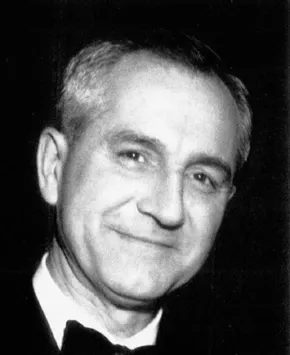
The 1965 Ford Mustang was not the result of years of sophisticated business planning. This was born out of the proactive motivation management skills and keen eye of lead designer Joe Orosz. Oros is not new to the industry. He began working for General Motors in the 1930s and early 1940s. He then joined the independent George Walker Design Group. There he helped build the seminal 1949 Ford. This car started a dynasty of cars and trucks and kept Ford afloat during a critical period.
When George Walker joined Ford as vice president of design in 1955, he took Oros with him. In 1956, Oros was running the Ford Studio. Over the next 12 years, he oversaw the design of nearly all Ford-branded vehicles in the United States. The Mustang is his masterpiece. Ironically, the winning design was rush job. Just like the ’49 Ford, speed was important.
Monday Morning Brief
Lee Iacocca had a clear vision. He wanted a personal sporty four-seater. He didn’t want a cramped European-style 2+2 concept. Gene Bordinat accepted this order and issued a request for proposals. Ford Studios, Lincoln-Mercury Studios and Corporate Advanced all received this information.
The request arrived on Monday. Oros participated in a week-long seminar. The focus was on analyzing problems and their solutions. Dave Ash was his executive supervisor. On Tuesday, Oros called Ash to ask about the studio’s progress. Ash reported the mission received. Sketches were already being made. In the studio, the production of clay models proceeded at full speed. Oros was scheduled to see them the following Monday.
He couldn’t concentrate on the seminar. Thinking about the car kept pulling him out of his focus.
Original model
Monday morning came early. Oros heads to the Design building. He walked quickly towards Ford’s studio. What he saw was not what he expected. This clay model has a low, mouth-type front end. The bumper is integrated directly into the grille opening. The greenhouse featured a reverse backlight. This design mirrors the latest Lincolns, Mercurys and British Ford Anglias.
Oros was not impressed. He quickly noticed two major flaws. The backlight makes your car look old instead of new. The front end would be expensive to tool is expensive and adds unnecessary weight. The bodysides were unremarkable. He didn’t think the design would stand out from other studios.
Designers began to trickle in. Oros pulled aside Gale Halderman and John Foster. Both were managers working under Ash. He asked them what happened. They say Dave Ash wanted to start this.
Dave Ash entered. Oros didn’t hesitate.
“Please cover this model.”
Ajattelin: If this car was new I wouldn’t be able to get the reverse tail light and the front end would be expensive and weigh more.
The team has to start over. They remove defects. They created something new and fresh. What defines a generation.
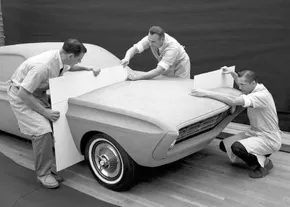
The clock is ticking. Chief designer Joe Oros and his team are hard at work refining the exterior design of the 1965 Ford Mustang prototype. Oros later recalled the tense atmosphere at the time when he first decided to take decisive action and coordinate the entire studio.
Set limits
He met with every designer in Ford’s studio, including the truck designers, to make sure there were no silos. They spent the afternoon analyzing the concept of a “sports car”. The goal is simple. It defines what a vehicle should look like, and more importantly, what it shouldn’t look like. In the management seminar, Oros wrote these parameters on a large pad and taped the list to the studio wall. This is a visual reminder to keep your team focused.
We also use historical context as a filter. Shows images of all sports cars previously produced by the Corporate Advanced studio. They act as a repository of “tired ideas” and help the team avoid topics that management rejects or gets bored with.
Fast iterations with clay
After creating the guidelines, the team completed the new design in a week. They don’t start from scratch. Instead, cut templates and fitted them to the existing clay model. This allows you to carve right into the piece by adding or subtracting clay to match the new direction. This is an effective way to evolve the design rather than rebuilding it.
Resource constraints play an important role in this process. Lincoln-Mercury is preparing to release two models. Advanced Studio offers five options, including modified versions of previous concepts and some additional features. However, Ford Studio presented only one model. The production schedules of many facelifts and other projects stretched thin. There is a shortage of labor.
They worked around the clock to make up for lost time. The goal is clear. The goal is to have the model ready for management review by the deadline.
The Review
It took another two weeks to refine the prototype. When Lee Iacocca first saw the car, it was about five-eighths to three-quarters complete. Oros met him at the studio entrance. They discussed the concept and the team’s goals. Iacocca is happy with the direction, but remained noncommittal in his reaction.
Despite the cautious feedback, the car won hands-down. The team’s breakthrough happened in less than three weeks of intense focus.
“We worked around the clock to make up for lost time to get the model ready for management review.”
The complexity of decision-making masked the complexity of its implementation. Utilizing existing clay work and strictly adhering to the management’s visual boundaries, the Ford Studio team achieved a design that stood out in the crowded internal field. The result is more than just a car. It was a proof of concept that withstood the scrutiny of Ford Motor Company’s top management. The prototype carried the weight of the studio’s survival and the hopes of a new niche. What if the design team has no choice but to succeed? That’s what they do.
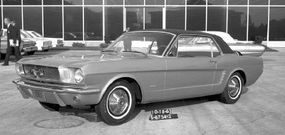
The team behind Pony
Front end? That was my call. But don’t think I did it alone. Dave Ash, Gale Halderman and John Foster did the heavy lifting, steering the Mustang through internal committee (manufacturing, design and product engineering) trials. Charlie Phaneuf brought his ideas to the table, and Damon Woods’ interior design studio kept things sharp inside. This was a large-scale, coordinated project that demonstrated what happens when teams really work together.
The design didn’t fight itself. It just fell into place. We don’t force a theme or fight packaging restrictions to get a perfect fit out of the box. The engineering side gelled quickly and stayed tight on feasibility from the beginning. From final approval to showroom, the adjustments were minor. Almost nothing had to be adjusted.
Lee Iacocca’s reaction
And then the moment came. Lee Iacocca saw the finished prototype. He just rolled his cigar in his mouth. I saw it in his eyes—that gleam. He was absolutely thrilled. As the saying goes, “Pleased as punch” Seeing his reaction? It makes me feel so good too.
For more information on the Ford Mustangs of yesterday and today, check out these articles:
-
The right car at the right time, but the Mustang had to wait until the early 1960s. It was then that savvy Ford executives realized the Mustang’s potential. Learn how Lee Iacocca brought his “”better idea”” to life in 1965 Ford Mustang Prototypes.
-
For a full report on the 2007 Ford Mustang, see Consumer Guide’s New Car Reviews. Here you can find road test results, photos, specifications and prices for hundreds of cars, trucks, minivans and SUVs.
-
Ford’s muscle car is one of the most powerful cars of the era of muscle cars. Check out profiles, photos and specifications for the tough Ford muscle cars.