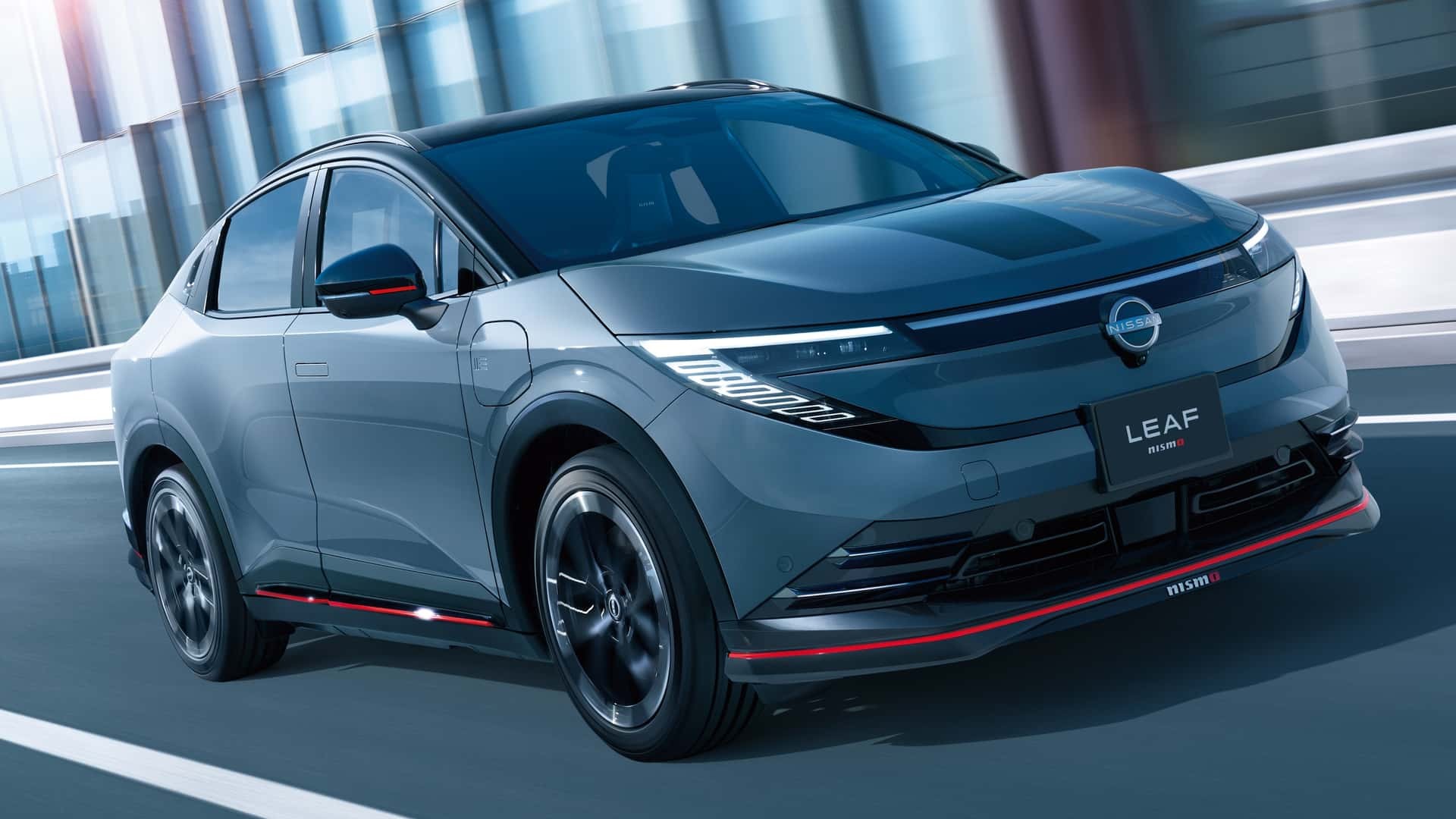
The Nissan Leaf Nismo exists. That alone is weird enough.
We’ve been waiting for an EV that feels fast for a decade. Instead, we get this. The new flagship Leaf wears the Nismo badge, borrows hardware from the X-Trail Nismo, and sports aggressive red accents. But here’s the catch: zero horsepower increase.
You get Recaro seats. You get Michelin Pilot Sport 5 rubber. You get a ducktail spoiler. But the electric motor stays exactly as it was. It’s performance theater. High-octane visual drama without the extra go.
Nissan’s “Nismo-all-the-things” strategy has no brakes. The badge used to mean something for bona fide sports cars like the Z. Now? It’s on SUVs. The Ariya Nismo has been around for years. The Armada Puts Nismo on a body-on-frame hauler. Now it’s on this mainstream hatchback.
Visual Drama Over Velocity
Let’s look at what you’re actually buying. The design changes aren’t just stickers. They’re functional. The new body kit reduces drag and increases downforce. It’s subtle, but it’s there.
The rear tells a mixed story. It keeps the base model’s taillights. Not the Z-inspired design on the higher trims. That feels like a mistake. It misses the chance to make it look as premium as the rest of the package.
Instead, you get beefier cladding. Red accents pop against the paint. Exclusive 19-inch Enkei alloys fill the wheel arches. Inside, the theme continues.
- Red stitching on the steering wheel
- A red 12 o’clock mark to keep you focused
- Synthetic leather with a Nappa-like feel
- Unique graphics in the digital cluster
If you opt for the Recaro seats, they save weight. 44 pounds less than standard bucket seats. They offer lateral support that will keep you pinned during hard cornering. They only come with the 75-kWh battery, though.
The Hardware Gap
This is where it gets disappointing for purists. The Leaf Nismo has the suspension to back up the looks. It uses swing-valve shock absorbers. It has upgraded springs. The stabilizers are firmer. Some bushings are revised for better compliance.
The Sport mode is tuned for sharper throttle response. That matters. In an EV, where power is instant, how the car manages that surge defines the drive.
But power output? Nothing changed.
In Japan, the numbers are stark.
| Battery Size | Horsepower | Torque | Weight |
|---|---|---|---|
| 52-kWh | 174 hp | 254 lb-ft | 4,012 lbs |
| 75-kWh | 214 hp | 261 lb-ft | 4,232 lbs |
You’re paying a premium for a badge, not acceleration.
Is It Worth It?
Nissan has a goal. Ten Nismo models by 2028. 150,000 annual sales. The Leaf Nismo is part of that puzzle. But will people buy it?
Leaf buyers usually want efficiency. They want low running costs. They don’t want a sport-tuned suspension. They don’t care about downforce. They care about the price of electricity in their zip code.
The pricing reflects the niche status.
- 52-kWh: 6,601,110 yen ($40,500)
- 75-kWh: 6,952,110 yen ($42,650)
- With Recaros: 7,227,110 yen ($44,330)
That’s a significant hike over the standard Leaf. You’re paying thousands for looks and handling tweaks. No one is selling this as a track weapon. It’s a style statement.
Global Availability?
N hasn’t confirmed exports. Not yet. The Nismo expansion is aggressive. It makes sense that this model would eventually go global. But right now? It’s Japan-only.
So you can’t buy it here. Not really. You can look at the images. You can read about the Recaro seats. You can admire the Enkei wheels. Then you can walk away.
The Leaf Nismo is a fascinating misstep. It proves Nissan can tweak a car until it looks like a race car. It just can’t make it faster. And maybe that’s the point. Maybe the badge is the product. Not the performance.
It’s shiny. It’s red. It’s fast in photos.
Is that enough?