You know the drill. You are looking for a new or used vehicle and the technical data sheet is your bible. You want to know the MPG. You want from zero to sixty times. You need a load of cubic feet. You want power, torque and final price. These are numbers that sell cars. These are the metrics you compare between different brands. But there’s one number that rarely gets the spotlight. It is often overlooked by buyers and even some hobbyists. This number is the Gross Axle Weight Rating or GAWR.
Whether you drive a sedan, pickup, SUV, or camper van, you need to know your vehicle’s GAWR. This is a hard limit set by the manufacturer. It determines the maximum weight that one axle can safely carry. The front and rear axles have their own limits. Think of GAWR as a strict weight limit for each axle. Never load your vehicle beyond this limit set by the manufacturer.
Real Definition of GAWR
The term itself does not explain what counts towards this limit. According to the new car buying guide, GAWR includes everything. It covers the vehicle’s own weight. It covers passengers. It covers the cargo in the bed or trunk. If you tow a trailer, the trailer tongue weight is included. The entire mass is distributed between the axles.
It is important to distinguish between GAWR and GAW. GAW stands for Gross Axle Weight. This is the actual weight on the axle at any given time. GAWR is a fixed maximum. The GAW is constantly changing as you load or unload items. GAWR will not change. Confusing the two is a common mistake that leads to dangerous situations.
Imagine a pickup truck carrying boulders. Let’s say you have four boulders that weigh 100 pounds each. That’s 400 pounds of cargo. When you remove them, your actual axle weight drops 400 pounds. GAWR remains exactly the same. Loading the boulders back in increases your GAW by 400 pounds. The limit remains static. Safety depends on the actual weight, which falls below the limit.
Why overload is dangerous
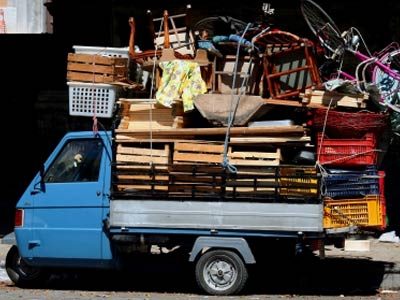
Manufacturers set these limits for safety reasons. Overloading the vehicle is risky. Heavy loads are difficult to control. The problem gets worse when the weight is uneven. If one side of the axle is overloaded, the vehicle becomes unstable.
Imagine putting too much stress on the rear axle. Your control becomes vague. The front tires lose traction, making the car less responsive. Braking performance is reduced because the front brakes do most of the work. The rear tires can explode under the influence of stress. Parts of the suspension can bend or break. You lose control. The list of possible failures is long. For your safety, the actual axle weight should never exceed the GAWR.
Trailers have their own GAWR. They are specified by the trailer manufacturer. You must not exceed this. Balanced loading is even more important in trailers. A poorly loaded trailer can jackknife. It can lead to destabilization of the towing vehicle. Appropriate distribution is non-negotiable.
Where to find your GAWR
You may be wondering how to find this number for your car. It’s usually not in the manual. Look for the sticker inside the driver’s door chassis. It is often located near the locking mechanism. The label lists the GAWR for the front and rear axles.
You can also search online. Most manufacturers publish this information on their official websites. It is part of the technical specifications. If you can’t find it there, look for third-party databases that compile this information. Accuracy is important. Don’t guess.
The information below provides a snapshot of popular models. It highlights the front and rear limits for specific years. This information will help you plan your load accurately.
GAWR List by Make
Acura
| year | Model | GAWR (Front/Rear) |
|---|---|---|
| 2006 | MDX | – |
| 2006 | RL | – |
| 2006 | RSX | – |
| 2006 | TL | – |
| 2006 | TSX | – |
| 2007 | MDX | 2888 / 3175 |
| 2007 | RL | – |
| 2007 | RDX | 2546 / 2381 |
| 2007 | TL | – |
| 2007 | TSX | 2335 / 2030 |
| 2008 | MDX | 2888 / 3175 |
| 2008 | RL | – |
| 2008 | RSX | 2546 / 2381 |
| 2008 | TL | – |
| 2008 | TSX | 2335 / 2030 |
| 2009 | MDX | 2888 / 3175 |
| 2009 | RL | – |
| 2009 | RSX | 2546 / 2381 |
| 2009 | TSX | 2325 / 2090 |
More Acura Specs: Acura GVWR, Acura GCWR, Acura Cargo Carrying Capacity, Acura curb weight, Acura payload, Acura towing capacity
Audi
| year | Model | GAWR (Front/Rear) |
|---|---|---|
| 2006 | A3 | – |
| 2006 | A4 | – |
| 2006 | A6 | – |
| 2006 | A8 | – |
| 2006 | S4 | – |
| 2006 | TT | – |
| 2007 | A3 | – |
| 2007 | A4 | – |
| 2007 | A6 | – |
| 2007 | A8 | – |
| 2007 | Q7 | – |
| 2007 | RS4 | – |
| 2007 | S4 | – |
| 2007 | S6 | – |
| 2007 | S8 | – |
| 2008 | A3 | – |
| 2008 | A4 | – |
| 2008 | A5 | – |
| 2008 | A6 | – |
| 2008 | A8 | – |
| 2008 | Q7 | – |
| 2008 | R8 | – |
| 2008 | RS4 | – |
| 2008 | S4 | – |
| 2008 | S5 | – |
| 2008 | S6 | – |
| 2008 | S8 | – |
| 2008 | TT | – |
| 2009 | A3 | – |
| 2009 | A4 | – |
| 2009 | A5 | – |
| 2009 | A8 | – |
| 2009 | Q7 | – |
| 2009 | R8 | – |
| 2009 | S4 | – |
| 2009 | S5 | – |
| 2009 | S8 | – |
| 2009 | TT | – |
More Audi Specs: Audi GVWR, Audi GCWR, Audi Cargo Carrying Capacity, Audi curb weight, Audi payload, Audi towing capacity
Most other major brands follow similar patterns. You can search for more detailed charts by brand. The information helps you understand the structural limitations of your machine. It’s not just about towing capacity. It’s about the integrity of the chassis. Know your limits. Stay on the road.
BMW Gross Axle Weight Ratings (2006-2009)
Data for the Bavarian manufacturer is sparse in this dataset. Most models lack specific front or rear GAWR figures for the 2006-2009 window.
2006
* 3 Series: 325, 330
* 5 Series: 525, 530, 550
* 6 Series: 650
* 7 Series: 750, 760
* M Models: M3, M5, M6
* SUV/Coupe: X3, X5, Z4, Z4M
2007
* 3 Series: 328, 335
* 5 Series: 525, 530, 550
* 6/7 Series: 650, 750, 760
* Performance/Luxury: Alpina B7, M5, M6
* Utility: X3, X5
* Roadster:
* Z4: 2767 (front) / 3770 (rear)
* Z4M: No data
2008
* Compact: 128, 135
* Mid/Luxury: 328, 335, 528, 535, 550, 650, 750, 760
* Specialty: Alpina B7
* High Performance: M3, M5
* SUVs: X3, X5, X6
* Roadster: Z4, Z4M
2009
* Compact: 128, 135
* Mid/Luxury: 328, 335, 528, 535, 550, 750
* M Division: M3, M5, M6
* SUVs: X3, X5, X6
For BMW enthusiasts, the absence of specific axle weights in public tables often forces reliance on Gross Vehicle Weight Rating (GVWR) minus curb weight for payload estimates.
Buick Gross Axle Weight Ratings (2006-2009)
Buick’s lineup shifted significantly during this period, moving from the Rainier to the Enclave.
2006
* Sedan: LaCrosse, Lucerne
* SUV:
* Rainier: 2950 (front) / 3200 (rear)
* Rendezvous: No data
* Terraza: 1148 (front) / 960 (rear) — Note: These figures seem unusually low, possibly a data entry error or specific trim limit.
* Minivan: No data
2007
* Sedan: LaCrosse, Lucerne
* SUV:
* Rainier: 2950 (front) / 3200 (rear)
* Rendezvous: No data
2008
* Crossover:
* Enclave: 3197 (front) / 3527 (rear)
* Sedan: LaCrosse, Lucerne
2009
* Crossover: Enclave (3197/3527)
* Sedan: LaCrosse, Lucerne
Cadillac Gross Axle Weight Ratings (2006-2009)
Cadillac’s heavy trucks and luxury sedans show varied data availability. The Escalade family provides the most consistent numbers in the early years.
2006
* Sedan:
* CTS: 2232 (front) / 2379 (rear)
* CTS-V: No data
* DTS: No data
* SRX: No data (Crossover)
* STS: No data
* STS-V: No data
* Luxury SUV:
* Escalade: 3350 (front) / 4000 (rear)
* Escalade ESV: 3060 (front) / 2809 (rear)
* Escalade EXT: 3800 (front) / 4000 (rear)
* Coupe:
* XLR: No data
* XLR-V: No data
2007
* Sedan:
* CTS: 2232 (front) / 2379 (rear)
* CTS-V: No data
* DTS: No data
* SRX: No data
* STS: No data
* STS-V: No data
* Luxury SUV:
* Escalade: No data
* Escalade ESV: No data
* Escalade EXT: No data
* Coupe:
* XLR: No data
* XLR-V: No data
2008
* Sedan: CTS, DTS, SRX, STS, STS-V (All “No data”)
* Luxury SUV: Escalade, Escalade ESV, Escalade EXT (All “No data”)
* Coupe: XLR, XLR-V (All “No data”)
2009
* Sedan: CTS, DTS, SRX, STS, STS-V (All “No data”)
* Luxury SUV: Escalade, Escalade ESV, Escalade EXT, Escalade Hybrid (All “No data”)
* Coupe: XLR, XLR-V (All “No data”)
Chevrolet Gross Axle Weight Ratings (2006-2009)
Chevrolet’s vast range covers everything from the Aveo to the Silverado HD. The shift from the TrailBlazer to the Traverse marks a key transition in 2009.
2006
* Compact: Aveo, Cobalt
* Mid-size: Impala, Malibu, Malibu MAXX, Monte Carlo
* Small Pickup/SUV:
* Colorado: 2533 (front) / 2896 (rear)
* HHR: No data
* SSR: No data
* TrailBlazer: 2950 (front) / 3200 (rear)
* TrailBlazer EXT: 3100 (front) / 3400 (rear)
* Large SUV/Truck:
* Avalanche 1500: 3400 (front) / 4000 (rear)
* Avalanche 2500: 4380 (front) / 5500 (rear)
* Equinox: 2535 (front) / 2535 (rear)
* Express: No data
* Silverado 1500: 3650 (front) / 4000 (rear)
* Silverado 1500 Hybrid: 3925 (front) / 3750 (rear)
* Silverado 1500 SS: 3600 (front) / 3600 (rear)
* Silverado 1500 HD: 4410 (front) / 6000 (rear)
* Silverado 2500 HD: 4410 (front) / 6084 (rear)
* Silverado 3500 HD: 4670 (front) / 8550 (rear)
* Suburban 1500: 3200 (front) / 4000 (rear)
* Suburban 2500: 3800 (front) / 5500 (rear)
* Tahoe: 3200 (front) / 3750 (rear)
* Minivan: Uplander: 2866 (front) / 2756 (rear)
* Sports Car: Corvette: No data
2007
* Compact: Aveo, Aveo 5, Cobalt
* Mid-size: Impala, Malibu, Monte Carlo
* Small Pickup/SUV:
* Colorado: 2533 (front) / 2896 (rear
Ford axle weight limits
Ford’s lineup in this era was a mix of workhorses and daily drivers, with GAWR (Gross Axle Weight Rating) telling you exactly how much weight each end of the vehicle could handle before things got ugly. When you tow or pull, this number becomes your hard limit.
2006 Ford model
Heavy goods vehicles take the crown here. The Ford E-350 Super Duty can handle 3,700 pounds on the front axle and 6,195 pounds on the rear axle. This is a very large capacity for a van used to transport people and goods. The E-250 isn’t far behind at 3550/5520 lbs.
For light trucks and SUVs, the restrictions are even stricter. Ford F-150 Front 3450 / Rear 3800. Explorer weighs 3240/3600 lbs. The Escape and Escape Hybrid have nearly identical specs, weighing around 2200 lbs at the front wheels and 2100 lbs at the rear wheels.
Not all vehicles have a GAWR listing. Sedan models such as the Taurus, Fusion and Crown Victoria generally do not have a specific front/rear GAWR listed in these base tables. This may be because weight distribution is more balanced or less important in commercial applications. Mustang and GT also have no specific data points here.
2007 Ford model
The F Series is still alive and well. F-350 weight remains at 3800/7000 lbs. The F-250 stays at 3800/6100 lbs.
SUVs are seeing changes. The new Explorer Sport Trac has a load capacity of 3080/3320 lbs. The standard Explorer drops slightly to 2860/3340 lbs. Expedition and Expedition EL do not include specific GAWR in this data set. This is odd for such a large vehicle, but the Escape hybrid weighs a solid 2380/2175 lbs.
2008 Ford model
The F-350 lost some of its rear cargo capacity, dropping from 7,000 pounds to 6,262 pounds. The new F-450 super truck comes in at an impressive 5600/9500 lbs. This is a vehicle built for commercial fleets or heavy towing.
The E-series van is being improved. E-150 Front weight increases from 3,240 lbs to 3,700 lbs and rear capacity increases from 3,800 lbs to 5,120 lbs. The E-350 Super Duty achieves a similar increase at 3800/6084 lbs.
2009 Ford model
F-150 weight increased slightly to 3800/6100 lbs. E-350 Super Duty Front weight increases to 4200 lbs while rear weight remains at 6084 lbs. The Flex and most sedans (such as the Taurus and Fusion ) do not yet have specific GAWR information from this source.
GMC axle weight limits
GMC trucks and SUVs are more powerful than their Chevrolet counterparts in many different ways, and their GVWR numbers reflect their industrial strength.
2006 GMC model
The Sierra 3500 is a beast that can carry 4,800 pounds in the front and 6,500 pounds in the rear. Sierra 2500 holds 4410/6084 lbs. The Sierra 1500 is rated at 3150/3686 lbs.
SUVs like the Yukon and Yukon XL can carry up to 3,200 pounds in the front and about 3,750 to 4,000 pounds in the rear. Envoy XL Available for 3100/3400 lbs. The Canyon pickups are lightweight at 2533/2896 lbs.
2007 GMC model
The new Acadia midsize SUV weighs 3197/3527 lbs. The Sierra 3500 has a slight reduction in rear weight, dropping to 6,390 lbs, while the front end is still rated at 4,200 lbs. Yukon Rear capacity increased to 4100 lbs.
2008 GMC model
The technical data is relatively stable. Yukon Hybrid equals 3200/4100 lb. gas version. The Sierra 1500 remains at 3200/3750 lbs. SAVANA Van does not have GAWR listed. This is likely due to the commercial focus being heavily dependent on GVWR.
2009 GMC model
The Canyon rose slightly to 2633/2896 lbs. Sierra Hybrid GAWR is not listed. The durable Sierra 3500 maintains a rating of 4200/6390 lbs. Yukon XL Dropped a bit to 3200/4200 lbs.
Honda axle weight limit
Honda’s ratings tend to be lower than Ford’s and GMC’s, reflecting its focus on fuel efficiency and lightweight platforms. However, the Ridgeline and Odyssey are interesting distributions.
2006 Honda model
Odyssey Minivan weighs 2833/3197 lbs. Ridgeline The truck has an amazingly low front load of just 309 pounds. Wait, that looks like a typo in the source data. It might mean 3090 or something like that, but the rear is listed at 3252 lbs. GAWR is not listed on Pilot and CR-V models.
2007 Honda model
The GAWR of the Civic is 2310/2290 lbs. Element is rated at 2300/2205 lbs. Pilot weight jumps to 2865/3155 lbs. Ridgeline The front axle appears to be revised to 3105 lbs this year and the rear axle is 3252 lbs. The Odyssey is still 2833/3197 lbs.
2008 ホンダモデル
評価は変わらず。 シビック 重量は 2310/2290 ポンドです。 エレメント 2300/2205 ポンドパイロット 体重は 2865/3155 ポンドです。 リッジライン は 3105/3252 ポンドで変わりません。
2009 Honda model
The Pilot increased slightly to 2921/3196 lbs. Civic and other cars have been removed from the GAWR list. This indicates that their weight distribution was considered less important or was not followed in this format.
Hummer axle weight limit
Hummer was not confused. The H2 is designed to handle the terrain, and the GAWR data reflects the conditions the vehicle has been driven in.
2006-2009 Hummer model
The H2 has been stable for 4 years (2006, 2007, 2008, 2009) and is rated at 4000/5000 lbs. Although this is a heavy SUV, the axles are designed to handle heavy loads.
The 2006 H1 Alpha weighs 4100/6800 lbs. Even heavier than H2. The H3 and H3T do not have a listed GAWR, which is surprising for such a large vehicle, but perhaps these values are held constant or don’t vary enough between trims.
Hyundai Axle Weight Limits
During this period, Hyundai was still establishing a foothold in the US market, and GAWR data was scarce for many vehicle models, focusing mainly on large SUVs and minivans.
2006 Hyundai Models
Jeep axle gross weight rating
When it comes to the Wrangler, the numbers don’t lie. In 2006, the front axle could carry 2,200 pounds and the rear axle 3,150 pounds. By 2007, Jeep tightened the bolts and increased the rear axle’s capacity to 3400 lbs. In 2007, the Liberty stabilized at 2750 front and 3150 rear, then disappeared from the specs. Compass and Patriot arrived but no GAWR data was recorded.
Commander and Grand Cherokee are still a mystery in this data set. Empty cells between 2006 and 2009 indicate either missing data or a degree of consistency that obviates the need for special axis constraints in this context. Wrangler Unlimited was added in 2008 and fits the standard Wrangler 2650/3400 split. This ratio has remained the same since 2009.
“The Wrangler’s rear axle gain was the only significant change in the entire Jeep lineup in 2007-2008.”
Kia’s load limits
Kia does things differently. The Sedona and Sorento carry heavy loads. This minivan weighs 2998 lbs up front and 3064 lbs in the back. The SUV has a unique weight distribution and weighs 3,307 pounds per axle. The Sportage? It was lighter. 2579 front, 2425 rear. A front-heavy bias.
The Rio was introduced in 2007 and had some limitations. Front 1918, back 1874. It’s almost balanced. The Sedona and Sorento had this number in 2008, but then the information disappeared. The Borrego was introduced in 2009, but its GAWR is not here. Spectral model? No data available. You’re on your own with those numbers.
Land Rover Axle Capacity
路虎揽胜在 2006 年或 2007 年没有透露它的秘密。LR3、路虎揽胜、运动版都是空白页。 2008 年推出了 LR2,但仍然没有车轴限制。 然后2009年就出现了暗示。 LR2 的前轴重量为 2885 磅,后轴重量为 2995 磅。 稍微向后倾斜。 队伍中的其他人都保持沉默。 他们不需要发布吗? 或者数据刚刚丢失?
Lexus Precision
Lexus is quiet. 2006 ES 330? Nothing. The GS 430? Nothing. The LX 470? Nothing. All model names SC 430 – RX 400h are listed, but the GAWR column for each year 2006-2009 is left blank.
Even the high-performance IS-F launched in 2008 has no recorded axle weight value. It’s very strange. You might expect a brand known for its technical precision to post numbers like this. Maybe they’re just that confident in the chassis. Or maybe you just lost data.
Lincoln Heavy Hitters
Lincoln had numbers. From 2006 to 2009, the Mark LT had a front weight capacity of 3,450 pounds and a rear weight capacity of 3,850 pounds. It’s a solid truck. The Navigator started at 3300/4128 in 2006, jumped to 3350/4300 in 2007, and has remained the same price ever since. The rest of the vehicles (LS, Town Car, Zephyr, MKX, MKZ, MKS) were empty. Blank.
Why list the Navigator and Mark LT and ignore the sedan? Maybe the SUV needs advertising. Or maybe the sedan is too light to count in this metric. The Town Car is a tank in itself and is not GAWR listed. This seems like an oversight.
Mazda’s different loads
Mazda is all over the map. B-series trucks have a consistent rear limits. The B2300, B3000 and B4000 have a rear weight of 2750 lbs. The front varied. B2300 is 2400, B3000 is 2625 and B4000 is 2850.
In 2006, the Mazda5 received a rating of 2218/2355. Mazda 6? 2372 front, 2119 rear. Light rear end. MazdaSpeed6 follows with 2449/2103. It’s fast, but not necessarily stronger on the back. The MX-5 was introduced in 2007 with 2449/2103. The 2007 MazdaSpeed3 has the same front wheels as the MX-5, but the length of the rear wheel has been shortened to 2064. By 2009, Mazda6 tire lengths had changed slightly to 2286 in the front and 2062 in the rear. small change. It has a big impact on handling.
Mercedes-Benz Silence
Mercedes-Benz didn’t care. Or forget. From 2006 to 2009, GAWR was not listed on everything from the C-Class to the SLR McLaren, from the G500 to the ML63 AMG. Not one.
This is a huge lineup. GL450, GL550, R class. Blank. 2009 CLS 550?Empty. You might expect a luxury brand to publish axle limits for towing and payload calculations. Maybe they just put it in a booklet. Or maybe the dataset is incomplete when it comes to German luxury cars.
Mercury’s Final Years
水星は非常に少数ながら消滅しました。 2006 年、マウンテニアには前輪が 2,860 個、後輪が 3,340 個搭載されていました。 それから沈黙があった。 グランド マーキス、マリナー、ミラン、モンテゴ、モントレー、セーブル – 2006 年から 2009 年のデータはありません。
これで一つの時代が終わりました。 マーキュリーは生き残れませんでした。 マウンテニアは重量制限を記載している唯一の製品です。 他に知る必要がある人はいますか?それとも、その数字があまりにも標準的であるため、わざわざ記録する必要がないのでしょうか?
MINI’s balanced approach
MINI becomes tangible. 2006 Cooper Convertible and Hardtop? Information not available. That changed in 2007. The front of the cabriolet was manufactured in 1918 and the rear in 1697. Hard roof? Obverse 1929, reverse 1653. weight on obverse.
Clubman was released in 2008. Circa 1830. Balanced. Convertibles and hardtops retain 2007 numbers. The John Cooper Works variant was then launched in 2009. The hardtop remained in 1918/1676. The Clubman jumps to 1829 and back to 1863. Retrospective performance models.
“The John Cooper Works Clubman is the only MINI with a durable GAWR split design at the rear.”
The data stops there. There are no more entries. Before things get complicated, it’s just a list of numbers that tell you how much each axle can handle.
Nissan, Pontiac, Porsche axle restrictions
That number has changed again, appearing in Nissan’s lineup for the past four years. If you’re looking for hard numbers, the Nissan Titan stands out. Front and rear axle weights for the 2007 Titan are 3,300 pounds and 3,800 pounds, respectively. The Frontier isn’t far behind, weighing in at 3,296 pounds in the front and 3,197 pounds in the rear from 2006-2009. The Altima also showed its superior performance early, starting in 2006 at 2,399 pounds in the front and 1,991 pounds in the rear. After this, the list is sparse. The rest of the Nissan lineup (350Z, Armada, Maxima, Murano, Pathfinder, Quest, Sentra, Versa, Xterra) does not have specific GAWR data listed in this dataset. It’s really weird. You might think it would be easier to find the details of a typical vehicle on the road.
The Pontiac part sounds a bit like a ghost story. By 2009, the brand was in rapid decline, and the numbers reflect its gradual demise. The Torrent is the only model with consistent axle ratings throughout. In 2006, 2007 and 2009 it was 2535 pounds front and rear. Grand Prix only had one data point for 2007 – 62 and 38 pounds? This must be a typo. Or maybe it’s a decimal point error. Otherwise there is no point. G5, G6, G8, GTO, GTO, Montana SV6, Solstice, Vibe are all listed but empty. It’s just an empty space where the specifications should be.
Porsche keeps its cars clean or as clean as possible. I have a 2006 Cayenne but no numbers. By 2008 we had the 911, Boxster, Cayenne and Cayman, but still no GAWR figures. The 911 Carrera was added for the 2009 model year, but the formula remains the same. This means that these high-performance machines have no axle weight restrictions. Maybe Porsche assumes you can count, or maybe they just don’t publish it that way.
Saab, Saturn, Scion problems
Saab brings a different weight distribution problem. The 9-3 and 9-5 were introduced between 2006 and 2009, but were quiet on the GAWR front. However, 9-7X has a clear story behind it. In 2008 and 2009, the front axle load capacity was 2,950 pounds and the rear axle load capacity was 3,400 pounds. 2006 9-2X is listed but missing information. This is a small, focused brand, and the numbers reflect its niche.
Saturn’s composition is also evenly distributed. The Aura, Aura Hybrid, Astra, Sky, VUE, and VUE Hybrid all appeared in different years from 2006 to 2009, but none had GAWR data. However, the Outlook, though consistent. From 2007 to 2009, the weight capacity was 3,197 pounds in the front and 3,527 pounds in the rear. This is a solid spread, typical of crossovers based on the Theta platform. It also includes the 2006 ion and relay which also have no numbers. I feel like the data tells us which models prioritize heavy use. Outlook is one of them.
The Scion is even smaller. tC occurred in 2006, 2007, 2008, and 2009, but the GAWR value was always absent. xB was introduced in 2006, 2008 and 2009. xD I participated in 2008 and 2009. That’s it. There are no axle restrictions. Maybe Scion doesn’t care about towing capacity or payload tracking the same way. Or the data simply doesn’t exist. You have to work with what you have.
Smart, Subaru, Suzuki details
The Smart fortwo is a one-year wonder in this data set, only appearing in 2008. No GAWR data is provided. However, this is a small car. Do you really need to know the axle weight limits of a two-seater city car? Probably not. But it’s on the list, so it’s there.
Subaru’s list is long and mostly empty. The B9 Tribeca, Baja, Forester, Impreza (sedan, wagon, Outback Sport, WRX Sti), Legacy (sedan, wagon) and Outback were available from 2006 to 2009, but none had GAWR data. Not one. This is strange for a brand known for its off-road performance and towing capabilities. You might think a Forester or Outback would announce clear limitations. they don’t know. The data ends at Tribeca in 2009, again without numbers.
Suzuki offers more texture. From 2006 to 2008, the Aeria and Forenza weighed 1918 pounds in the front and 1940/1764 pounds in the rear. The SX4 debuted in 2007 at 2050/1786 pounds but disappeared from the GAWR list in 2008 and 2009. The Reno and Grand Vitara are listed but details are missing. Equator appeared in 2009, but also without numbers. It’s a patchwork of data points, focusing primarily on the small sedan and XL7 SUV.
Toyota’s Heavy Lifting
Toyota complements this segment with light and heavy options. The Land Cruiser immediately stands out from the crowd. In 2006 and 2007 the front was 3595 pounds and the rear was 4220. Then the data stops. The RAV4 is more stable, weighing in at 2535/2435 pounds in 2006, 2008 and 2009. Wait, 2007? For 2007, the RAV4 jumps to 4430/4730 lbs. This is a big difference. Have they changed platforms? Or is the composition of the 2007 data different? It’s not clear yet. The Tundra debuted in 2007 at 3900/3800 pounds, but disappeared from the GAWR list in 2008 and 2009. The 4Runner, Avalon, Camry, Camry Hybrid, Camry Solara, Corolla, FJ Cruiser, Highlander, Highlander Hybrid, Sienna, Tacoma are all listed in different years, but none have GAWR numbers attached. The Venza debuted in 2009, but again, there were no numbers.
This is a strange collection. Some models have specific axle limitations that are clear. The others remain undefined. The 2007 leap forward in the Toyota RAV4 model is particularly surprising. Nissan Titan ‘s solid ratings give us confidence. Suzuki XL7 Gradual addition means improvements or changes in intended use. rest? It’s just a name.
Why does such a gap exist? Is it data limitation? Manufacturer’s choice? Or is it just the passage of time and the wear and tear of certain technical details? You can’t always know. But the numbers there tell the story of weight distribution: heavy sedans in the front and cargo-laden SUVs in the back. The Subaru Forester may not have a GAWR number listed, but you can imagine the balance. The Mitsubishi Raider split is 3100/3600, so you know exactly where the weight is. The rest is silence.
What about the Pontiac Torrent? 2535 and 2535. Perfectly balanced. It looks like a sports car, but with a cargo box. Is this your goal? Does the weight distribute evenly for handling, or is this just a technical fluke?
データはトヨタ ヤリスとヴェンザで終わります。 数字はありません。 名前だけです。 このリストは完全なものではありません。 ちょうど止まったんです。
Gross Axle Weight Rating isn’t just a number on a sticker. It’s the hard limit for how much weight each axle can physically support without failing. When you load a car, the front and rear axles take different loads depending on where the cargo sits. Knowing the specific GAWR for your model year helps prevent suspension collapse, tire blowouts, and alignment nightmares.
Volkswagen Weight Limits
Volkswagen spread its lineup across several platforms during the mid-to-late 2000s. The Golf, Jetta, Beetle, and Passat shared underpinnings, but the weight distribution varied significantly by body style and engine choice. The Touareg, being a body-on-frame SUV in its first generation, carried much heavier ratings than the unibody sedans.
For the 2006 model year, data was sparse in the source records. The Golf, GTI, Jetta, Beetle Convertible, Beetle Coupe, Passat Sedan, Phaeton, Rabbit, and Touareg all show missing specific GAWR figures in the provided dataset. This likely reflects variations based on specific trim levels or optional equipment packages not detailed in the summary table.
The 2007 lineup expanded slightly with the introduction of the Eos and Passat Wagon. Again, most models like the GTI, Jetta, Beetle variants, Passat Sedan, and Rabbit lack specific front/rear split data in this summary. The Touareg remained the heavy hitter, though exact figures are listed as missing in the raw data for this specific year snapshot.
By 2008, the R32 and Touareg 2 entered the mix. The GLI and GTI continued to populate the compact segment. The Routan minivan joined the family in 2009, alongside the Tiguan compact SUV. The Tiguan and Touareg 2 represented the heavier end of the spectrum.
Here is what the available data shows for Volkswagen models where figures were explicitly listed:
-
2006–2009 Models with No Specific Front/Rear Split Listed:
- Golf (2006)
- GTI (2006, 2007, 2008)
- Jetta (2006, 2007, 2008)
- Jetta Sedan / Sport Wagon (2009)
- Beetle Convertible (2006–2009)
- Beetle Coupe (2006–2009)
- Passat Sedan (2006–2009)
- Passat Wagon (2007–2009)
- Rabbit (2006–2009)
- Phaeton (2006)
- Eos (2007–2009)
- GLI (2008–2009)
- R32 (2008)
- Routan (2009)
- Tiguan (2009)
-
Touareg / Touareg 2:
The source data lists the Touareg and Touareg 2 but does not provide a distinct front/rear GAWR split in the table rows provided for these years, despite the vehicle’s heavy-duty nature. Note that the Touareg 2 (second generation) debuted in late 2009/2010, so 2009 listings may refer to the end of the first generation or early second generation depending on the VIN cutoff. -
Other Models:
Data for the C70, S40, S60, S80, V50, V70, XC70, and XC90 (Volvo) are detailed below.
Volvo Weight Limits
Volvo took a more straightforward approach with its sedan and wagon lineup, maintaining consistent architecture across the S40, S60, V50, and V70 platforms. The XC90 and