Nothing breaks out a cold sweat like the reflection of blue and red lights from the rear view mirror. Panic strikes immediately: Have I really broken the law? Or is this a mistake? Regardless of the reason, how you react in the first few seconds can determine the entire outcome. Police officers are trained to monitor behavior when the lights are on. Your cooperation – or lack thereof – is recorded in real time.
Safe and correct stopping
As soon as you see the lights, signal to the right. Move to the right side of the road as quickly as possible without compromising safety. Don’t swerve. Do not brake hard. Just go to an open place.
It is strategic to stop near the location of the suspected violation. It allows you to check the facts yourself. Was the speed limit sign covered in leaves? Is there a confusing new yield signal that wasn’t there last week? This information is important if you want to fight the ticket later. Notice them. Write them down.
The waiting game: hands, lights and silence
After stopping, turn off the engine. Roll the window all the way down. Place both hands clearly in the ten-and-two position on the steering wheel. If it’s night, turn on the interior lights. This is not just a politeness; It is a security protocol. Officers deal with routine stops that can be deadly. They are looking for threats, not conversations.
Do not fumble for your wallet. Do not reach under the seats. Do not make sudden movements. Wait for the police to approach and speak. A polite greeting is perfectly acceptable, but let them lead the interaction.
“It is acceptable to answer ‘yes’ or ‘no’ questions.
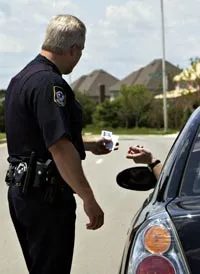
If requested, present your driver’s license and vehicle registration certificate. Pass them on without comment. Don’t ask why you’re being stopped. Don’t question the officer’s decision at this point. If you are pulled over by an unmarked vehicle, it’s a good idea to keep your window up until the person identifies themselves as a police officer.
Golden rule: Don’t say anything
This is where most drivers fail. Don’t plead guilty. Even if you know you were speeding, even if you know your insurance has lapsed, keep your mouth shut. Anything you say can be used against you in court.
The authorities have already decided whether to give a warning before turning on the sirens. There’s no point in arguing your case on the side of the road. If you decide to contest the traffic ticket, it will be done in court, not on the asphalt.
Never attempt to bribe an officer. This is not only unethical; it is a felony. Attempting to hand over cash as a “fine” during the stop can be interpreted as bribery. Fines are paid through official channels – post or online portals – and not directly to the official.
Search and Seizure: Probable cause exists
An officer cannot randomly search your car just because you have stopped. You need probable cause to believe you are hiding illegal items or that you are in danger. Before approaching, they often observe movement in the front seat – their eyes dart back and forth, their hands hide something under the pillow. When they see that, the dynamic changes immediately.
If you are asked to exit the vehicle, you must comply. Once outside, the officer can conduct a pat-down for weapons. If they find contraband or anything suspicious during this pat down, they likely have grounds to search the vehicle. Also, if your car is impounded, it can legally be searched in the impound lot.
Signing the ticket
When the officer gives you the citation, they may ask you to sign it. In most jurisdictions, signing does not constitute an admission of guilt. This is just a confirmation that you have received the ticket. It confirms that you agree to pay the fine or appear in court on the date announced. You don’t have to sign in every state, but refusing to do so can lead to additional problems.
So you have a ticket in your hand. What now? The next crucial step is to understand the specifics of the citation and the options available.