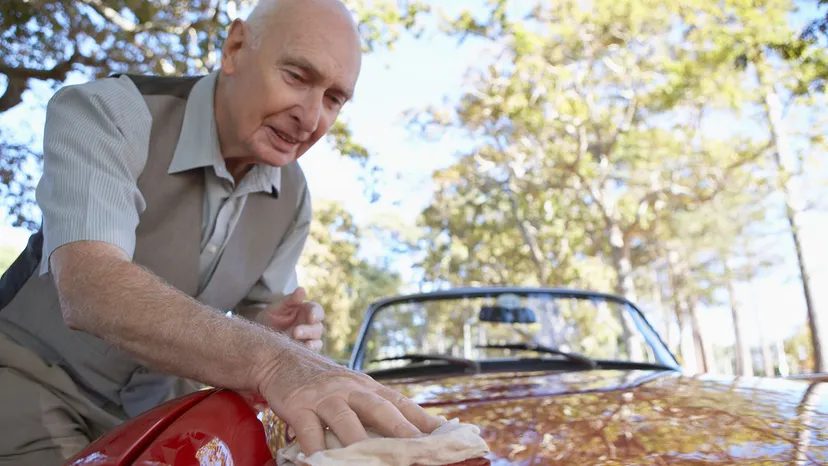
They stop in a shady spot under a big tree. You’re going away for an hour. When you return, the hood will be covered in a sticky, golden brown film. Most people assume it’s tree sap. It probably isn’t. It is almost certainly insect honeydew. This sticky residue is secreted by aphids that feed on the leaves and twigs above. Insects suck plant juices, transport sugar and waste products through their bodies and collect them on your paint.
The difference is important because this substance behaves differently than traditional pine sap. It is stubborn. It sticks to clear lacquer. And regular washing with soap and water does nothing to lift it. If you ignore it, the sugar will darken. They turn black. They stick to the paint. Then removing them becomes a nightmare.
You need solvents. You need something that breaks down the sugar matrix without eating your factory finish. Here’s how to handle it.
The Solvent Approach
Nail polish remover works thanks to acetone. Apply a small amount to a cotton pad. Wipe the area. Do not scrub aggressively. The sap should lift immediately. However, acetone is aggressive. If left too long, the clear coat can become dull. Once the residue is gone, neutralize the area. Make a paste of baking soda and water. Rub it gently. This helps to remove any remaining chemical residues before the normal car wash.
Mineral spirits is a safer option for larger areas. Moisten a soft microfiber cloth with the spirit. Rub it over the honeydew. The sap dissolves. In some contexts it may be called turpentine, but mineral spirits is more refined and less aggressive. Then wash the area thoroughly with water to remove any oily residue.
There is a long list of household and automotive products that act as solvents for this slime. Lighter fluid. Rubbing alcohol. WD-40. Even bacon grease works, although it’s messy and requires more cleanup. The mechanism is simple. You apply the substance. You let it sit. The solvent penetrates the sap structure. The bond breaks. Wipe it off. WD-40 is especially popular for this because it dissolves adhesives and dirt without immediately damaging the car’s paint.
If you don’t want to try it, there are commercial options. Visit an auto parts store. Look for a special insect and tar remover. These products are specially designed for organic matter left behind by aphids and trees. They are optimized to remove debris while protecting the clear coat.
Aftercare and prevention
Removing the goo is only half the battle. The solvent makes the paint look dull. The clear coat loses its shine where chemicals have touched it. You need to restore the shine. Apply car wax to the damaged area. Buff it in. The wax fills in micro-scratches and brings back the depth of the paint.
You may be wondering if alcohol damages your car’s paint. It can. If you leave it on too long, it will etches the clear coat. That’s why you need to rinse it off immediately after the sap lifts. Does WD-40 remove pine sap? Yes. It also works with honeydew. It dissolves sugar.
The key is speed. Do not let the honeydew harden in the sun. Don’t wait until it turns black. Clean it while it’s still fresh and sticky. When it hardens, you need harsher chemicals. You can damage the paint surface more.
There is no perfect protection against nature. Aphids will find your car. Trees will drip. The trick is to know what you’re dealing with. It’s not just dirt. It’s sugar. It requires a solvent. Handle it carefully. Wipe it off. Wax it back up. Drive on.