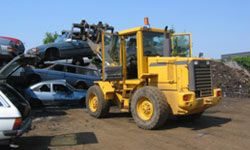
Walking through a salvage yard isn’t for everyone. It’s dusty, loud, and smells like rust and old oil. But for those of us who know that the best projects often come wrapped in grime, these places are treasure chests. You can spend a few bucks on admission and walk away with a quarter-panel for a dented VW Beetle or a running engine from a modern sedan that died in a fender bender. The variety is staggering. You’ll find everything from high-mileage cruisers to vehicles that once held the fate of a nation in their chassis.
Bringing a friend who knows a coil spring from a control arm helps. Especially if you’re hunting for parts for the project gathering dust in your driveway. Some cars found in these yards aren’t just repairs. Some are worth millions. Others are historical artifacts waiting to be unearthed. Here is what actually makes it to the scrap heap, what gets saved, and why some of the most interesting cars you’ll ever see are parked in dirt lots across the country.
Retired Police Interceptors Are Better Than You Think
Seeing a police cruiser flash its lights in your rearview mirror is stressful. Seeing one in a salvage yard is a mechanic’s dream. Many retired police vehicles end up at public auctions, but a significant number are sold off to junkyards instead. The surprise? They’re often in good shape.
These cars endure hard life. High-speed pursuits. Rough idling. Heavy braking. Yet, many retain less than 100,000 miles. They are stripped of their lights and sirens, but the underlying mechanicals are usually solid. The Ford Crown Victoria Police Interceptor, or “Crown Vic,” is the king of this category. These rear-wheel-drive sedans were built like tanks. They are cheap to fix and easy to work on. For a fraction of the cost of a used sports car, you can grab a Crown Vic with a robust V8 and plenty of life left.
Newer models are trickier. The Ford Taurus Police Interceptor replaced the Crown Vic in 2011. It’s a front-wheel-drive unibody. Not as rugged, but efficient. As these older Crown Vics vanish, salvaged examples will become rarer. If you see one with low miles and no accident damage, that is a steal. Vintage police cars are harder to find. Most were scrapped when they were too old to serve. But the Crown Vic era is closing. The next generation of salvage hunters will be hunting for these transitional models.
When Public Transit Becomes Scrap
Subway cars and trolleys don’t just disappear. They weigh around 18 tons each. Moving them is expensive. Stripping them for metal is a logistical nightmare. You have to cut them down, remove the hazardous materials, and haul them away. So, they sit.
In New York City, the Metropolitan Transit Authority (MTA) had a unique solution. Instead of paying to scrap them, they dumped retired subway cars into the Atlantic Ocean off the New Jersey coast. It created an artificial reef. Marine life took to the metal structures. It worked for a while. But by 2009, the cars were falling apart. The experiment ended. The remaining cars went to salvage yards.
Reuse is common, too. Bars and diners built from old trolleys are a retro staple. But what happens when a city needs transit fast and has no money? Look at the former Yugoslavia. During the siege of Sarajevo in the 1990s, public transportation was destroyed. Bombed. Bullet-ridden. Rebuilding the system from scratch would have taken years. The world stepped in. Donated trams and buses arrived from across the globe. In Mostar, you could ride a bus provided by Japan. These international hand-me-downs didn’t just keep the city moving. They added a layer of colorful, flag-emblazoned history to a place rebuilding from the ashes.
The 1926 Vauxhall 30-98: A Hidden British Racer
Some finds don’t walk out of a yard. They crawl out from under tarps. In 2010, a British race car was discovered in the yard of a private home in the United States. It had been sitting there for 47 years. Covered. Forgotten.
This wasn’t just any old beater. It was a 1926 Vauxhall 30-98. A pre-World War II British track winner. A British soldier had brought it to the States during the war. It changed hands in the 1960s. When the owner died, the car looked like junk. Rough. Worn. Ready for the crusher.
But someone looked closer. They recognized the chassis. The history was lost. It wasn’t registered as a historic auto when it arrived in 1948. So the racing legacy vanished. Until it was uncovered. This car was a significant find. It had won races in Britain. It had survived a war. It had been hidden in plain sight. It escaped the scrap heap because someone knew what they were looking at. Most cars in yards are just metal. This one was history.
The Mystery of Stolen Vehicles
Then there are the stolen cars. They end up in yards for many reasons. Recovered vehicles. Impound lots that can’t hold them. Cases where the owner gives up. These cars come with baggage. Title issues. Damage. But they also come with potential. If the theft was recent, the car might be intact. If it was recovered after a chase, it might be totaled. Either way, they populate the lots. They are part of the ecosystem. You might find a clean vehicle that was stolen and returned. Or a wreck that was abandoned. The stories behind these cars are often stranger than the machines themselves.

Stolen car junkyards are a reality. Search online and you will see dozens of reports on busted theft rings and recovered vehicles from across the globe. Some finds are pristine, simply towed from parking spots by crooks looking to flip them for scrap cash. In cities like Philadelphia, Cleveland, and Albuquerque, tow truck drivers “shop” for these targets. They tow them away on command and sell them directly to salvage yards. How many of these vehicles actually get crushed versus resold for parts depends entirely on the integrity of the yard owners. Sellers usually need proof of ownership. A VIN check can reveal a car’s history if the buyer cares to look.
In 2010, junkyard theft took a darker turn. A bomb plot in New York’s Times Square was foiled. The vehicle used in the attempt bore a license plate stolen from a truck in a Connecticut junkyard. That single plate helped detectives narrow the timeline. Abandoning getaway cars in junkyards is a common tactic to hide evidence. The New York plotters, however, stole plates to falsify the vehicle’s identity. They wanted it to look legit if run through a police database.
The Fate of Over-Sized Fleet Vehicles
Buses from the New York City Metropolitan Transit Authority (MTA) typically have a 12 to 15 year lifespan. Then they end up as scrap. Before hydraulic cutters slice them into small metal pieces, yards may hold yards of waiting buses. School buses face a similar fate nationwide. Some are sold for personal use. Others become motor homes or even permanent housing. Municipalities often keep their own yards for out-of-commission city vehicles. You won’t find many buses in public junkyards unless you are in a rural area. Some salvage dealers post available buses online if you are looking.
Fire trucks also head to the scrap yard. Many are auctioned to collectors. Some stay on firehouse grounds after retirement. Others end up in salvage yards, sold for parts or crushed whole.
Saved by the Dwell
You do not need to dream about missing the bus on test day if you already live on one. With a few thousand dollars, a school bus motor home dream becomes reality. Buyers are transforming out-of-service school buses into drivable homes. This saves the buses from the crusher. It also offers an affordable alternative to traditional RVs. Check out the Tiny House Blog for examples.
The “Purple Gang” Car
The name “Purple Gang” sounds sweet. It refers to a Detroit gang from the 1920s and 30s. They were known for robbing, shooting, and boozing. They even attempted to murder a U.S. Senator. At 3 a.m. on a summer morning in 1936, police raided a junkyard in Albion, Michigan. This location was a frequent stop for gang runs between Detroit and Chicago. Officers captured more than half a dozen Purple Gang affiliates. They also confiscated a “gangsta” car. It was riddled with bullet holes from previous chases.
This junkyard find was a tricked-out mobster mobile. It featured three-quarter-inch bullet-proof glass. Two-sided license plates allowed for quick identity changes. Metal armor flaps deflected bullets. They also kept rear tires from puncturing under gunfire. The car held eight guns. This included revolvers, sawed-off shotguns, pistols, and rifles. There were sledge hammers, claw tools, six flashlights, a wrecking bar, a monkey wrench, and other burglary tools. Explosive dynamite and blasting caps filled the trunk. An empty bank bag and lots of rubber wire completed the load.
That is a fully loaded automobile.
Military Surplus in Salvage Yards
Military goods and vehicles often end up in the same places as civilian scrap. These yards can be goldmines for collectors and hobbyists. The sheer volume of equipment is staggering.
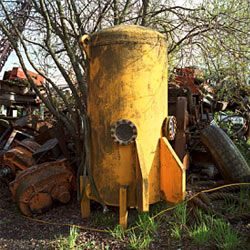
The image of a decommissioned tank sitting in a suburban American driveway is rare. Yet, the global trade in military surplus is robust. Collectors buy, display, and operate government-issued hardware. These private collections eventually circulate. They change hands. Sometimes they end up in salvage yards.
Today, the internet has transformed the junkyard. Online platforms sell everything from 15,000-pound British tanks to Czech and Russian reconnaissance trucks. Delivery is possible. Government auctions represent another primary channel. Lots fill with rows of vehicles. Items sell. They ship.
Sometimes stock arrives by accident. Forces succumb to attack. Scarred vehicles are abandoned on site. They become available later. This is the reality of military salvage. It is not just about rusted sedans.
1937 Bugatti 57S
Someone has probably told you to “do something” with the wreck in your garage. This find might finally motivate you. A barn is not a junkyard. But it is often where classics go to die a slow, neglected death. Much like in a salvage yard.
One junked beauty escaped that fate. It sold for $4.4 million at auction. Only 17 of these 1937 Bugatti 57S models were built. One sat undriven in an English doctor’s garage for 50 years. The owner died in 2007. The car went up for auction.
Resurrecting it required a different investment. Restoration costs were estimated in the hundreds of thousands. That is on top of the seven-figure purchase price.
Space Junk at Norton Sales
Looking to lift your ride? Or lift off into space? There is a salvage yard in North Hollywood, California, that handles both. Used NASA rockets land at Norton Sales Inc. Aisles are lined with space gadgetry. You will also find “old school hydraulics.” And other car parts.
Some enthusiasts adapt space-flight hydraulics for custom cars. Others buy props and air cannons for movies. Stunt teams rely on this inventory.
Novices and rocket engineers alike can buy pieces of space history. Buying used saves hundreds of thousands of dollars for private commercial ventures. You might even send people to space. As of this writing, Norton had NASA X-15 components for sale. Liquid propellant engines. Liquid rocket engines. Assorted thrusters. Transducers. Turbine assemblies.
The Los Angeles Times called Norton Sales “one giant heap for mankind.” It fits the description.
Classic Cars and Trucks
“Space junk” refers to man-made technologies blasted into outer limits that do not return to Earth.
There are about 20,000 pieces of this junk orbiting Earth. Cast-off spacecraft parts. Communications satellites. The clutter makes future space exploration more dangerous. Collisions between cast-off parts are becoming common.
NASA is studying how to blast away space junk with lasers. Picture a real-life game of Space Invaders. But there is no intergalactic salvage market. Yet.
The market for classic cars and trucks remains grounded. Enthusiasts know the difference between a barn find and a true salvage. One offers potential. The other offers a puzzle. Both require patience. And cash.
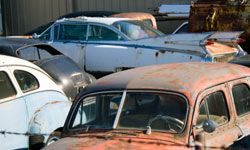
Most of us have that story. The one where you stumble on something priceless in a pile of neglected trash or spend months hunting down a component that suddenly appears just when you need it. There is a specific kind of magic in the junkyard. It is a place where tall tales and true stories blur together, where forgotten metal gets a second chance at being a drivable classic or a show-ready build.
Where the Legends Live
Salvage yards are notorious for these finds. They are the hunting grounds for the “holy grails” of hot rodding. You might be looking for a replacement part for a newer model, or perhaps you are chasing the dream of finding a 1965 Plymouth Barracuda or a 1968 Ford Fairlane hiding under layers of rust and neglect. These aren’t just cars; they are potential legends waiting to be refined.
If you want to see what real people are finding right now, look at the forums. This is where the community shares intel on local yards and online listings. You read about the guy who found a pristine engine block in a field or the woman who tracked down a rare transmission in a different state. These forums are live databases of inspiration, updated by gearheads who know exactly where to look.
Sourcing Without the Sweat
Not everyone has the time, or the desire, to get knee-deep in elbow grease and yard dogs. The modern approach is digital. You can import a needed hotrod part directly from Japan without ever leaving your driveway. You can haul a low-rust Volkswagen Beetle from the West Coast to the East with the click of a mouse. It cuts out the physical battle, the dirt, and the drama.
The Modern Hunt
The tools have changed, but the thrill hasn’t. Whether you are crawling through a physical yard or scrolling through a digital inventory, you are participating in a long tradition. The junkyard is no longer just a graveyard for cars; it is a library of possibilities.
You don’t always have to get dirty to find the treasure. Sometimes the best parts are the ones you never have to touch.
The question isn’t really about how hard you have to work anymore. It is about what you are willing to overlook. Rust? Dents? Time? All of that is negotiable if the core is solid. The search continues, whether you are digging through dirt or just clicking “buy now.”