History remembers a few American automakers as genuine innovations. The Kaiser-Frazer Corporation is one of them. It was a bold, albeit brief, experiment in postwar automotive manufacturing that lasted only a few years. The brand honored Joseph Washington Frazer, a salesman with aristocratic Virginia roots who had worked alongside Walter P. Chrysler and revitalized Willys-Overland. When World War II ended, Frazer wanted to build cars again. He wasn’t the only one thinking that way.
Henry J. Kaiser was building Liberty ships for the war effort. He was a metals and construction tycoon with deep pockets and a massive industrial footprint. The two men met. They liked each other. They formed the Kaiser-Frazer Corporation in July 1945. Frazer took the presidency. Kaiser became chairman. It looked like a perfect marriage. Sales genius met manufacturing might. The plan was simple. Use Kaiser’s factories and Frazer’s sales network to dominate the civilian market.
The Design Compromise
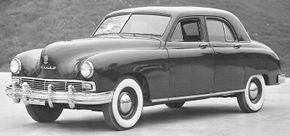
They considered a front-wheel-drive prototype. It was radical. It was rejected. Instead, they chose a conventional rear-wheel-drive sedan. The styling came from Howard A. “Dutch” Darrin, a famous custom-body designer. His touch was evident in the smooth, flush-fender look. It was stylish for 1946. The hood was blunt and high. Some critics hated it. Most buyers found it acceptable.
The project split into two brands. Kaiser was the mass-market option. Frazer was the luxury flagship. Kaiser bought the massive Willow Run bomber plant in Michigan to build the Kaisers. Frazer was supposed to be built by Graham-Paige in Detroit. Graham-Paige was failing. Kaiser bought them anyway in 1947. From then on, both cars rolled off the same lines.
Production started in June 1946 for the 1947 model year. The cars were heavy. They were expensive. They were different.
Specs That Didn’t Add Up
Under the hood sat a single engine. It was a 226.2-cubic-inch flathead six. The block was based on the Continental “Red Seal” design. Kaiser-Frazer improved it. They built most of them. Frazer marketed it as the “Supersonic Six.” The name was ironic. The engine produced 100 to 110 horsepower. The car weighed 3,300 pounds. It did not feel fast. It did not move like a jet.
The body, however, was brilliant. Darrin’s design offered exceptional interior space. The front seat was 64 inches wide. That is the widest front seat in the industry. The chassis was rugged. It used a box-section frame. The suspension featured modern front coils and rear leaf springs. It was comfortable. It was solid. It was just slow.
The Price Problem
Kaiser initially built two Kaisers for every one Frazer. The Kaiser sold for less. The Frazer started at $2,295. That price tag was close to Cadillac territory. The upscale Frazer Manhattan cost another $400. The interior was nice. It featured nylon and Bedford cord cloth. The colors matched the exterior paint. Two-tone schemes were standard. Full leather was available.
Here was the problem. The car cost like a luxury vehicle. It drove like a truck. There was no automatic transmission. The Hydra-Matic in Cadillacs was smooth. The Frazer offered a three-speed manual. You could add a Borg-Warner overdrive for $80. That was it. No power steering. No power brakes. Just a heavy steel body and a slow engine.
The Postwar Wonder Company
Despite the flaws, people bought them. Sales were strong at first. The press called Kaiser-Frazer the “postwar wonder company.” Critics were skeptical. They said Kaiser knew nothing about cars. He built ships and skyscrapers. They said Frazer only sold cars. He never engineered one. The management duo seemed mismatched.
But the cars appeared on roads. Postwar America faced shortages. Steel was scarce. Copper was hard to find. Kaiser-Frazer hired expediters. These workers scoured the country for materials. They found sheet steel. They found wire. They paid whatever it took. That cost drove up the final price.
Kaiser-Frazer became the highest-volume independent automaker in 1947 and 1948. They reached ninth place in total production. It was a respectable run. But the margin was thin. The cars were too expensive for the mass market. They were too slow for the enthusiasts. They were stuck in the middle. And the middle is a dangerous place to be when you are a new brand.
The wonder didn’t last. The overhead was too high. The engine was too weak. The transmission was too basic. Joseph Frazer left the company in 1950. He died shortly after. Henry Kaiser kept going. But the name Frazer was gone. The cars remained, though. They sat on those wide seats, waiting for a second chance that never came.
The Kaiser-Frazer Dilemma
The timing was impeccable for both the Kaiser and the Frazer. They were fresh starts. No prewar baggage. No lingering associations with the old guard. They arrived just as competitors were scrambling to return to pre-1941 production levels, leaving a vacuum these two could fill.
They looked the part. Clean lines. Modest horizontal grilles. The Frazer’s was slightly more ornate than Kaiser’s, but both stuck to Howard Darrin’s minimalist philosophy. Little decorative chrome. No sculptured sheetmetal trying too hard.
Inside, the 123.5-inch wheelbase did the heavy lifting. It provided a ride that felt substantial. The six-cylinder engine? Plodding. But it sipped fuel. In a different market, that might have been enough.
But this was the late 40s. Buyers weren’t looking for efficiency. They wanted performance. They wanted chrome. They wanted presence.
Frazer eventually caveled to consumer pressure. Optional hood ornaments appeared. Interiors got glittery. It was too little, too late. The lack of an eight-cylinder option was a fatal flaw. The prices were high. The power was low. Sales stalled.
Why the 1948-1951 Frazers Struggled in a Chrome-Hungry Market
The Performance Gap
The core issue wasn’t design. It was drivetrain. Competitors were pushing V8s. Ford’s Y-block and Chevrolet’s small-block V8 were changing the game. The Kaiser-Frazer stuck with a flathead inline-six. It was reliable. It was economical. It was irrelevant to buyers chasing horsepower.
Interior and Exterior Tweaks
Frazer tried to compensate. They added chrome. They added ornaments. They beefed up the interior trim. But these were bandages on a broken leg. You can’t sell performance with accessories.
Market Context
While competitors ramped up, Kaiser and Frazer were still finding their footing. They had the space. They had the style. But they lacked the muscle. The market moved fast. They couldn’t keep up.
Legacy of the Kaiser-Frazer
They were pioneers. They proved a new company could build a car. But they also proved that style alone doesn’t sell cars. Not in America. Not then.
The Kaiser-Frazer remains a fascinating footnote. A clean design. A solid chassis. A tragic lack of power.
More on Defunct American Cars
-
AMC
-
Duesenberg
-
Oldsmobile
-
Plymouth
-
Studebaker
-
Tucker
The Henry Kaiser Gamble That Failed
The Frazer formula never evolved. It stagnated.
In 1948, the changes were cosmetic. Minor. Yet the price tag climbed to between $2,483 and $2,746. This was a mistake. The postwar market was hot. Demand was high. But Frazer sales plummeted from 68,775 units to just 48,071. Volume dropped by nearly 30%. The warning signs were flashing red, but the company ignored them.
Then came the strategic disaster.
Joe Frazer saw the writing on the wall. The Big Three—Ford, Chevy, and Plymouth—were launching all-new platforms. Nash had fresh designs too. Frazer’s only option was a facelift. Joe recommended a production cut for 1949. He wanted to pause. He wanted to redesign for 1950.
Henry Kaiser said no.
“The Kaisers never retrench,” Henry declared. He wouldn’t shrink. He wouldn’t wait. He wanted volume. He wanted presence.
Joe Frazer resigned. He stepped down to a meaningless title as board vice-chairman. Henry appointed his own son, Edgar, as president. It was a power play. A family takeover.
Kaiser-Frazer (K-F) retooled for 200,000 cars. They built for a mass market that wasn’t there. They sold 58,000. The slide had begun.
The 1949 Makeover and the Convertible Flop
The 1949 Frazer tried to look new. It failed.
The grille became an eggcrate pattern. Rectangular parking lamps sat prominently on the fenders. Vertical taillamps with two lenses stared back at drivers. It was a shallow refresh.
Engineers John Widman and Ralph Isbrandt faced a harder task: a four-door convertible. The Manhattan convertible. It was a desperate fix.
They took a sedan. Sheared off the roof. Kept the B-pillars. Added small inset glass panes. They bought beefed-up X-member frames to handle the structural loss. It cost too much. Over $3,000.
Buyers weren’t interested. The four-door flop-top couldn’t move units.
The 1950 Hangover and Final Days
No 1949 Frazer sold well. Not really.
So K-F did something desperate. They took 5,000 leftover 1949 cars. Reserialized them. Called them 1950 models. The run ended in spring 1950. Total production for both years? Just under 25,000 units. Only 70 Manhattan convertives made it through the pipeline.
Estimates suggest only 15% of the total output sold as legitimate 1950 models. The rest were just old inventory with new numbers.
By 1951, things got weird.
Herb Weissinger of K-F Styling redid the front and rear. The cars looked startlingly different. The goal? Use up remaining 1949-50 body shells. Save money on stamping.
Leftover Kaiser Vagabond utility sedans—double hatchback, folding rear seat—became standard-trim 1951 Frazer Vagabonds. Kaiser Virginian four-door “hardtops” became 1951 Frazer Manhattans. Pillared sedans got the standard trim. They were trimmed like 1950 Manhattans.
Hydra-Matic transmission arrived as a $159 option. Dealers loved it. They ordered 55,000 cars.
K-F delivered 10,214.
The Frazer was dead.
The K-F design team didn’t stop drawing. They churned out renderings for future Frazers, basing the concepts on the sleek, low-slung 1951 Kaiser “Anatomic” by Darrin. It looked good on paper. The lines were clean. The stance was aggressive.
Then Joe Frazer walked out in early 1949.
The plans died with him. Stillborn. No prototypes. No production. Just sketches fading into company archives.
Two years later, Kaiser-Frazer was scrambling. They were busy launching the Henry J, a small car meant to compete with imports. They were also trying to move leftover 1951 Kaiser stock. The market was shifting. Budget buyers were looking elsewhere.
In hindsight, ignoring Joe Frazer was a mistake. The man knew what he was doing. He saw the writing on the wall. His departure left a void the remaining executives couldn’t fill.
Defunct American Cars
- AMC
- Duesenberg
- Oldsmobile
- Plymouth
- Studebaker
- Tucker