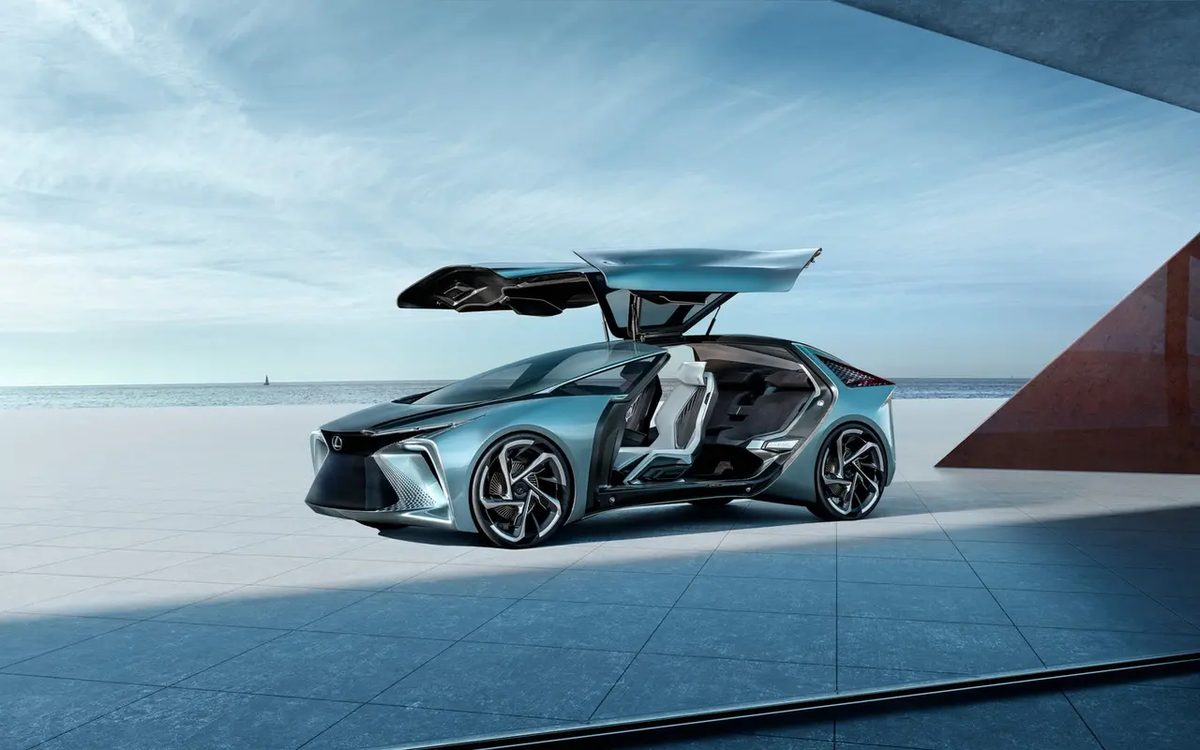
Lexus wasted no time. Like other major automakers, they use concept cars as billboards for their next big move. At the 46th Tokyo Motor Show, the brand presented the LF-30, an innovative vision of the electric Lexus of the future. It’s more than just a pretty face. This is a technical manifesto.
The design screams sci-fi. Imagine a spaceship meets a sports car. The front grille is huge, almost aggressive and swallows the bumper completely. The taillights stand out and add power to the silhouette. To get inside you have to open two giant butterfly doors. It’s not just about getting into the car. You enter the cockpit.
Design language for the electric age
The outer lines are dynamic, sharp and purposeful. This is where Lexus plans to take its styling DNA. But the real shock comes when you step inside.
The cabin is a technical playground. Giant screens dominate the dash. The ceiling is glass, but it also functions as a viewing surface for augmented reality. You control it with hand gestures. No fumbling for buttons. The car anticipates your needs.
Yes, it is designed for fully autonomous driving. The steering wheel can be stored inside the dashboard when not needed. The seats fold out into lounge-style benches. Transforms from a driving machine into a high-tech living room.
Under the skin: specs and the drone
But let’s look at the numbers. The LF-30 is the blueprint for all future Lexus electric vehicle powertrains.
Four electric motors are integrated directly into the wheels. Total output? 400 kilowatts or 536 horsepower. The torque is 700 Nm. That’s a considerable amount of muscle for a 2.2-tonne vehicle. Acceleration from 0-100 km/h takes only 3.8 seconds.
The battery is a 100 kWh unit. The range is estimated to be 500 kilometers on the WLTP cycle. Wireless charging is fast and supports up to 150 kW power. The artificial intelligence system manages your charging schedule and synchronizes it with your calendar, so your car is always ready.
Now here’s the weird part. Hidden in the rear is a drone. Yes, it’s a drone. does it work Carry luggage and shopping bags from the car to the front door.
Practical? Probably not. Will it be mass produced soon? Not likely. It’s too gimmicky. But it shows Lexus is thinking outside the box. All of the LF-30’s other technologies (skateboard chassis, autonomous driving, AR interfaces—) could find their way into mainstream models. A drone? This will probably stay in the concept lab.
Why is LF-30 important?
This isn’t just a showpiece. This is the road map. The LF-30 proves that Lexus is committed to electrification. It shows how they plan to blend luxury with autonomy. The design cues will filter down. This technology will likely find its way into even higher-end devices.
The question is whether consumers want a car with self-driving capabilities and the ability to play movies on the roof of the car. Or do you still prefer driving? Lexus seems to be betting on both.
Drones are an exception. It’s flashy. Not necessary. But it leaves an impression. Making a lasting impression in a sea of similar-looking electric cars is a matter of strategy.
You won’t see drones in the Lexus ES. But we might see a retractable steering wheel, an augmented reality roof or an aggressive front end. These elements define the next generation of Lexus vehicles.
The LF-30 is a promise. A bold, expensive, slightly absurd promise. But promises are how brands keep customers engaged. What will you take from it?