Nine million cars. That is the number of vehicles currently burning liquefied petroleum gas on roads across 38 countries.
It isn’t a radical new experiment. Propane-powered machines have been rolling around for decades. The World Liquefied Petroleum Gas Association (WLPGA) tracks the stats. They claim autogas slashes carbon monoxide emissions by 50 percent. Hydrocarbons drop by 40 percent. Nitrogen oxides (NOx) fall by 35 percent. Ozone forming potential? Down by half.
There is money in it too. Government incentives and tax breaks make the fuel significantly cheaper than gasoline. Even without the handouts, autogas is usually much cheaper to pump. It is a high-octane fuel. Performance sits comfortably alongside gasoline and diesel. Owners swear it runs smoother. Less vibration. Less wear and tear on engine components over time.
But how do you actually drive one?
The easiest path is buying a vehicle designed from the ground up to burn propane. Major manufacturers know this. Ford. General Motors. Daimler-Chrysler. They all offer propane-powered options.
Here is the catch. You will not see these cars parked on the showroom floor. They are special order items only.
Sometimes there is no production model available for the market you live in. In those cases, an LPG system can be factory-installed as an option. It is not a DIY retrofit. It is built-in.
Which specific models got the treatment?
- Ford Crown Victoria
- Dodge Ram
- Ford F-150 truck
- Chevrolet Cavalier
- Toyota Camry
These were the workhorses and commuters chosen for the dual-fuel setup. The infrastructure was there. The demand existed. The technology was mature.
Yet, they remain obscure to the average driver. Why?
Because you had to ask for them. And most people did not.
The Dual-Fuel Compromise
You rarely see a car built only for LP-gas. That happens more often in Europe. When it does, the engine is tuned specifically for propane. It runs at maximum efficiency. Wear drops. Mileage improves over the long haul.
But consumers worry about range. They fear finding a fill-up will be a nightmare. So manufacturers usually install dual fuel systems.
One tank for gasoline. One for propane. The car switches automatically. It depends on what’s available. You use clean, cheap propane when you can. But if you run low? You pull into any standard gas station. Quick fill. No stress.
Infrastructure Reality
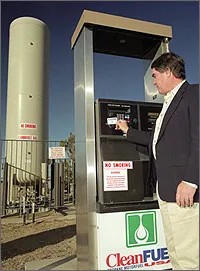
How hard is it to actually find a propane station? Not hard at all.
Unlike hydrogen, which has a spotty and fragile network, propane has a stable infrastructure. It’s already there. You don’t need to build a new grid.
Use the Alternative Fuels Data Center to find the nearest refueling points. It’s simple.
Take Buffalo, N.Y. as an example. There are five LP-gas refueling points within 25 miles of the author’s house. That’s dense enough for most daily drivers. You won’t be stranded. Not often.
The Mechanics of the Swap
Converting a gasoline car to run on autogas isn’t just about swapping out a tank. It’s a systemic overhaul. The process demands precision. You’re dealing with pressures and temperatures that differ wildly from standard petrol systems.
Core Components of a Bi-Fuel Conversion
The heart of any LPG conversion is the fuel delivery system. Unlike gas, liquid propane behaves differently under pressure. You need a dedicated fuel rail. This rail supplies the engine with LPG in its liquid state. The injectors then vaporize it just before combustion.
Key parts include:
– LPG Tank: Usually located in the spare wheel well or under the chassis.
– Reducer-Vaporizer: This is critical. It lowers the pressure from the tank and heats the fuel using engine coolant to vaporize it.
– Bi-Fuel Switch: Allows the driver to toggle between gasoline and LPG.
– Electronic Control Unit (ECU): Some systems are purely mechanical. Most modern setups use a dedicated ECU to adjust air-fuel ratios for the different combustion characteristics of propane.
Why Choose Autogas?
The primary driver is cost. In many regions, autogas is significantly cheaper per liter than unleaded petrol. The environmental benefits are secondary but real. LPG burns cleaner. It produces fewer particulates and less carbon monoxide. For fleet operators, the savings add up fast. For the weekend enthusiast, it’s about stretching the budget.
Installation Realities
You’re not just bolting on a tank. The installation requires space. A standard sedan might lose its trunk space entirely. An SUV might sacrifice under-floor storage. The reducer needs a connection to the cooling system. This adds complexity. It also adds potential points of failure if not maintained.
“LPG systems require regular maintenance of the reducer and filters. Neglect leads to poor vaporization and engine roughness.”
Performance Considerations
Does it hurt performance? Generally, no. Propane has a high octane rating. This allows for more aggressive timing in some cases. However, energy density is lower. You might see a slight drop in horsepower compared to petrol. The trade-off is the lower fuel cost. Range is also reduced. You’ll burn through your LPG tank faster than your petrol reserves.
Is It Worth It?
For high-mileage drivers, the math is simple. The ROI can be under two years. For low-mileage commuters, the upfront cost might never be recouped. The complexity of the system also adds to insurance premiums in some areas. It’s not a plug-and-play solution. It’s a commitment to a different way of driving.