There is nothing quite like the sight of a highway turning into a parking lot. Cars are bumper to bumper, inching forward with agonizing slowness. The psychological toll is immediate. You are late for a meeting, trapped in a metal box, seatbelt digging into your shoulder. Claustrophobia sets in. You can’t get out. You have to wait for the gridlock to ease.
But the stress isn’t just mental. Your engine is still running.
On a sweltering July afternoon, you can feel the radiant heat from exhaust pipes surrounding your vehicle. You are burning gas while going nowhere. Idling is one of the most inefficient ways to use fuel. You are literally throwing money out the window.
The cost extends beyond your wallet. The carbon emissions from internal combustion rise into the atmosphere. This smog contributes to the urban heat island effect, raising local temperatures in metropolitan areas. It’s a double penalty: financial and environmental.
Drivers are looking for answers. With oil prices volatile and environmental concerns mounting, the conventional combustion engine feels outdated. There is a solution to the stop-and-go nightmare. It’s called an idle-stop system.
The Mechanics of Stop-Start Efficiency
An idle-stop system, often referred to as a start-stop system, automatically shuts off the engine when the vehicle comes to a halt. It restarts the moment you release the brake or engage the clutch. This technology is the backbone of what the industry now calls mild hybrids.
Unlike full hybrids that use an electric motor to drive the wheels, mild hybrids rely on the engine for propulsion. The electric motor assists only during acceleration or by powering auxiliary systems. The idle-stop feature is the most common application of this mild hybrid architecture.
The goal is simple: eliminate unnecessary fuel consumption during stationary periods. When you wait at a red light, the engine sleeps. No fuel is burned. No emissions are released. When you’re ready to move, the starter motor engages instantly. The transition is quick. Modern systems have reduced the lag to near imperceptible levels.
Why Traditional Idling is Inefficient
Internal combustion engines are designed to operate at specific RPMs for optimal efficiency. Idling keeps the engine running at low RPMs without doing useful work. The fuel-air mixture burns, but the energy is lost to friction and heat.
Consider the numbers. A typical sedan might consume between 0.2 and 0.5 gallons of fuel per hour while idling. Over a week of commuting through heavy traffic, this adds up. You aren’t just paying for the fuel; you are paying for the wear and tear on components like the spark plugs and oil, which degrade faster under inefficient operating conditions.
The idle-stop system breaks this cycle. By cutting fuel delivery entirely while stationary, it preserves resources. It reduces the load on the battery and starter, though these components are reinforced to handle the increased duty cycle.
The Role of Mild Hybrids in Reducing Emissions
Mild hybrids integrate a belt-driven starter-generator (BSG) or an integrated starter-generator (ISG). These devices handle the engine restart process. They are more robust than conventional starters. They also provide torque assist during acceleration, smoothing out the power delivery.
This setup allows the engine to shut off more frequently and for longer durations. In dense urban traffic, the engine might be off for significant portions of the trip. The result is a measurable drop in CO2 emissions.
Regulatory bodies worldwide are tightening fuel economy standards. Automakers are adopting idle-stop technology as a cost-effective way to meet these requirements without redesigning entire powertrains. It’s a incremental change with a cumulative impact.
Real-World Impact on Fuel Economy
The fuel savings vary based on driving conditions. In stop-and-go traffic, the

How Mild Hybrids Actually Work
You hear a lot about full hybrids. The industry is pivoting hard toward electrification, and the marketing budgets reflect that. But mild hybrids are quietly climbing in relevance, too. Don’t let the name fool you. They aren’t hybrids in the technical sense. There is no electric motor pushing the wheels. You are still burning gasoline to create rotational motion. The battery exists, but its job is completely different from what you see in a Prius or a Toyota RAV4 Hybrid.
Its primary function is supporting the start-stop system. This technology kills the engine when the car is stationary or coasting to save fuel. A red light? Engine off. No gas burns. When the light turns green and you press the pedal, the engine restarts. It happens so fast you might not even notice. The suspension doesn’t drop. The steering doesn’t go heavy. It feels like the car never stopped running.
The system relies on three core components: the internal combustion engine, an electric starter-generator, and a high-capacity battery. Energy flows in both directions depending on the driving state. This is where regenerative braking comes into play. It’s not just for coasting. When you are moving and begin to brake, the wheels turn the electric generator. That rotational energy converts into electricity. The generator sends that charge to the battery. It stores it. Later, when you need to restart, the battery sends power through the starter. Simple. Efficient.
Which Cars Feature Idle-Stop Technology?
This isn’t exclusive to one manufacturer. Almost every major automaker has integrated some version of this technology across their lineup. You will find it in compact sedans, mid-size SUVs, and even some performance-oriented models. The implementation varies. Some systems are basic, shutting off the engine at a complete stop. Others are more sophisticated, capable of restarting before the car comes to a full halt if traffic is inching forward.
Look at the compact SUV segment. Brands like Honda, Toyota, and Ford have widely adopted these systems in models like the CR-V, RAV4, and Escape. You’ll also see them in mainstream sedans such as the Honda Accord, Toyota Camry, and Ford Fusion. The technology has trickled down to economy cars too. The Nissan Versa and Hyundai Elantra often feature these systems to meet stricter emissions standards without sacrificing too much power.
In the luxury segment, BMW, Mercedes-Benz, and Audi have used these systems for years. They are often paired with more complex mild-hybrid architectures that can briefly assist the engine during acceleration. This isn’t just about saving a gallon of gas here and there. It’s about meeting regulatory requirements. Cities are tightening emissions rules. Automakers need to lower fleet averages. Mild hybrids offer a relatively low-cost path to compliance.
“The battery in a mild hybrid is still very important, but its main purpose is as a part of the idle-stop system.”
Not all start-stop systems are created equal. Some feel jerky. The engine might sputter when it restarts. The air conditioning might pause, leaving you sweating in summer traffic. Others are refined. The restart is silent. The climate control stays on. The difference often lies in the quality of the starter-generator and the battery management system. Higher-end vehicles usually get the better implementation. You pay for that smoothness.
Consumer adoption
The Reality of Mild Hybrids and the Rise of Smart Idle-Stop
Let’s be honest right out of the gate. The fuel savings from a mild hybrid won’t make you rich. You aren’t going to see the kind of numbers you get with a full hybrid powertrain. But that doesn’t mean the technology is useless. Stop-start systems are a genuine step forward for conventional internal combustion engines. They target the two biggest enemies of fuel economy: idling and the stop-and-go nightmare of city driving.
This isn’t a new concept. The tech has been floating around for years, but adoption is finally picking up speed. We are seeing a shift from niche implementations to broader adoption across major manufacturers.
European and Japanese Adoption
Most of the early adopters come from Europe or Japan. It makes sense. Traffic density and fuel taxes in those markets have forced engineers to look at efficiency where other regions might not have bothered.
Consider the MINI Cooper. Built under the BMW Group umbrella, this small car has featured idle-stop technology since 2007. It’s a subtle feature, often overlooked by buyers focused on style or brand heritage, but it adds up over thousands of miles.
Audi followed suit later. By the second quarter of 2009, the German automaker rolled out idle-stop systems to the A3, A4, and A5 models. They signaled that even premium sedan buyers weren’t exempt from efficiency demands.
Mazda’s SISS: Combustion Over Cranking
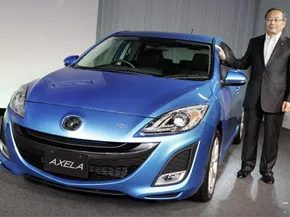
The most significant recent development comes from Mazda with the Mazda3. Starting late 2009, this vehicle introduced a smarter variation of the standard idle-stop system.
Here is the problem with conventional systems: they rely on a traditional electric starter motor. That motor draws heavy current from the battery. The restart can feel sluggish. There is a lag. It kills the seamless experience drivers expect.
Mazda solved this by using combustion to restart the engine. They call it the Smart Idle Stop System, or SISS.
The trick lies in direct injection and precise sensor data. When you come to a halt, the system’s sensors position the engine’s pistons in specific locations within each cylinder. This isn’t random. The computer identifies which cylinder is fully pressurized and ready to fire.
At restart, fuel is injected directly into that specific cylinder. The air-fuel mixture ignites. The engine kicks back to life instantly. No starter motor whine. No delay.
The Numbers Don’t Lie
The result of this mechanical shift is measurable. Mazda claims their engines restart in just 350 milliseconds. Compare that to conventional systems, which take roughly twice as long to get the crankshaft spinning again.
The efficiency gain is equally concrete. Mazda reports a 10 percent reduction in fuel usage in city conditions. That is significant for a car that isn’t plug-in. It’s the kind of improvement that matters when you are staring at a price-per-gallon sticker.
This slight improvement in restart mechanics changes the equation for city drivers. It turns a nuisance feature into a tangible benefit.
For those digging deeper into hybrid technology and fuel efficiency, the landscape is shifting fast. The gap between mild hybrids and full hybrids is narrowing in terms of driver experience, even if the mechanical complexity remains different.
Sources
- Abuelsamid, Sam. “Paris Preview: Mazda introducing new, smarter Smart Idle Stop System.” AutoBlogGreen.com. Sept. 10, 2008.
- HybridCars.com. “Stop-Start Engine Hybrids.”
- Korzeniewski, Jeremy. “Audi announces introduction of stop/start technology.” AutoBlogGreen.com. May 8, 2009.
- Pollard, Tim. “MINI stop-start.” CarMagazine.com. Sept. 3, 2007.
- Richard, Michael Graham. “Tired of getting zero miles per gallon? Stop/start technology is for you.” Treehugger.com. Feb. 8, 2008.
- U.S. Department of Energy. “Stop/Start: Overview.”