It happened to almost everyone.
The touchscreen creep.
For fifteen years, car companies have been busy replacing plastic buttons with giant slabs of glass, claiming it’s what you asked for. You probably didn’t ask for it, but here we are. Toyota just got cold feet. Specifically about the new Toyota RAV4 physical controls vs touchscreens.
They admit they might have pushed it. Hard.
And now? They are considering walking it back.
Did Toyota go too far with RAV4 buttons?
Let’s look at what’s actually in there.
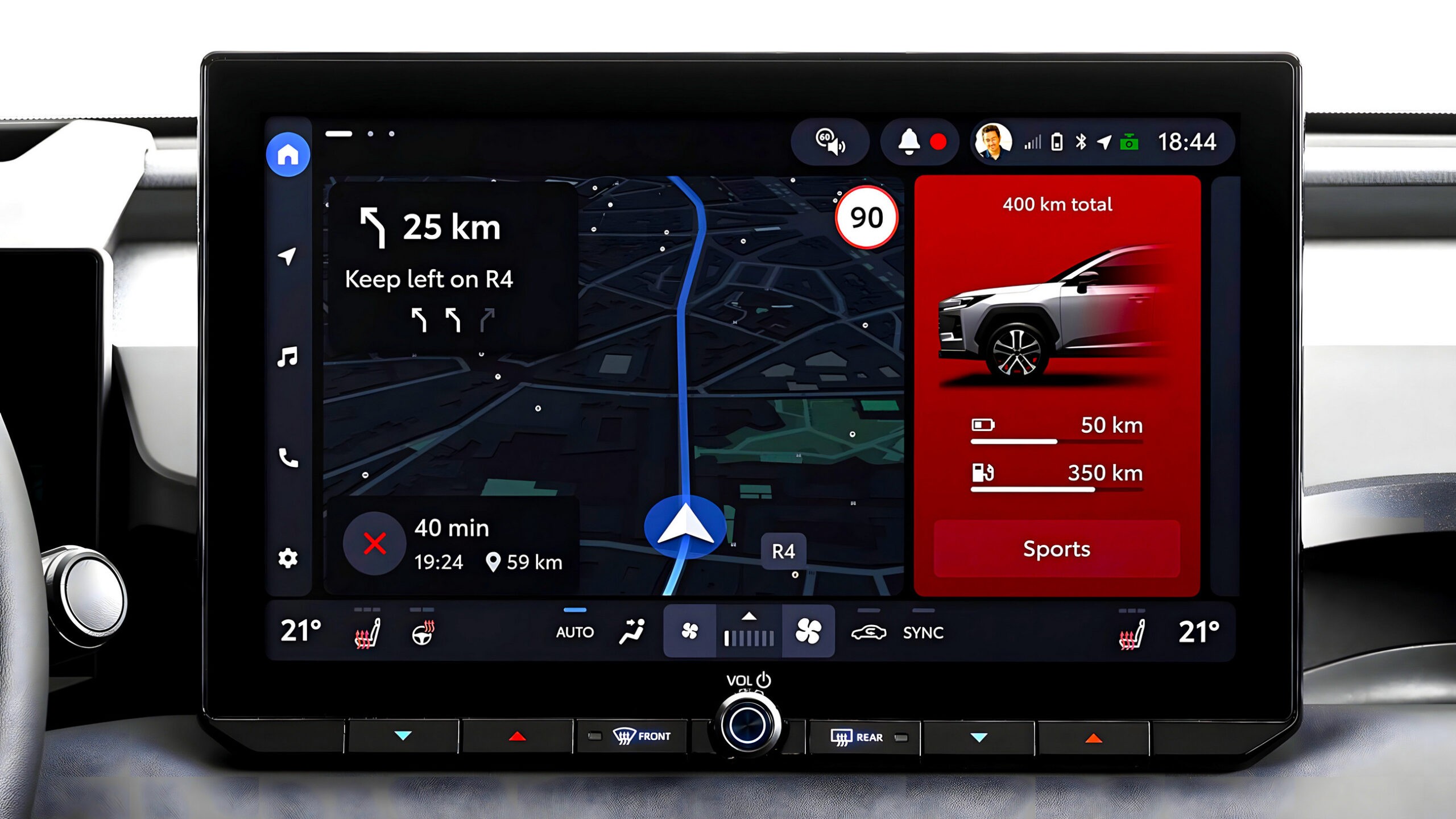
The new RAV4 isn’t a monolith of black glass. There is still a volume knob. Good.
You have buttons for air temperature. Drive mode shortcuts exist. Some frequently used things are safe.
But then there is the rest.
Fan speed? Inside the screen.
Air distribution? Tapping.
Seat heating settings? Dig through a menu.
Previously, those had dedicated switches. Now, your eyes leave the road. Your thumb hovers. You hunt.
Yoshinori Futonagane is the chief engineer. He told Drive magazine in Australia that the plan was actually worse.
Original strategy: More stuff on the screen.
Reality check: “I see there’s so much stuff on the screens… What’s the minimum we can get away without?”
Wait. Let me rephrase that. He wants to know the minimum number of physical switches they can use while still pushing as much as possible onto the screen. But the admission remains. They are testing the limits.
And the limits might have been crossed.
“If necessary, yes, we will.”
That was his answer when asked if Toyota would bring back more buttons.
Why Chinese buyers rejected touchscreen dashboards
Here is the part that surprises people who watch auto blogs for a living.
Conventional wisdom says Chinese drivers love tech. Love the big screens. The tech-heavy, feature-laden, smartphone-in-a-car vibe.
Wrong.
According to Futonagane, Chinese owners are screaming for knobs.
“They didn’t want it.”
That refers to the screen-focused functionality. They want switches. Tangible ones. You touch it. You feel the click. You know what it does.
This contradicts the narrative that emerging markets demand the most futuristic interfaces. It turns out, even in the world’s largest EV market, people get tired of menus while merging into traffic.
Will future cars get buttons again?
Toyota is tracking this feedback closely.
They are looking at real-world data. Not just showroom reactions.
The current RAV4 keeps drive modes on physical buttons. Futonagane says it’s because they want you to feel the different driving characteristics. Engage with the car. Enjoy the SUV experience.
Then, immediately after saying that, he admits he sometimes wonders if anyone actually uses those modes.
Probably not.
But at least they are right there. Under your thumb.
No hunting through layers of UI design philosophy. Just a button.
Is the touch era over?
No.
But it’s hitting a ceiling.
A ceiling made of user frustration and driver distraction.
Toyota knows this.
So do you.
We suspect most of those drive mode buttons sit unused, gathering digital dust.
Does that make them useless?
Or just… there?
In an emergency, or a sudden desire to play with your car, does a button save you five seconds of tapping?
Maybe.
Or maybe we are all just nostalgic for plastic we never realized we missed until it vanished.
Toyota is listening now.
Let’s see what they change.
If anything.