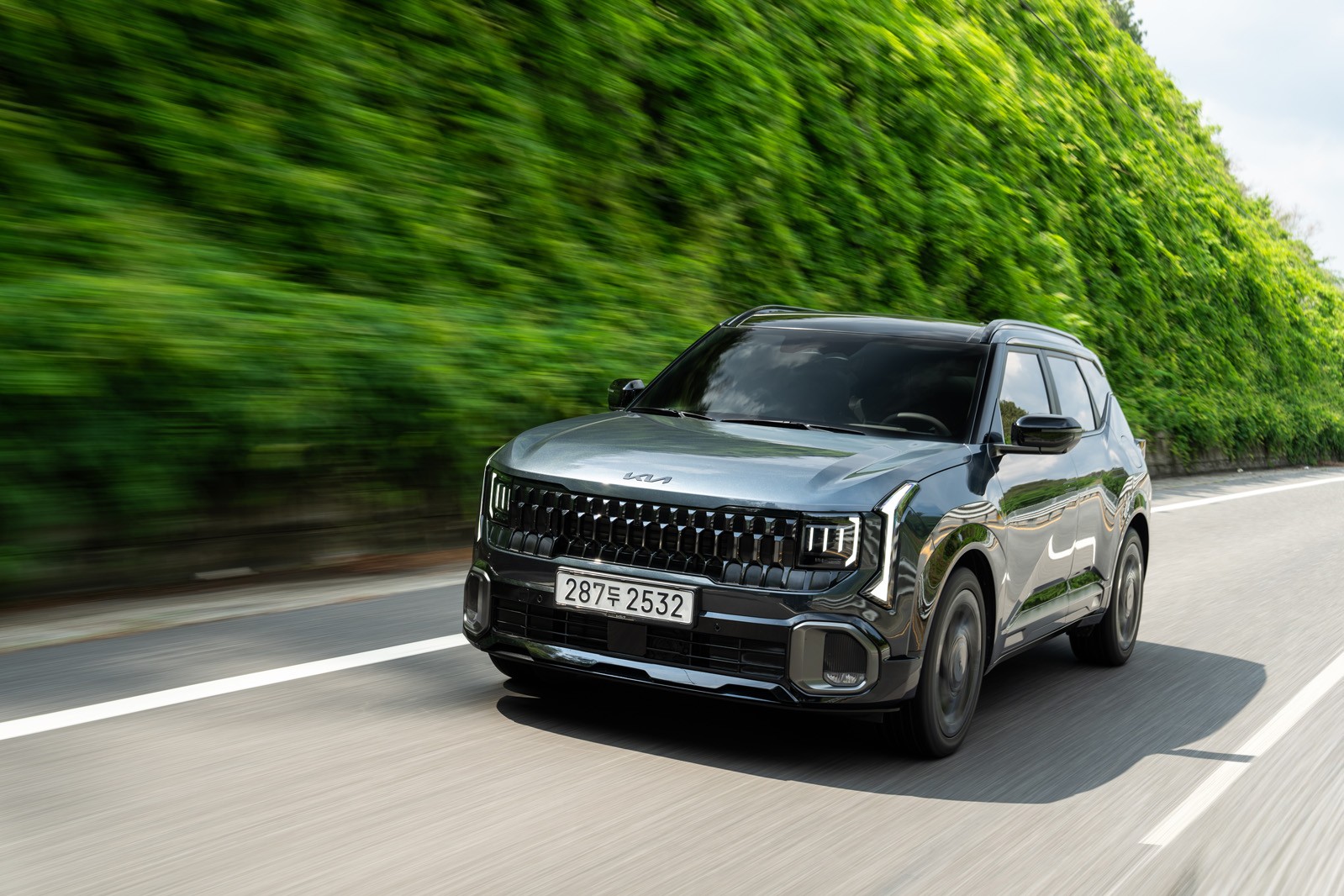
The new Kia Seltos isn’t hiding its DNA.
It shares a platform with the Niro, yet it won’t replace the hybrid version like the EV3 bypassed the Niro EV. It sits awkwardly between the Sportage and the smaller stuff, roughly 4.4 meters long with a 2.7-meter wheelbase. A hybrid SUV trying to find its specific shade of middle.
You can’t miss the family resemblance. Wide grille. Star Map headlights borrowed from the EV2. That floating roof and taillight treatment seen on the EV3 too. It screams Kia.
Then there are the wheels. Three new designs coming in 16, 18, or 19 inches depending on which trim you pick. You’ll also have an X-Line option for the first time since the 2019 Picanto, adding a bumpier look with lower front bumpers and plastic wheel arch cladding. Rugged vibes. Minimal effort.
Interior & Space
Inside, it’s familiar territory for any Kia driver who’s spent time in their recent EVs. Better looking than a conservative Qashqai, sure, but not fancy like a Sportage. The hard plastics don’t scratch easily or feel cheap. It feels built to last rather than designed to wow.
Two 12.3-inch screens dominate the dash. Sharp graphics, responsive touch. Easy enough. Between them sits a 5.3-inch screen for climate control. Problem? You can’t see it from behind the wheel. The rim blocks your view. Classic Kia design flaw.
Physical buttons exist though, which is a mercy. No fighting touchscreens when you’re freezing in winter unlike in the VW T-Roc.
Up front, space is fine for adults. The rear? A mixed bag. Legroom is generous enough for long limbs. Headroom is not. If you’re over 6ft, your hair will touch the rooflining. Even with reclined seats. The middle passenger gets the best head clearance, mostly thanks to the panoramic roof, but has to straddle a massive transmission tunnel that eats into foot space.
The boot wins out, however. 536 liters beats the Qashqai and the Karoq. Plenty for luggage. Rear seats split 60:40 for longer items. Useful.
Driving & Efficiency
Both UK models get the 1.6-liter turbo petrol engine paired with a mild-hybrid system and six-speed auto. The entry model pushes 150bhp through the front wheels, doing 0-62mph in 10.4 seconds. Same pace as an entry Qashqai. Feels slower. You have to work the car to get any burst of acceleration.
The e-AWD adds a rear motor, bumping total output to 175hp. Cuts sprints to 9.7 seconds and allegedly offers some off-road grit. We’ll hold judgment on the off-road part.
On road, it’s soft. Soft in a good way for comfort. It eats potholes without drama but doesn’t float or wallow over undulating roads like a bouncy old truck.
Winding roads aren’t its forte. Body roll appears quickly in fast corners. The steering lacks natural feedback, even in Sport mode. It feels detached. But does it matter? The car is safe. Composed. Most people won’t care that the steering is vague as long as they arrive safely.
Our 150-mile tester averaged about 50mpg mostly at 68mph on the motorway. Not official figures yet, but promising for a car of this weight and shape.
Verdict
Pricing is a guess game right now. Kia estimates a starting point of £32,00 climbing to £42,00.
That’s higher than you might think.
At £32k, it undercuts the Qashqai but barely scratches the surface against the Sportage hybrid. If the price stays there, the larger Sportage looks like a better deal. Nicer inside. Bigger boot. Actually good rear headroom.
The Seltos succeeds in global markets because it’s simple. Easy to drive. Comfortable enough for the daily commute. Efficient enough to ignore on longer trips. It avoids being flashy and leans into being utilitarian.
The front-wheel drive feels underpowered. You probably need the e-AWD. Whether it’s worth the premium remains unclear until official specs drop.
Until then, we watch. Wait for the prices. Maybe consider the Sportage again. 🤷