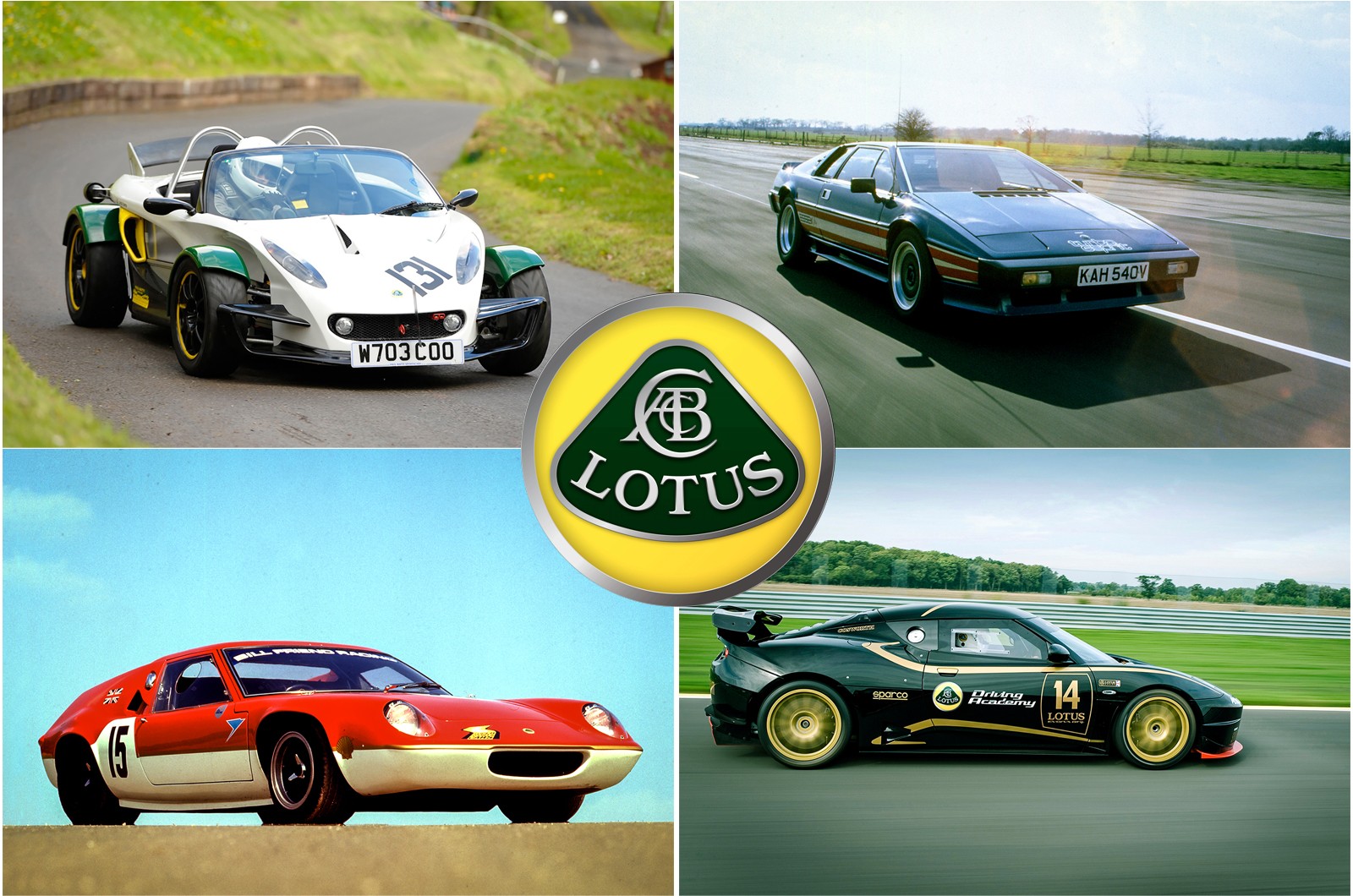
Colin Chapman founded Lotus in 1952. He didn’t just build cars, he built philosophy. Lightweight. Mid-engine. Go. The brand has churned out dozens of models since then, some iconic, some obscure. Most failed simply because nobody wanted to buy them. A few sold in numbers that actually mattered. Here is the breakdown of what stuck, and what barely scraped by.
The mid-tier survivors
10: Lotus Seven (1957–73)
2,477 sold
It started here. The Seven was raw. Just two seats and open air. Chapman loved it because it doubled as a racetrap. You drove to work Monday through Friday. You took the brakes off and went racing on Saturday. Braver souls built their own from kit cars to dodge tax. It wasn’t comfortable. It was brilliant.
9: Lotus Esprit (1970s–80s)
2,919 sold
James Bond saved this one. Or rather, he parked it outside a movie producer’s office and called it a day. The Spy Who Loved Me put the wedge-shaped thing on every screen in the world. Free advertising? Priceless. The handling was sharp, the Ital design was ahead of its time, and for once, the pop-culture hype actually matched the mechanical reality. Did anyone buy it for the torpedo tubes? Probably.
8: Lotus Exige 2S (2006–2011)
3,306 sold
Born on the track, built for the street. Toyota supercharger inside, razor-sharp edges outside. Track-day regulars worshipped it. It had more oomph than the regular Elise and cost less than a Porsche. Many owners ripped it apart anyway. Upgrades were the only way to cope with extended corner carving. It was a tool for drivers who hated comfort.
7: Lotus Elise 2nd Gen (2000–2006)
4,535 sold
General Motors showed up with cash. Good. The original Elise was great, but this update polished the edges. The interior felt less like a garage project, the K-series engine was tuned, and the styling got aggressive hints from the M250 concept. There was a sibling too, the Vauxhall VX220. Same DNA, different badge. GM money meant better paint, less rattle, more sales.
The profitable experiments
6: Lotus Elan S1/S2 (late 80s–mid 90s)
4,655 sold
The FWD mistake. Lotus tried front-wheel drive once. Never again. The M100 Elan used an Isuzu engine, which meant it didn’t fall apart immediately. Reliability! But it lacked soul. GM funded the venture, lost interest, and sold the tooling to Kia. Kia kept making it for another three years because the Japanese knew how to profit on thin margins.
5: Lotus Elan +2 (1960s–70s)
5,168 sold
Add four inches. Call it “plus two” seats. People believe the lie. The chassis stretched to fit a small rear bench. The twin-cam engine grew with the weight. Crucially, Lotus stopped selling this as a kit car. Factory assembly meant fewer loose bolts. Reliability improved, which is weird praise for Lotus, but it’s true. It sold well because it was the easiest way to put a family member in the passenger seat without eviscerating them.
4: Lotus Elise (Gen 1)
8,613 sold
The car that kept the lights on. Literally. Before the Elise, Lotus was dying. This plastic-bucket-with-wheels changed the script. Getting in required gymnastics, putting the roof up felt like an assault course. Nobody cared. The steering was telepathic. The weight was almost insulting to gravity. It proved you could buy a sports car for under twenty grand that drove better than a Ferrari.
3: Lotus Elise 111R
8,628 sold
Toyota power. This engine cleared the US emissions hurdles where the older K-series choked. 189bhp wasn’t massive, but the gearing was smarter. An extra ratio. It opened up the American market properly.
Wait, wasn’t the standard Elise a bigger seller? The list cuts off. The Elise platform clearly dominated, with the 111R edgeing out the earlier standard spec numbers thanks to that crucial engine swap. Lotus proved that simple is profitable, as long as it goes fast enough. Or did it just prove we are obsessed with driving lightweight toys until the paint chips?