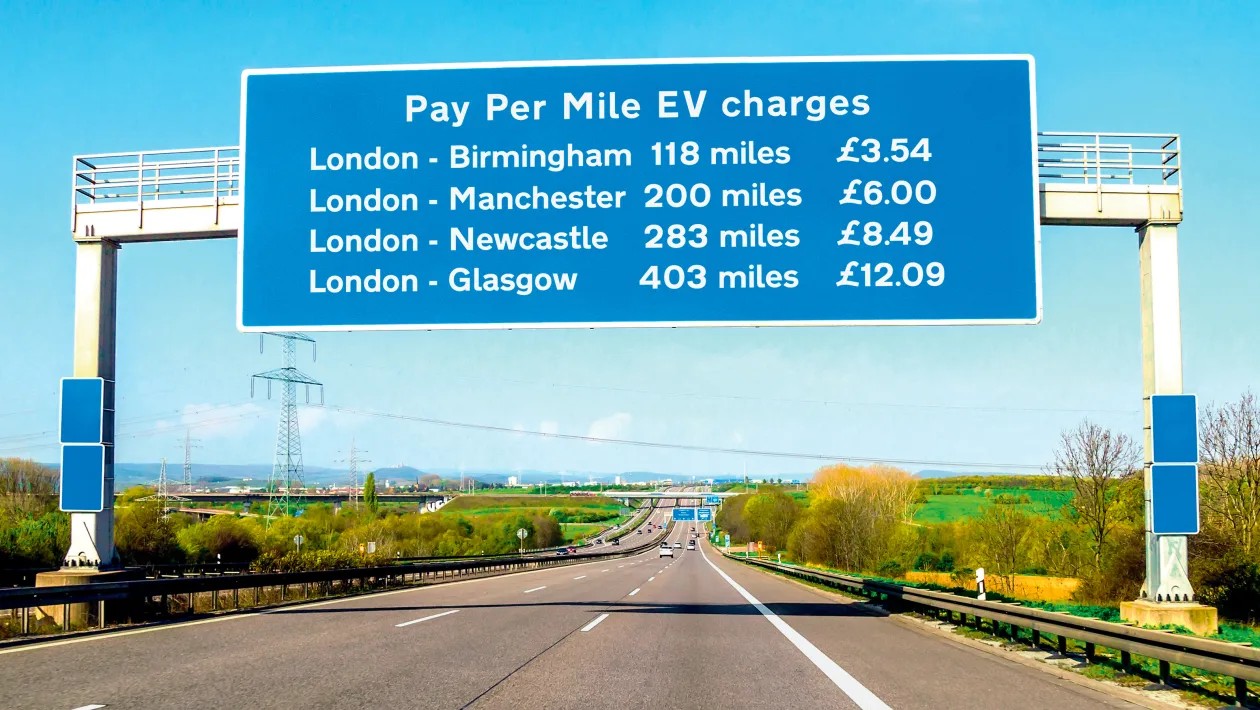
The UK government is moving forward with plans for a new “eVED” (Electric Vehicle Excise Duty) – a pay-per-mile road tax for electric vehicles (EVs) set to launch in April 2028. The policy aims to close the tax gap between EVs and traditional gasoline/diesel cars, but critics warn it could discourage EV adoption at a crucial time.
How the Pay-Per-Mile Tax Will Work
Under the proposed system, EV drivers will pay 3 pence per mile driven, on top of the existing annual Vehicle Excise Duty (currently £195). Plug-in hybrids will face a reduced rate of 1.5 pence per mile. Both rates will increase annually with inflation.
The government suggests several implementation methods:
- Pre-packaged VED: Dealers could include the estimated tax cost in the initial vehicle price.
- Annual Mileage Checks: Mileage will be verified during the annual MoT exam for older vehicles.
- Estimated Mileage Submission: Owners of newer cars may estimate their annual mileage and prepay, with adjustments made at year-end if the prediction is off.
Why This Matters
For years, EVs have been attractive to buyers because of lower running costs. This new tax changes that calculation. The government argues it’s necessary because EVs currently avoid road taxes paid by gasoline/diesel cars. However, the timing is controversial. The automotive industry is already struggling with EV transition challenges, and this could slow progress further.
Impact on EV Sales and Costs
The Office for Budget Responsibility (OBR) estimates the tax will raise roughly £1.4 billion annually by 2029-30, but at a cost: an estimated 440,000 fewer EV sales by 2031.
While the government has raised the threshold for the £425 “Expensive Vehicle Supplement” (now applying only to EVs over £50,000), industry figures are skeptical. Ford UK called it a “confusing message,” while Instavolt’s CEO warned it overshadows investments in charging infrastructure.
EVs vs. Gas: Will the Gap Narrow?
The tax will reduce the cost advantage of EVs, especially when charging at public stations. For example, an electric Volkswagen ID.3 costs roughly 2 pence per mile (plus the 3 pence tax) when charged at home during off-peak hours. A gasoline Golf costs around 12 pence per mile.
However, rapid public charging can push the ID.3’s per-mile cost to 9 pence, nearly matching gasoline. Using even more expensive rapid chargers could make EVs more costly per mile than gasoline cars.
The new pay-per-mile tax will erode the financial incentives for EV ownership, especially for those who rely on public charging infrastructure.
The change is likely to force buyers to reassess the total cost of EV ownership, including the new tax and charging costs. Ultimately, this policy could slow down the switch from combustion engines.