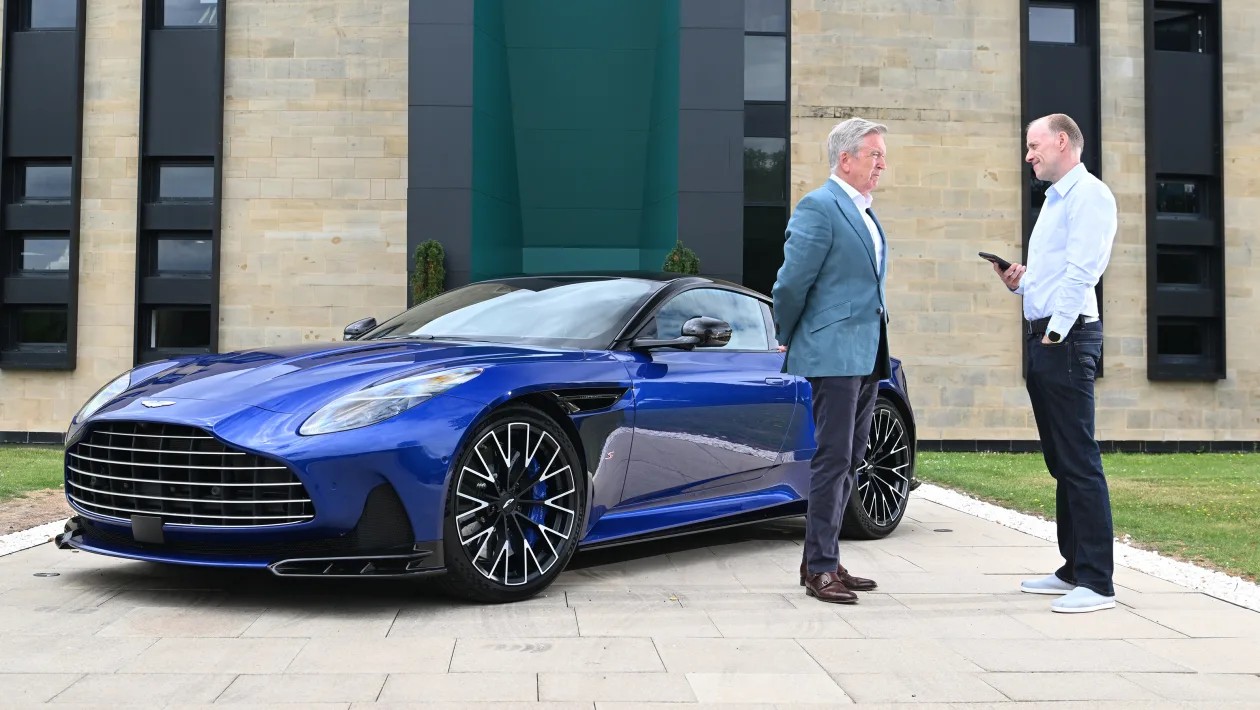
Aston Martin is cooking up a “revolutionary” new breed of cars. Sports cars, SUVs, the works. They’ll hit the road before this decade ends, running on mild-hybrid petrol setups. Pure electric? Not yet.
“We’re developing the new generation… with a new level of incredible powertrain and electronics.” — Adrian Hallmark
The plan is simple. Build a clean-sheet modular platform. Share parts. Make life easier.
The Engine Room Strategy
BEVs? Pushed to the 2030s until the luxury market actually wakes up. But combustion isn’t dead. Not quite.
Hallmark is pragmatic about the V12. They’ve tweaked it to meet regulations. There’s a loophole, remember? Keep sales under 1,0,000 a year and you dodge European bans until 2035. That’s how the Vanquish and hyper-luxury specials like the One-77 keep their crown.
No plug-in hybrids either. PHEVs? They add weight and cost without delivering the clean credentials regulators promised. Hallmark calls it a “complexity tax.” So instead, they’re going 48-v mild hybrid. It helps the air-con. Spins the turbos. Lets the car coast in silence occasionally.
“We’re not delusional. We’re pragmatic.”
Friends Like Mercedes
Bentley has Volkswagen’s pocket to lean on. Aston Martin sails solo. But they still buy help.
The 5.2L twin-turbo V12 is their own baby. But for everything else? They’re likely to keep buying. Electronics, too. They learned the hard way. Layering their own infotainment on top of Mercedes’ system created headaches.
The new rule: don’t touch the core code. Just fix the hardware. The interface needs to feel like Aston Martin. The look and switchgear must differ totally, even if the engine room looks familiar.
Currently, about a third of components come from Mercedes. That number will rise. But more than half will be in-house built. Independence has no penalty, Hallmark argues, provided the suppliers stay competitive.
Architecture as Revolution
The new architecture is mathematical. Precise. A benchmark of 52 systems against rivals.
“This will be a revolution in vehicle performance.”
Bodies remain aluminum. Bonded. Extruded. But newer methods promise more stiffness without adding much weight. Stiffer suspension points. Sharper rear-wheel steering for the GTs.
The lineup stays broad. Sports cars, DBX, the Valhalla supercar, plus limited editions. But under the skin, they’ll look increasingly similar. Same line. Same assembly hall. Maybe even the same factory in Wales handling everything from paint to final bolt.
Today, bodies travel back and forth between Gaydon and St Athan. It’s messy. It’s expensive.
Hallmark calls it “inefficiency” which is another word for opportunity. They are stripping the rot out of the supply chain to save “game-changing” amounts of money.
Is this enough to survive? Maybe.
Or maybe it’s just enough to buy them another ten years while they figure out what comes after petrol.