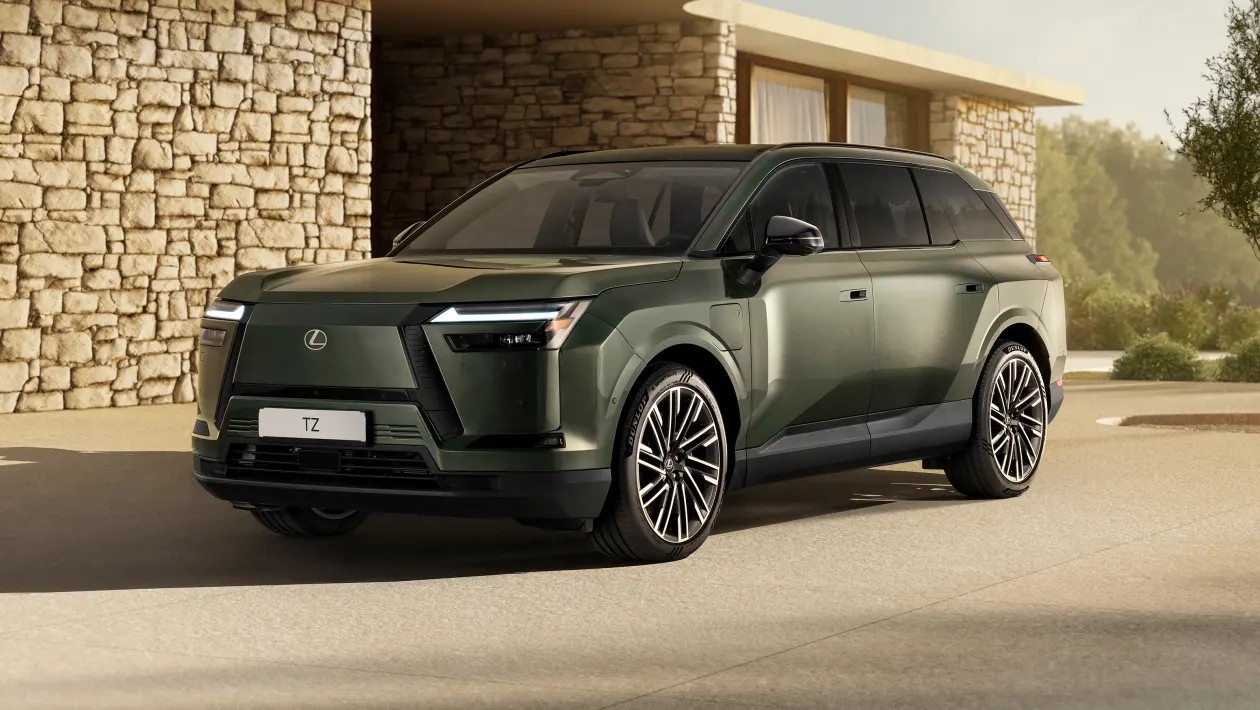
Lexus is preparing to launch its first dedicated three-row electric SUV in the UK, aiming to carve out a niche in the competitive luxury family car segment. The new model, named the Lexus TZ, is scheduled to arrive in early 2027 with a starting price of approximately £80,000. It will directly challenge established rivals such as the Volvo EX90 and high-specification versions of the Kia EV9.
While the vehicle promises distinct Japanese luxury and a spacious interior, its underlying technology is shared with mainstream Toyota and Subaru models. This raises questions about whether the premium price tag is justified by the driving dynamics and efficiency, which appear to lag behind some European competitors.
Design and Dimensions: A Bold Presence
The Lexus TZ is a substantial vehicle, measuring 5.1 metres in length, making it roughly 50mm longer than the Volvo EX90. Its exterior design is characterized by sharp, angular lines that mimic the rugged aesthetic of Lexus’s off-road lineup, such as the GX and LX models. Key design features include:
- Front Profile: A bluff nose and square bonnet with slim, modern lighting signatures.
- Rear Design: Blocky elements complemented by a thin rear light bar.
- Wheel Options: Customers can choose between 20-inch and 22-inch wheels. However, the larger 22-inch options are likely to negatively impact the vehicle’s electric range due to increased rolling resistance and aerodynamic drag.
Interior: Luxury Meets Practicality
Inside, the TZ adopts a 2-2-2 seating configuration, featuring captain’s chairs in the middle row. This layout has gained popularity in markets like the USA and China, as it provides a more car-like, luxurious experience for middle-row passengers compared to traditional bench seats.
The cabin design aligns with Lexus’s latest generation of interiors, seen in models like the ES saloon. Key features include:
- Digital Interfaces: A floating driver display paired with a 14.5-inch central touchscreen.
- Physical Controls: While many buttons have been removed, essential climate controls and a volume knob remain, addressing a common criticism of fully touch-based interfaces.
- Ambiance: High-quality materials and ambient lighting create a clean, modern environment that distances the interior from its mass-market Toyota cousins.
Powertrain and Performance: Shared DNA, Modest Specs
Despite the premium branding, the TZ shares its chassis and battery technology with the Toyota Highlander and Subaru Getaway. This platform sharing results in specifications that are competitive but not class-leading.
- Power: A dual-motor all-electric powertrain produces 402bhp. This is approximately 50bhp less than the comparable Volvo EX90.
- Battery: The vehicle uses a 95kWh battery, which is smaller than some competitors.
- Range: Lexus quotes a WLTP range of 330 miles. This falls short of the Volvo EX90 by about 50 miles and offers only a marginal improvement over the older dual-motor Kia EV9.
- Acceleration: The 0-62mph time is 5.4 seconds, which is adequate for a family SUV but not particularly sporty.
Charging and Technology: Average Speeds in a Fast-Charging Era
One area where the TZ may struggle to impress tech-savvy buyers is charging speed. A 10-80% charge takes 35 minutes. While this is reasonable, it lags behind German manufacturers that are pushing towards 400kW charging speeds, and Chinese brands that are adopting even faster next-generation technologies.
However, the TZ does offer some unique technological touches:
- Virtual Gearshift: Controlled via steering wheel paddles, allowing drivers to tailor the driving experience.
- Sound Design: Drivers can customize the vehicle’s acoustic profile, including a mode inspired by the iconic Lexus LFA supercar.
- Rear-Wheel Steering: This system enhances low-speed manoeuvrability, making the large SUV easier to handle in tight urban spaces.
Conclusion
The Lexus TZ represents a strategic entry into the luxury electric SUV market, prioritizing interior comfort and brand prestige over cutting-edge performance metrics. While its range and charging speeds are average compared to European rivals, its spacious 2-2-2 interior and distinctive design may appeal to families seeking a premium, practical electric vehicle. For buyers prioritizing luxury and space over maximum efficiency, the TZ offers a compelling, albeit technologically conservative, option.