In a sector where turbocharged four-cylinder engines are rapidly becoming the standard, Nissan has taken a bold contrarian stance. On May 6, 2026, the automaker officially declared the date as the first annual V6 Day, a celebration of its commitment to six-cylinder powertrains. This move signals that Nissan intends to keep the V6 engine central to its identity, even as competitors streamline their lineups.
A Strategic Pivot in a Shrinking Market
The automotive industry is largely moving away from larger engines in favor of efficiency and downsized turbocharged units. Brands like Chevrolet, Jeep, Buick, and Volkswagen have significantly reduced their V6 offerings in the US market. Even within Nissan’s own portfolio, the shift has been visible: the Altima and Murano now rely exclusively on four-cylinder engines, and the Maxima sedan was discontinued entirely.
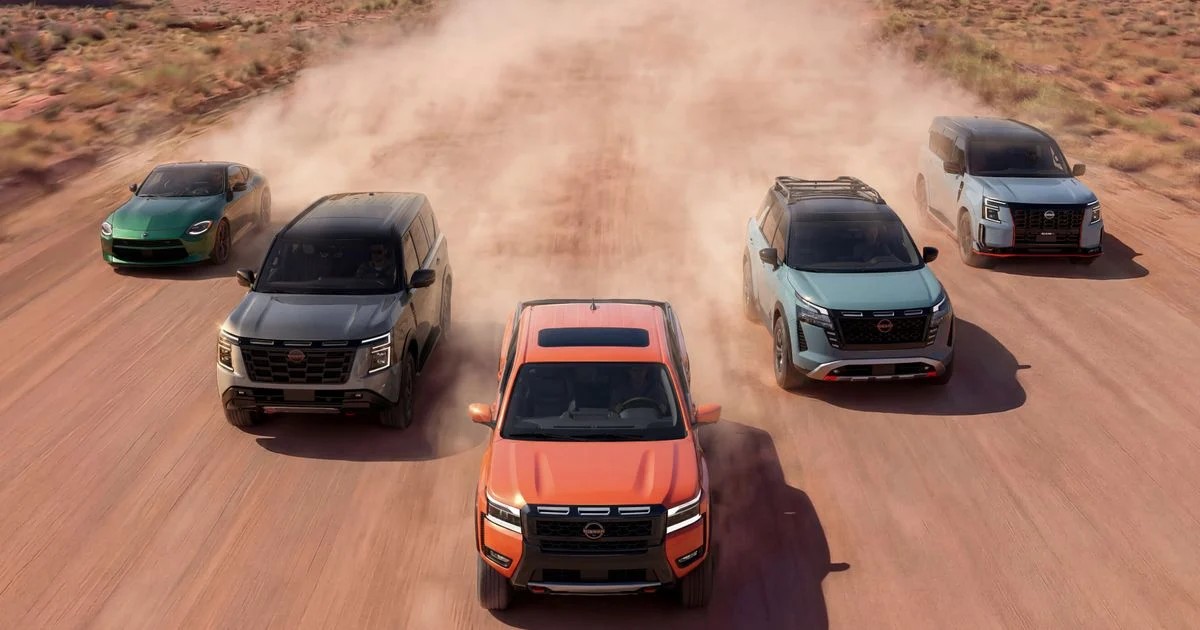
However, Nissan is doubling down on specific segments where the V6 remains king. In North America, the current V6 lineup includes:
- Pathfinder : The large family SUV.
- Frontier : The mid-size pickup truck.
- Z : The iconic sports car.
- Armada : The full-size off-road SUV (known as the Patrol in other markets).
This strategy suggests that Nissan views the V6 not as a relic, but as a critical differentiator for vehicles requiring substantial torque, towing capacity, or performance character.
Hybridization and Future Models
Nissan’s commitment extends beyond traditional petrol engines. The company is preparing to introduce a V6 hybrid system, which will debut in the revived Xterra. This hybrid powertrain is expected to underpin Nissan’s new ladder-frame platform, potentially serving as the foundation for the next-generation Pathfinder and other rugged models.
This move aligns Nissan with Honda, another Japanese manufacturer investing heavily in hybrid V6 technology for the US market. By combining the torque and smoothness of a six-cylinder engine with electric assistance, Nissan aims to meet modern efficiency standards without sacrificing the driving dynamics associated with larger engines.
Furthermore, reports indicate that the next-generation GT-R will not be all-electric. Given Nissan’s current trajectory, it is highly probable that the supercar will retain a V6 engine, possibly hybridized, preserving its heritage and performance pedigree.
The Global Context: Why V6s Persist
While the US market has seen a decline in V6 availability for passenger cars, the engine remains vital in other segments and regions.
- Australia : The Nissan Z stands out as one of the few sports cars under $100,000 with a six-cylinder engine (alongside the Toyota GR Supra). While the Pathfinder was recently discontinued in Australia, V6 options remain plentiful in premium segments through Audi, Genesis, and Lexus.
- Heavy-Duty Applications : In trucks and large SUVs, the V6 has replaced the V8 as the preferred choice. Toyota’s Tundra and LandCruiser 300 Series, as well as Ford’s F-150 in Australia, now rely on twin-turbo V6 engines. This shift proves that displacement is not dead; it has simply evolved to prioritize torque and efficiency over raw cylinder count.
A Legacy of Engineering Excellence
Nissan’s relationship with the V6 is deep-rooted. The company was the first Japanese automaker to mass-produce a V6, launching the VG-series engine in 1983. This was followed by the legendary VQ-series, which dominated the WardsAuto 10 Best Engines list for an unprecedented 14 consecutive years (1995–2008).
Christian Meunier, Chairman of Nissan Americas, emphasized the enduring value of this configuration:
“For decades, the V6 has been the beating heart of some of Nissan’s most iconic vehicles – delivering the durability, strength, and power our customers rely on. From the speed and acceleration of our sports cars to the confident torque that defines our trucks and SUVs, the V6 offers a rare balance of performance and dependability.”
Conclusion
Nissan’s declaration of V6 Day is more than a marketing gimmick; it is a strategic affirmation of its engineering philosophy. By integrating hybrid technology and retaining V6 powertrains in key performance and utility vehicles, Nissan is proving that six-cylinder engines still have a vital role to play in a modern, efficiency-conscious automotive landscape.