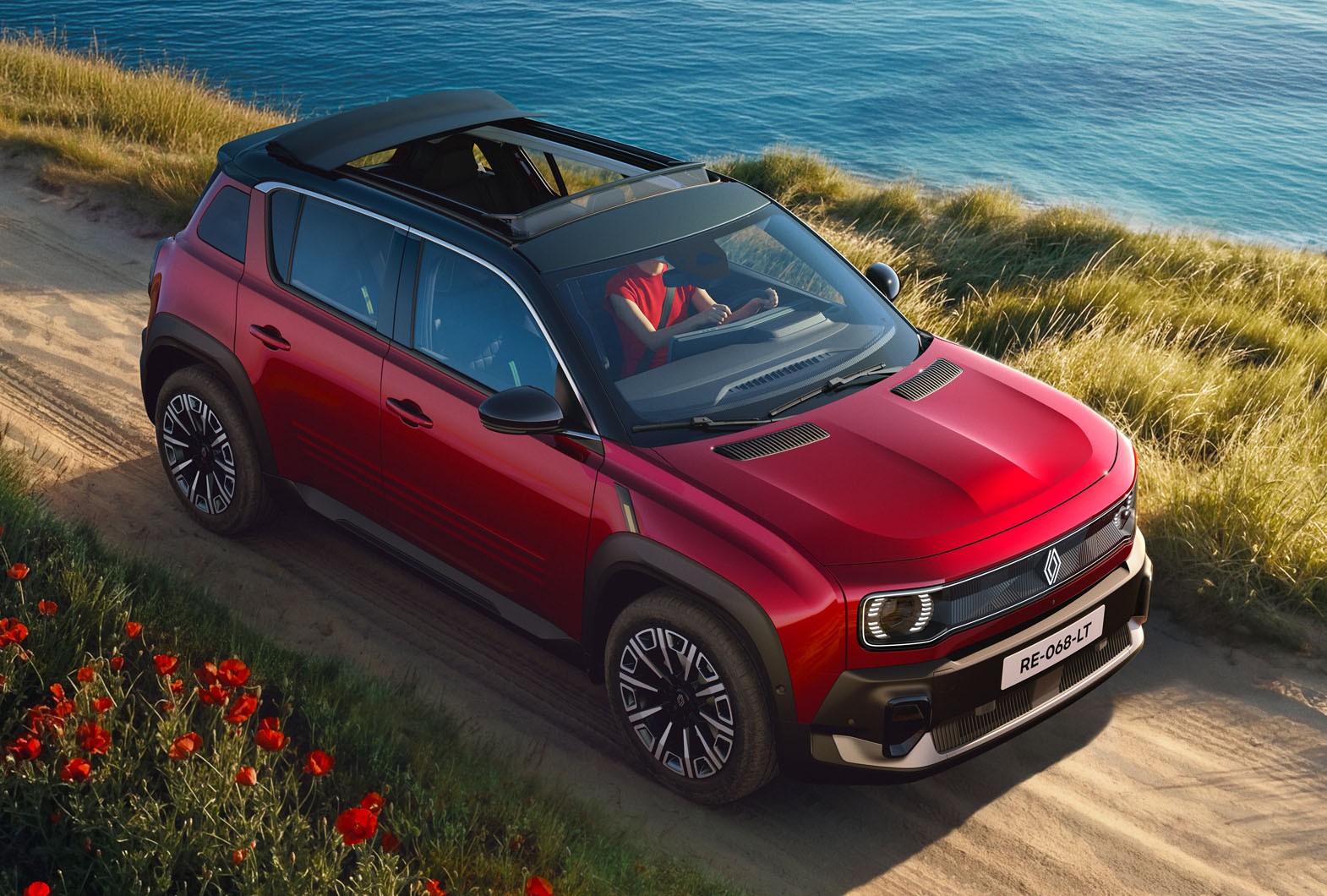
The Renault 4 has long been celebrated for its nostalgic design and practical electric mobility, but the French automaker has now introduced a variant that directly appeals to automotive heritage enthusiasts: the Plein Sud. This new model features a folding cloth roof, a direct homage to the convertible option available on the original 1960s Renault 4.
Launched nearly a year after the standard fixed-roof crossover debuted, the Plein Sud represents a strategic move to broaden the appeal of the EV segment by blending retro charm with modern functionality. While it does not offer the full-open-air experience of a traditional convertible, its unique positioning in the market raises interesting questions about how manufacturers are redefining “convertibility” in the electric age.
Design and Functionality: More Than a Sunroof
The term “convertible” might be slightly misleading, as the roof operates more like an expansive glass sunroof rather than retracting entirely to the rear. However, Renault emphasizes the sheer scale of the opening. Measuring 80x92cm, the aperture is significantly wider than those found in competing models, creating a unique sense of space and light within the cabin.
“It’s not a true convertible, but the opening is wider than those offered by rivals, making it unique in its segment.”
This design choice suggests a trend in the EV market where manufacturers are prioritizing cabin atmosphere and perceived luxury over traditional mechanical complexity. By offering a large, soft-top opening, Renault aims to capture the emotional appeal of open-top driving without the structural compromises or weight penalties of a full convertible chassis.
Performance and Efficiency: The Cost of Style
Mechanically, the Plein Sud remains identical to the standard Renault 4. It retains the 148bhp front-mounted motor and the 52kWh battery pack. Consequently, the driving dynamics are unchanged, with a 0-62mph sprint time of 8.2 seconds and a boot capacity of 420 litres.
However, the addition of the roof mechanism does have a tangible impact on efficiency. The extra weight and the slight aerodynamic drag introduced by the roof structure result in a marginal reduction in range:
* Standard Renault 4 Range: 245 miles
* Plein Sud Range: 242 miles
While a 3-mile difference is negligible for most daily commuters, it highlights the ongoing engineering challenge in EVs: balancing added features and weight against battery efficiency. For buyers prioritizing maximum range, the fixed-roof model remains the more efficient choice.
Safety and Technology: Meeting New Standards
Beyond its aesthetic appeal, the Plein Sud serves as a platform for Renault to roll out updated safety technology. The variant now complies with the EU’s stringent GSR2.3 safety standard, bringing the total number of safety features to 28. Key additions include:
* Driver fatigue monitoring camera: Detects signs of tiredness to alert the driver.
* Emergency stop system: Enhances safety during critical situations.
These updates reflect the broader industry shift toward proactive safety systems, moving beyond passive protection to active prevention.
Pricing and Trim Levels
The Plein Sud enters the market at a premium, priced from £27,445 (including the £3,750 UK Electric Car Grant). This represents a £1,500 premium over the standard model, positioning it as a desirable but accessible upgrade for those seeking a more distinctive aesthetic.
The range is split into two primary trims: