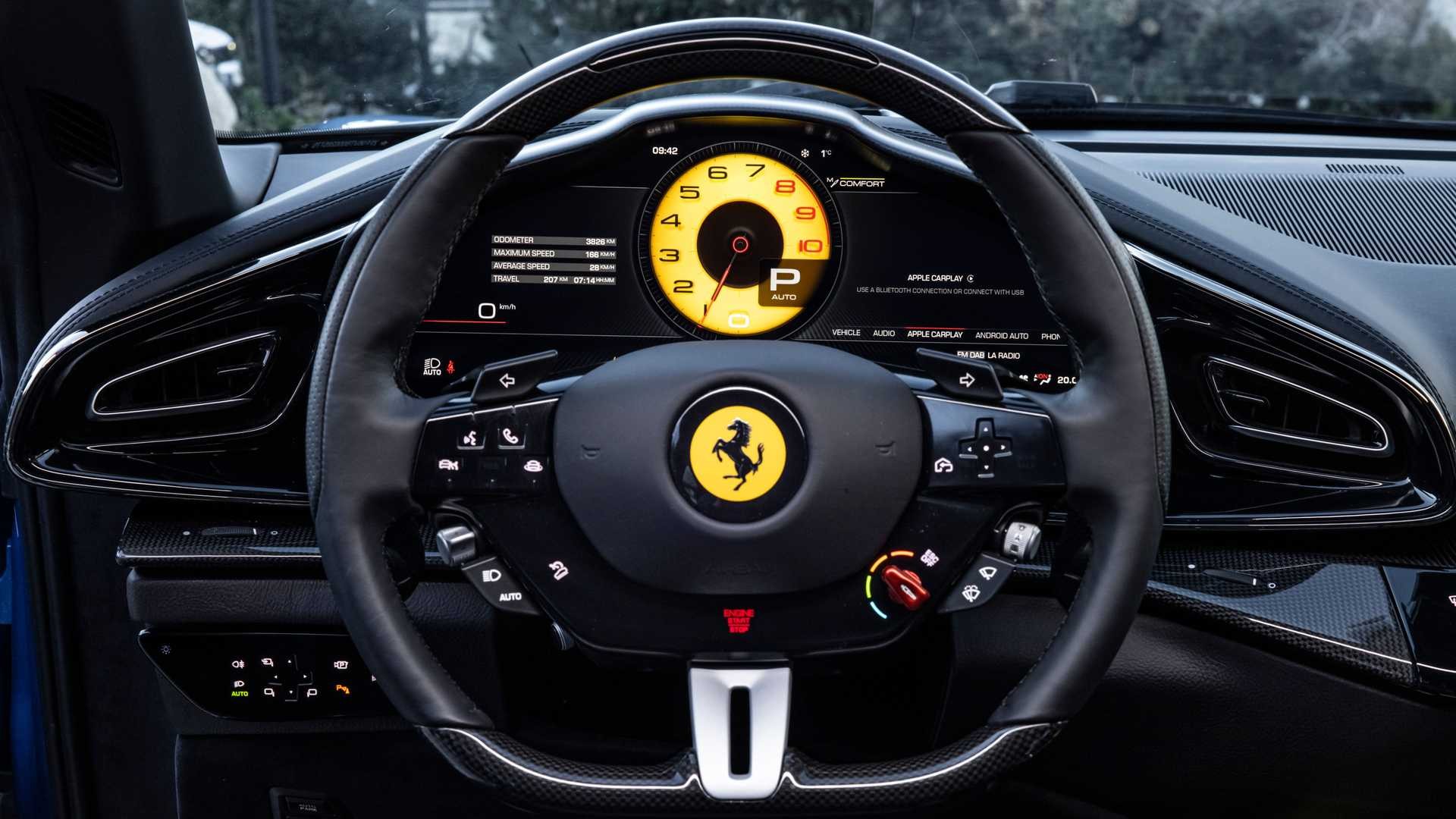
Ferrari’s CEO, Benedetto Vigna, has openly acknowledged that the shift toward touch-sensitive controls in recent car interiors was primarily driven by cost savings—not innovation. The company is now reversing course, offering retrofits for existing models and incorporating physical buttons into future designs. This admission highlights a broader trend: automakers are quietly admitting that capacitive controls, while visually sleek, are less practical and more frustrating for drivers.
The Economics of Touch
Vigna revealed that touch buttons are 50% cheaper to manufacture than traditional physical buttons. This isn’t a matter of superior engineering; it’s a straightforward financial decision. Many companies have been eliminating buttons altogether to maximize savings, but Ferrari’s approach differs. It will retrofit existing Purosangue and 12Cilindri models with steering wheels featuring physical controls, and new models like the Testarossa and Amalfi already include more tactile buttons.
“The touch is something that is made for the supplier’s advantage,” Vigna stated in an interview with Autocar India.
Why Now? The Value of Distinctive Design
Ferrari’s change of heart isn’t simply about customer complaints—although those played a role. The company prioritizes exclusivity and bespoke design. According to Vigna, mass-produced interiors that all look the same are undesirable. Ferrari aims to stand out with tailor-made switchgear, even if it means higher production costs.
The upcoming Luce electric vehicle, co-developed with Jony Ive’s LoveFrom, exemplifies this shift. It will feature dedicated physical HVAC controls and other functions accessible without relying on a touchscreen. The Luce’s starting price is expected to exceed $500,000, underscoring Ferrari’s commitment to premium quality over cost efficiency.
A Broader Automotive Trend
Ferrari isn’t alone in reconsidering touchscreen-heavy interiors. Volkswagen Group, Hyundai, Kia, and Toyota are also reintroducing physical controls for essential functions. These brands recognize that drivers often prefer the simplicity and reliability of tactile buttons, especially for frequently used features like climate control or seat heating.
However, some automakers like BMW and Mercedes continue to favor minimalist designs with fewer physical controls, despite widespread customer dissatisfaction. This suggests that while Ferrari is responding to practicality, other manufacturers may still prioritize aesthetics or brand identity over usability.
Ultimately, Ferrari’s admission and subsequent actions confirm what many drivers suspected all along: touch buttons weren’t about progress—they were about profit. The shift back to physical controls is a recognition that user experience matters, even in the luxury automotive segment.