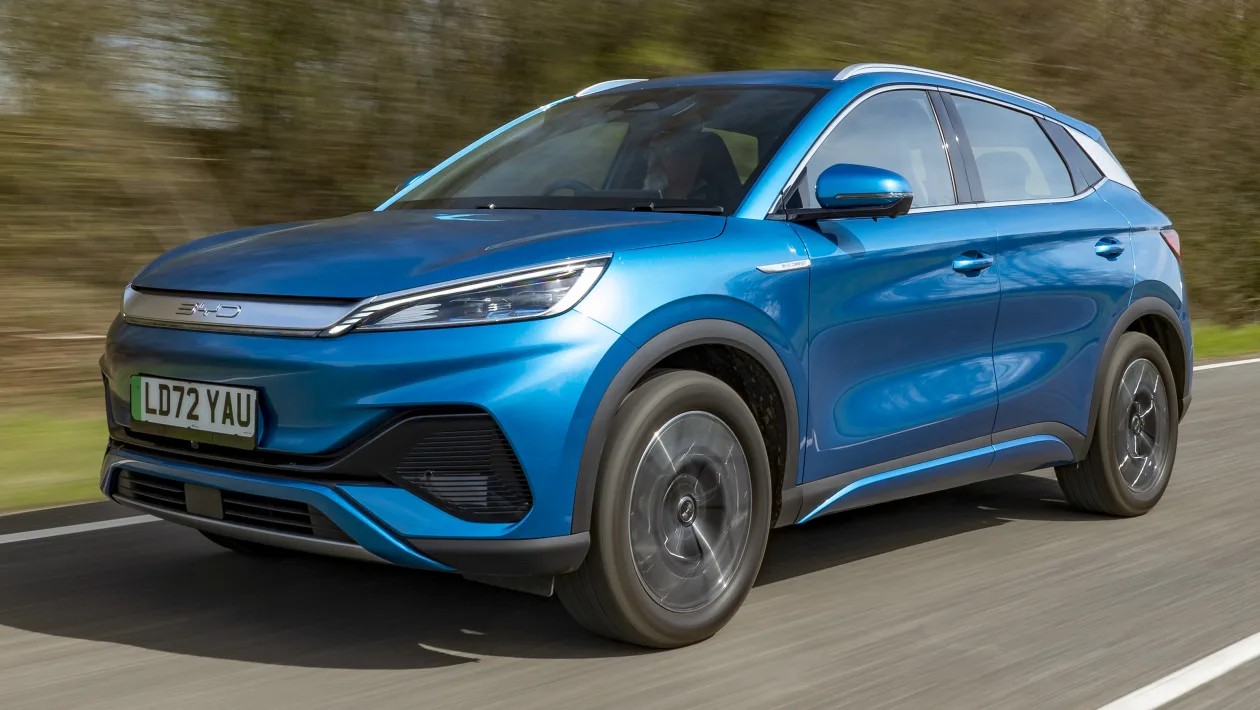
The BYD Atto 3 is a compelling choice for buyers prioritizing value and features over brand prestige. While it won’t win any design awards, this electric SUV delivers a refined driving experience, a well-equipped interior, and a bold departure from the often-drab cabins found in many competitors. It’s a solid contender in a rapidly expanding EV market, but not without its quirks.
Rapid Rise of BYD
BYD (Build Your Dreams) has quickly emerged as a major player in the automotive industry, ranking among China’s “big four” automakers. The Atto 3 was the first model available for order in the UK, now part of a growing lineup including the Atto 2, Dolphin, Seal, and Sealion 7. This expansion signals China’s increasing influence in the global EV sector.
Technical Foundation: e-Platform 3.0
The Atto 3 is built on BYD’s e-Platform 3.0, designed for both front, rear, and four-wheel drive configurations, with support for ultra-rapid 800V charging. The current Atto 3 utilizes a single front-wheel drive motor and BYD’s proprietary “blade” battery design. This blade design integrates directly into the car’s structure, saving weight and maximizing space—a key advantage in EV packaging.
Performance and Driving Dynamics
The Atto 3 prioritizes comfort over sporty handling. It excels in urban environments and on cruises, offering a smooth ride thanks to its soft suspension. However, this setup results in noticeable body roll in corners, making it less appealing for enthusiastic drivers. The steering lacks feedback, and regenerative braking is limited to two settings, falling short of the one-pedal experience found in rivals like the Kia Niro EV.
The 201bhp electric motor provides adequate performance, accelerating from 0-62mph in 7.3 seconds. While not a speed demon, it’s slightly quicker than the Kia EV3 in certain configurations.
Interior and Design: A Mixed Bag
The Atto 3’s interior is where it truly stands out—for better or worse. Material quality is good, but the design is polarizing. The blue and cream color scheme offers a refreshing alternative to the all-black interiors common in the EV segment, though some may find it excessive. The cabin features quirky elements like air vent designs, red stitching, and guitar string-inspired door pockets.
The infotainment system, available with either a 12.8-inch or 15.6-inch rotating touchscreen, is quick to respond, but the interface can be cumbersome to navigate. Apple CarPlay and Android Auto are supported, but accessing them requires digging through sub-menus.
Range, Charging, and Running Costs
The Atto 3’s 60.4kWh battery offers a claimed range of up to 261 miles. Real-world testing reveals around 212 miles, about 18% less than the official figure. Charging from 30% to 80% takes approximately 28 minutes using a rapid charger, while a 7kW home wallbox requires nearly 10 hours for a full charge.
Insurance costs are slightly higher than some competitors, with the Comfort trim in group 37 and the Design in group 38. The Atto 3 is also predicted to hold around 39-40% of its original value after three years, slightly better than the Peugeot E-2008 but worse than the Kia EV3.
Practicality and Space
The Atto 3 offers ample passenger space and a reasonably sized boot. The flat floor enhances rear passenger comfort, but visibility is somewhat compromised due to thick pillars and a high ride height. The boot lip is level, making loading and unloading easier.
Verdict
The BYD Atto 3 presents a compelling value proposition for EV buyers willing to overlook its minor quirks. It’s a refined, comfortable, and well-equipped SUV that stands out in a crowded market. While not perfect, it delivers a solid driving experience at a competitive price point. If you’re looking for a practical family EV and aren’t fixated on brand prestige, the Atto 3 deserves serious consideration.