Forget those unsightly square trucks that get stuck behind ATMs. This is just the tip of the iceberg. The world of personal protection and military transport is vast, diverse and often hidden in plain sight. Most people think that “armored vehicle” refers to a certain type of commercial vehicle. In fact, this is a broad category designed to enable heads of state, CEOs and the military to survive in a hostile environment.
Dividing the four types
Armored vehicles are usually divided into four different categories. Each service has a different threat profile and budget.
Personal Protection Vehicle (SUV/Sedan)
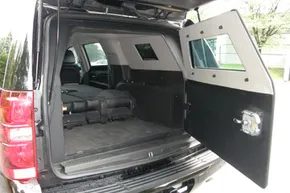
These are your covert threats. It looks like the stock model is coming off the assembly line. However, under the chrome and paint, bulletproof glass and steel panels have been added throughout. The Chevrolet Suburban is the gold standard here, with a balance of space and stealth that favored by security details. You don’t notice them unless you’re right next to them.
Cash in transit (CIT)
Think Brinks or Wells Fargo trucks. Surprisingly, these are not always the most fortified. Their role is usually to protect against handguns and small-caliber threats on short routes. Armor is typically lower than diplomat armor, reflecting the unique risk profile of bank robbery and guerilla warfare.
Police, SWAT, Tactical
These look superficially like CIT truckss, but are much more heavily armored. They are designed for law enforcement and emergency operations, and weapons include rifles and explosives. The protection level is higher, the suspension is strengthened and the windows are almost impenetrable.
Military Grade
It is the heaviest, most fortified and most expensive. Military vehicles face the greatest threats and require armor that can withstand anti-armor rounds and improvised explosive devices. Costs reflect this complexity, reaching $1 million per unit for some specialized military builds for protection packages alone.
Who builds them?
You can’t go to a dealership and order a bulletproof Chevrolet Suburban. Most manufacturers such as Mercedes-Benz offer factory armor options in Europe. However, most of the market relies on experts.
Companies such as The Armored Group and Alpine Armoring buy standard vehicles. Then they strip them down, welded steel panels, replaced the windows with bulletproof glass and reinforced the suspension to handle the extra weight. This is a modification that turns your ordinary SUV into a mobile fortress.
Who Buys These Machines?
The customer list reads like a who’s who of high-risk operations.
* Governments: For heads of state and diplomatic corps.
* Corporate Leaders: CEOs and executives operating in volatile regions.
* NGOs: Aid workers in conflict zones where kidnapping is a real threat.
* Banks and Militaries: For secure transport of assets and personnel.
The demand is driven by necessity, not luxury. When you’re operating in a place where a single bullet can change history, the extra weight and cost are just the price of doing business.
We’ve covered the basics. Now, let’s dig into the history. You might be surprised to learn that armored vehicles are much older than you
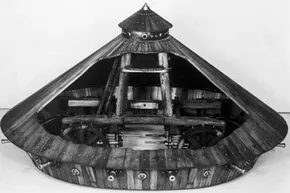
The concept of a protected war machine didn’t wait for the gasoline engine. Leonardo da Vinci drew up plans for an armored fighting vehicle back in 1485. His design featured a circular platform on four wheels, surrounded by light cannons pointing outward. A cone-shaped shell of panels covered the body, topped with a turret for a lookout. Inside, cranks and gears were supposed to turn the wheels and drive the thing forward.
It was a brilliant idea with a fatal flaw. The mechanism da Vinci sketched would have turned the wheels in opposite directions. It wouldn’t have moved. It would have just sat there, a confusing pile of metal.
Over four centuries later, engineers at Rolls-Royce fixed the physics. They armored Ghost models for World War I. The first heavy-duty versions entered service in August 1914. The Royal Naval Air Service in Britain put them to use. They came equipped with gun turrets.
Colonel T.E. Lawrence, better known as Lawrence of Arabia, saw the value immediately. He deployed a fleet of nine armored Rolls-Royces in his Middle Eastern campaigns. He didn’t just like them. He called them “more valuable than rubies.” The armored vehicles handled the harsh desert climate far better than standard trucks.
Armored cars have evolved significantly since those early experiments. Creating a modern armored personal protection vehicle requires specific ballistic materials and engineering choices.
Ballistic Materials and Construction
Modern armor isn’t just about stacking steel. It’s about layered composites. The goal is to stop projectiles while keeping the vehicle mobile.
Steel plates are the baseline. They stop small arms fire. But steel is heavy. Too much weight kills fuel economy and handling.
Composite materials offer a lighter alternative. Aramid fibers, like Kevlar, stop bullets. They also stop shrapnel. Ceramic tiles add hardness. They shatter incoming rounds on impact. The energy dissipates across the layer.
Glass laminates protect the windows. Bulletproof glass is actually transparent laminate. It consists of layers of polycarbonate and glass. A single hit can crack the surface. The inner layers hold the piece together. The occupant stays safe.
Protection Levels
Not all threats are the same. Armor ratings define what a vehicle can withstand.
The NIJ Level IIIA stops handgun rounds. Most executive protection vehicles meet this standard. It’s enough for a street-level ambush.
NIJ Level IV stops high-powered rifle rounds. This is military-grade protection. It requires thicker plates. The vehicle structure must support the extra weight.
STANAG 4569 is the NATO standard. It covers ballistic, mine, and blast protection. Levels 1 through 5 indicate severity. Level 5 is the highest. It handles anti-tank mines.
Critical Components
The armor changes how the vehicle behaves. Engineers must adjust several systems to compensate.
Tires need run-flat inserts. A bullet through a tire shouldn’t leave you stranded. Solid inserts allow the car to drive even after a puncture.
Suspension must be reinforced. Armor adds hundreds of pounds. Standard springs sag. Heavy-duty shock absorbers keep the car level.
Engine power needs a boost. More weight means more horsepower is required.
The Strip-Down and Steel Weaving
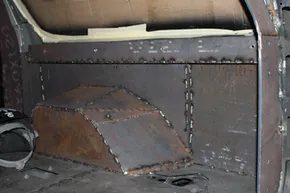
You can’t protect what you don’t have. This is the first rule of the trade. Companies like Alpine Armoring don’t start with a raw frame. They buy whole cars from dealerships or fleet services and strip them down to the metal frame. Seat? Gone. Carpet? Tossed. Headliner? Removed. Door panel? history. The store is now a blank slate waiting for the next big step.
Then there’s the armor. It’s not just a layer of paint or a layer of plastic. We are talking about very hard ballistic steel that is applied like a jigsaw puzzle. Each piece overlaps with the next piece. The gap here is deadly. “Think of it like a cocoon,” said Ron Leffler, Alpine Armoring’s project manager. This logic is very simple. No matter from which angle you shoot at the car, the bullets will not penetrate it. Firewalls are protected. The tailgate is armored. The battery is also protected. It’s an all-encompassing shell.
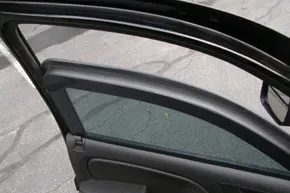
Glass tells a different story. We replaced the factory glass with custom-made laminate. Thickness is measured in inches, not millimeters. Replace the original glass with 1 to 3 inches (2.5 to 7.6 centimeters) of ballistic glass. It’s thick enough to stop high-speed bullets, but heavy enough to stress the hinge.
Weight problem
Not all armor is created equal, and the level of protection dictates the price—and the physics. Light armor can stop a pistol. Vehicle management becomes easier. Heavy armor can stop sniper rifles. However, this level of protection weighs the vehicle down.
This is the engineering gets tricky. Adding several thousand pounds to a standard SUV doesn’t just make it slower; It breaks. Factory brakes cannot stop the new mass. The shocks will bottom out. The engine may have difficulty haul the dead weight. Therefore, changes are mandatory. The brakes have been updated. Shocks are reinforced. In some cocoons, the engine itself can be adjusted to withstand the load.
This physical change has hidden costs. Safety features are sacrificed. For example, the rear side airbags often have to be removed to make room for the steel plating. But you can’t rip them off and leave a hole in the safety net. The car’s computer has to be reprogrammed. It needs to forget the airbags ever existed. Otherwise, the annoying warning light on the dashboard stays on forever and flashes to indicate what has been removed to keep the passenger alive.
隐形的艺术
这个过程在纸面上听起来很简单。 Strip. Armor. 重新组装。 较低级别的转换需要数周时间。 对于heavy hitters来说需要几个月的时间。 但目标始终是相同的:隐形。
“我们的首要目标是成为一排汽车中唯一的装甲车,但你无法判断,”莱夫勒说。 第二个目标是生存。 The third is escape。 你在袭击中幸存下来,然后离开了该区域。 回到安全地带。 这辆车看起来是库存的。 它drives like stock。 但在里面,它是一座堡垒。
著名装甲车
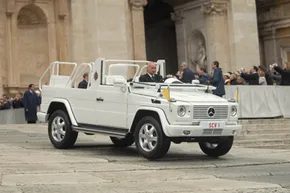
ドイツの工学技術とバチカンとの関係は、ほとんどの人が思っているよりも古く、より具体的です。 すべては 1930 年に始まり、メルセデス・ベンツが教皇ピウス 11 世に最初の教皇車であるニュルブルク 460 を贈呈しました。 この契約により、白いインテリアを備えた装甲セダンの 80 年にわたる伝統が始まりました。 世間では「ポープカー」と呼ばれています。 バチカンはその言葉を嫌います。 とにかく世界の残りの部分がそれを使用しています。
Modern Papal Navy
Fast forward to the time of Benedict XVI. He doesn’t just have one. He owns a small fleet of armored Mercedes-Benzes. This gem was introduced in December 2007. This time it is not a sedan. This is a modified Mercedes-Benz G500 SUV.
Design is born out of necessity. The Vatican wanted a vehicle to match the sunny look so the Pope could stand for better visibility. To achieve this, the engineers installed a folding windshield and a sturdy armrest. outside? Classic Vatican Mystic White. At the back of the interior, there is a red carpet step that adds a touch of tradition even to a rugged off-roader.
白宫的野兽
还有一种不存在的豪华轿车,实际上并不存在。 你不能谈论奥巴马总统的官车,因为特勤局把它锁得比鼓还紧。 在安全方面,他们名副其实。
我们所知道的信息来自泄密和官方确认。 2009年,总统收到了一辆凯迪拉克卡车。 它是在他的就职游行期间命名的,这是一个难得的公众关注时刻。 内部本质上是一个移动办公室。 构建过程处于极度保密状态,安全协议非常严格,甚至构建阶段都受到严格监控。
Armor novel
Armored vehicles are not just for heads of state. It can also be seen in novels. Take, for example, Dr. Cullen from the Twilight stories. He drives a Mercedes-Benz S-Class Guard.
The problem is that the Guard series isn’t officially available in the US yet. But Mercedes isn’t just handing over the keys to the tank. They offer professional driver training programs. It can be assumed that Dr. Cullen took full advantage of this. These cars are heavy. The added weight changes the driving dynamics dramatically. Mercedes is committed to teaching drivers, often professional drivers, how to get the most out of their cars in all situations. Although it is very dangerous.
装甲车的未来
A lighter future for armored vehicles
Steel has dominated the armored vehicle market for over a hundred years. It is heavy. It is effective. But it also gets old. Leffler and Pazderka agree on the next step: lighter materials.
The goal is simple. Replace thick steel plates with space-age bulletproof composite fibers. Result? Fewer structural changes. The silhouette is so clean it’s almost impossible to see. Disadvantage? Price. Composites cost up to three times more than steel.
Kevlar is already widely used. It is found in bulletproof police vests. Armorer shops are using it to protect vehicles from light. It’s a proven solution. It works.
But there is something new. Dyneema. It is a polyethylene product. The result is a fabric consisting of thousands of short sandwiched fibers. These fibers run from one end of the car to the other.
“If you scratch the fiber with your finger or a knife, little threads come off,” says Leffler.
The protection level is high. The price matches it. Currently, only the military can afford Dyneema. Civilians and business customers are looking at steel or Kevlar. They are waiting for the cost to be drop.
Pazderka believes that the future of armored vehicles is secure. He sees no end to this trend. Not in his lifetime. Or anyone else’s.
“Armored cars are as likely to disappear as total world peace.”
Demand will remain. Materials change. Costs remain high. The question is not whether armored cars can survive. Who can afford to hide in them next.