60 年代初頭はデトロイトにとって転換点となりました。 自動車メーカーは単に車を作るのではなく、外科的な精度で車をマーケティングし始めました。 1962 年から 1964 年にかけて生産されたダッジ ポララ 500 は、この変化を体現しています。 これはただのセダンではありません。 これは新しい種類のパーソナル高級パフォーマンスカーの一部です。 これらのマシンは厳密な公式に従っています。 彼らには大きなV-8エンジンが必要でした。 ユニークな装飾が必要です。 バケットシートは間違いなく必要です。 ダッジはこれらの材料を混ぜ合わせて焼き上げる製品を作り、巷を席巻しています。
How to Spot the Year by Tail Lights
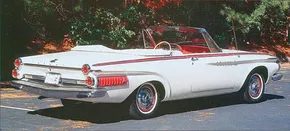
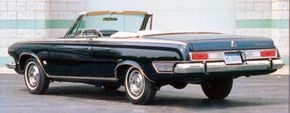
Picture this. You’re watching a reality show in the middle of the Utah salt flats. It was pitch black. The air was cold and the scenery deadly quiet. Suddenly three cars approached. The low and high beams are aimed directly at you. That’s twelve circles that cut through the darkness. What is your mission? Pick out the 1962 Dodge Polara 500 from the 1963 and 1964 models.
If you know your Mopars, it’s a slam dunk. No need to look at the grill or the sides. Look at the taillights.
In the 1962 model, the inner light was located higher than the outer light.
In the 1963 model, the inboard lamps drop lower than the outboards.
The 1964 model flattens everything out. All four lights are at the same height.
It sounds like trivia. Maybe so. But when you’re staring at rows of vintage Dodges in a foggy parking lot, those light positions are the only thing that separates the collectors from the confused tourists.
激動の50年代後半
1962 年のポララ 500 は、豪華さとパフォーマンスを融合させるというダッジの最初の本格的な試みでした。 しかし、それはどこからともなく現れたわけではありません。 それは50年代後半の混乱の産物でした。 業界は苦境に立たされている。 1955 年は 800 万台の自動車が販売された記録的な年でした。 1957年も600万人と好調を維持した。 そして1958年が来た。 短期間の深刻な不況により、売上は壊滅的な打撃を受けました。
中価格帯は消滅した。 ナッシュ、ハドソン、パッカード、デソートが姿を消した。 Mercury was gutted. 1955 年の栄光の時代に計画され、フォードのエドセルは 1958 年に発売されましたが、その後経営危機に陥りました。 市場は縮小しています。
Compact conversion
At the same time, profit margins are shrinking. The Volkswagen Beetle penetrates the lower end of the market. George Romney’s Rambler is increasing its market share in the mid-priced segment. The big three have no choice. At the end of 1959, they launched a compact car. The unit yield of these smaller vehicles is lower. The game has changed.
Detroit’s product designers panicked. They ask basic questions. Should I build a big building or a small one? V-8 or 6-cylinder? Front engine or rear engine? More chrome or less? Dodge needed a winner. The Polara 500 is their answer to an industry that no longer knows what it wants.
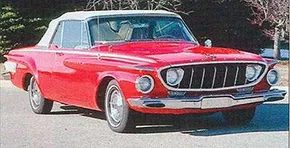
The bucket seat revolution and Dodge’s Near Collapse
The personal luxury car segment didn’t just appear; it was engineered. Ford started the engine in the four-seat Thunderbird in early 1958. This is not intended to hauling lumber or the whole family. It’s a matter of style. The blind-quarter roof line hides the cab, which is divided by a floor console with separate front buckets and simulated rear buckets. The public bought it. They loved the idea of a unique but approachable car.
Pontiac tried to follow suit with the 1958 Bonneville, with buckets. Others dabbled. But the real change came with the 1960 Chevrolet Corvair Monza Coupe. Affordable two-door personal luxury car. Skillfully finished buckets in front. Handsome interior. It sold out.
Despite the late arrival, 12,000 Monzas rolled off the assembly line in 1960. By 1962, the number had increased to 151,000.
“It remained for Monza to send other manufacturers to enter the bucket seat market.”
— Ward’s 1964 Automobile Yearbook
The industry took note of that. Ward’s noted that by 1963, 16.7 percent of production cars were equipped with bucket seats. That’s a massive jump in a few years. The implication was stark. If you put buckets in the front, only two people can sit. This means that at least one million cars sold each year are no longer family vehicles. They are personal machines.
Chrysler lagged. Swivel seats were installed in 1959, which was close but not quite there. The limited production Chrysler 300-F of 1960 had four individual seats separated by a full console. But what about the mass market? Nothing. Front bucket seats did not appear on the Chrysler mass market until 1962.
The Polara 500 needed those buckets to compete with the Thunderbird, but the car itself was born out of chaos. Dodge was scrambling. Headlamps moved every year in a desperate attempt to restore sales balance. The previous styling and product planning disaster nearly killed the division. The 1962 disaster didn’t just hurt sales; It nearly crippled Dodge and its dealers. The Polara 500 was supposed to be the fix. Instead, it was a symptom that the brand has lost its way and is reinventing itself as the rest of the industry begins to shift to new definitions of luxury.
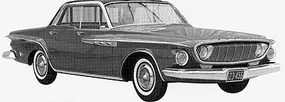
The story of the 1962 Chrysler full-size model line is a prime example of corporate panic overriding creative instinct. Virgil Exner had already done the hard work. When the fins had peaked and faded, he looked for a new image. The result was a re-sized silhouette: a long hood, a short deck and a distinct absence of the wedge-shaped tail fins that characterized the late 1950s.
This design featured a brilliant piece of engineering: an oval body section at the B-pillar. It was modeled after the fuselage of a jetliner and allowed for curved side windows that blended seamlessly into the sheet metal. It was smooth. It saved space. Unfortunately, it was too big.
Chevrolet Shock
The turning point happened in the spring of 1959. Chrysler’s vice president William Newberg received bad news. Chevrolet planned to downsize its full-size cars in 1962.
Newberg panicked. He realized that the Dodge and Plymouth models currently in development were huge by comparison. He ordered the immediate downsizing of Chrysler products in a move that would stifle design for years. There was no time for a new design theme. To meet the new criteria, the existing clays had to be hacked down.
Syd Terry and a group of engineers who were quietly dismayed by the bloat of American cars in the late 50s jumped at the chance. They enthusiastically accepted the smaller, lighter package. It made more sense. It was cheaper. It was also a style disaster.
Plucked chickens
To adapt the cars to the new size restrictions, Exner’s team had to remove the very features that made the design interesting. The curved side window of the B-pillar was removed. The width has been reduced. The wheelbase was shortened from 118 inches to 116 inches.
Efforts have been made to reduce size, weight and costs. But the damage was done. At the meeting to approve the downsized 1962 cars, Exner was uncharacteristically blunt.
“These cars are ‘plucked chickens,'” he told the assembled engineers and executives. “They’re not competitive, and style shouldn’t be blamed.”
He was right about the style. He was wrong about keeping his job.
Consequences
Chrysler president Lynn Townsend didn’t appreciate the public dissent. In the fall of 1961, Exner was replaced by Elwood Engel. The 1962 Dodge and Plymouth were caught between a stylist’s vision and a manager’s fear, resulting in vehicles that were competent but uninspired. They were smaller. They were lighter. They were also robbed of their souls, as Exner noted.
More information about the cars can be found at:
-
Classic Cars
-
Muscle Cars
-
Sports car
-
Search for a new car
-
Used Car Search
Dodge B-Body cars
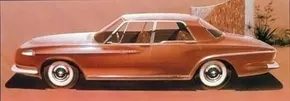
Convex Grille Controversy
At the end of September 1961, Dodge quietly began to renew its lineup. These weren’t just updates. These were Chrysler’s first unitized “B-body” chassis and marked Chrysler’s move to a lighter and more efficient structure. Called Dodge’s New Lean Breed, the chassis carried over to the Dodge Polara 500 from 1962 to 1964, but underpinned the entire Dart lineup, from the base Dart to the sportier Dart 330 and Dart 440 models. The visual language is unique. The long, horizontal wings of the body extend to the fenders and are interrupted only by the grille, which appears to tilt aggressively forward in the form of an inverted trapezium.
The lighting arrangement is also practical and quirky. The High beams sat high in a light recess in the upper corner of the vertical grill. The low beams are low and mounted on round chrome edges just below the wide fender wings. It’s simple logic. High beams are up and low beams are down. But achieving this look required awkward technical compromises.
“The grille is basically cut from the bottom, with a short wrapover at the top.”
To install the high beams, the engineers had to dig into the convex side of the grille. An unnatural looking white space appears around the light frame. Retired Chrysler design chief Gerry Thorley wasn’t a fan. He remembers the original idea differently. The original design featured a concave grill design, with the interior lights recessed into the frame and protruding forward. This concave approach feels more natural to Thorley. It’s also a direct stylistic evolution from the recessed grille of the 1961 Dart and Polara.
So why did this car become convex? M.C. Patterson, general manager of the Dodge division, had the last word. He chose the convex design because it was sharper and more dramatic than the 1961 look. It’s about differentiation. The dipped beam frame also has its own eccentricity. The inner ring of the chrome frame is made of white plastic. The goal? To trick the eye into thinking the 5-inch low beam is larger than the high beam, both beams take up similar physical space.
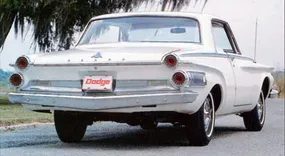
The rear end of the 1962 Dart wasn’t just a copy of the previous model. This refined the staggered concept. The four round lights are placed diagonally, following the rule that the inner light is higher than the outer light. However, the lines have changed. In the Dart, the lower outer light group takes care of the rear light tasks and the upper inner light takes care of backup tasks.
Above the rear wheel is a sculpted sheet metal blade that swings up to meet the light above. This creates a visual bridge between the front and back. The side glass is now straighter, but the middle part keeps the same body-to-glass relationship from the original model. There is a notch in the belt line behind the front door. This lowers the height of the rear door glass and reduces costs without compromising too much on style.
The roof line is the same in both 2- and 4-door models. They stood upright in profile. This is a big departure from the heavily sloped hardtop that Dodge has loved since 1957. The bottom of the windshield is pulled forward from the center line. It met the rising “speedboat” cowl. Vice President Virgil Exner cherishes these styles.
Why darts mattered in 1962
The 1962 Dodge Dart was not a full-size car. This is a compact. This difference is important because it allows Dodge to compete with the Ford Falcon and Plymouth Valiant. Design cues such as the vertical roof and flat glass were Exner’s answer to the need for a smaller and more efficient platform. The name “Dart” itself is new, marking a change from the previous Polara and Coronet series.
Polara 500 connection
The 1962 Polara 500 shared the Dart’s platform but offered a different market position. Upholstery and size are a step up from the base Dart. The Polara name has been used before, but its revival is linked to a new compact strategy. The 500 badge indicates a higher equipment level and more powerful engine options.
Engine options and performance
Under the hood, the Dart is available with several engine configurations. Basic models are usually equipped with a 6-cylinder engine. For those looking for more power, a V8 engine is also available. These engines were tuned to achieve a balance of efficiency and performance in keeping with the compact car ethos of the time. Specific horsepower varies by configuration, but the main focus is on providing an easy-to-use and lively experience without the fuel consumption of a full-size vehicle.
Interior design and practicality
Inside the Dart is a simple and functional cockpit. The vertical roofline offers excellent headroom. A notch in the beltline makes it easier to get in and out, making it a practical compact car. It uses durable materials and reflecting the no-nonsense approach of compact car design. The layout of the dashboard is simple and clear, and the important gauges are within easy reach.
Legacy of the 1962 Dart
1962 年のダートは、コンパクトカー市場におけるダッジの地位を確立しました。 これは同社にとって、急成長する市場セグメントでの競争を可能にする重要なステップです。 スタイリングは、一部のフルサイズ製品ほど過激ではありませんが、まとまりがあり、モダンです。
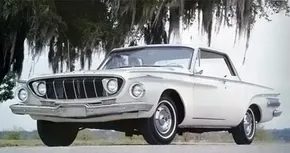
Despite the company’s turmoil, it didn’t stop Dodge from launching one of its sharpest models. In 1962, management instability hampered the extensive design process, but the 1962 Dodge Polara 500 slipped through the cracks of uncertainty. The Polara name debuted in 1960 as a high-end product distinct from the Dart, with a larger footprint and unique styling. But by 1962, the designers had changed. Instead of a stand-alone model, the Polara became a high-end interior package for the compact Dodge Dart.
This change created an anomaly. The Polara 500 is the most beautiful and refined 1962 Dart body. While the Dart 330 and 440 have a heavy chrome, the Polara 500 deliberately dechromed. It looked cleaner. More sporty.
Designing the Dechromed Dart
Appearance depends on restraint. The front door has a slightly flattened ‘blade’ design, with a delicate, individual lettering of \ on the flat chrome surface. “500” is more than just a trim code. It’s a direct homage to the Indianapolis 500 and connects this compact car to America’s most prestigious race.
Below the waistline is a narrow colored band that extends from the nose to the tail. This color sweep is outlined with narrow moldings and matched the interior trim perfectly. It is a continuous design element that unites the car. This look was so effective that it inspired a mid-year copies of the Dart 440, as well as the chrome-heavy Plymouth Fury and Sport Fury.
However, not all design options landed.
There are bright louvers on the trailing edge. The Dart 440 already has similar louvers as standard, so the Polara 500 needed something distinct. The stylist designed a long, bright, die-cast rectangle with chrome louvers and a new triangular “fratzog” emblem. The background of the rectangle is painted with an accent color. It was too much. The design felt heavy-handed. The car looks better without it.
Front and Back Details
遠くにグリル越しにポララ 500 が見えます。 遮光加工を施しています。 狭い垂直バーは黒く塗られており、7 つの幅広の明るいバーが高いコントラストで目立つようになります。
車の後部も同様に特徴的です。 4 つの丸いライトはすべて赤いテールライトです。 メータークラスターには白色の後退灯は組み込まれていません。 代わりに、リバースライトは、リアバンパー上の水平リブテクスチャーを備えた細いダイキャストストリップに移動されました。
ホイールが外観を完成させます。 ユニークな蓋には、目立つスピナーが付いています。 ダッジは彼らを「ウィードワッカー」と呼んでいます。 回転すると光と注目を集める巨大なクロームホイールです。
Color Coordination Strategy
Dodge didn’t just match paint; 他们设计了一个完整的内外协调系统。 调色板是特定的。
- Red, blue, green, cocoa, and black exteriors 在color sweep和louver panel中采用米色。
- Beige exteriors 可以与任何相同颜色的扫帚和百叶窗一起订购。
- 黑色汽车 允许使用红色或蓝色的外部装饰。
内部的主色调始终是浅米色。 它出现在座椅垫、方向盘、门板装饰和车顶内衬上。
其余部分填充了较暗的对比色。 仪表板、门饰嵌件、座椅中心和地毯都使用这种较深的色调。 一辆蓝色汽车的外部有米色的装饰,内部有蓝色的米色装饰。 一辆带有蓝色外部装饰的米色汽车使用了相同的内饰方案。 结果是惊人的。 时髦的。 运动型。
1962 Dodge Polara 500 Interior
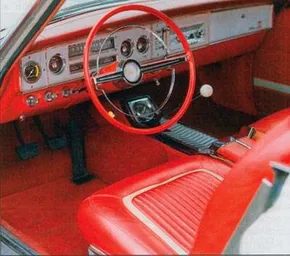
The internal precision also matches the exterior. Light beige vinyl covers the cushions and headliner, creating a light and airy cabin. The seat upholstery and carpet create a darker contrast and often match the secondary tones of the exterior. The dashboard is a simple, functional platform dominated by the instrument cluster and a large, thin-rimmed steering wheel.
“The overall impression is eye-catching, stylish and sporty.”
This was a big difference from the cluttered interiors of the early 1960s. The interior of the Polara 500 has a well-organized atmosphere. Each element has a position. Color matching is more than just decoration. It is the structure of the design language.
But while the Polara 500 is sophisticated, it’s also in a strange limbo. It’s a dart, but not quite. Polara, but not perfect. Management changes that plagued the design process kept the car in constant change. Yes, it’s beautiful. However, it is also a temporary measure. A solution to a problem that is not yet fully formed.
Does the trim level define the car or is it just for dressing up? We recommend choosing the latter for the Polara 500. It was a low-budget platform dressed up for the Indy 500, and it worked. to a large extent. Until the next redesign cycle wipes it out.
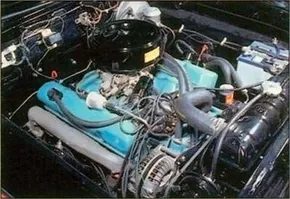
The interior of the 1962 Dodge Polara 500 is designed to speak of personal luxury, although it takes more effort to prove than the exterior. The cabinin is decorated with saddle-grain vinyl that sets the tone for everything inside. The front seats feature narrow vertical pleats in a horseshoe-shaped contrast color detail designed to raise the seat cushion and backrest above the standard level. The back seat is also interesting. Its cushions are shaped to mimic the appearance of individual buckets, creating a unified aesthetic throughout the cabin.
A chrome center console separates the front seats. It’s not just for show. The console has a lockable storage space, two ashtrays, a cigarette lighter and a courtesy lamp. It acts as a functional hub for the driver and passengers, keeping clutter off the floor and within reach.
The instrument panel broke from tradition. Unlike the full-width panels favored by General Motors and Ford, the Polara’s dashboard is minimalistic. This approach was largely promoted by Virgil Exner, Chrysler’s executive vice president at the time. The floorboards slope down away from the windshield and are hidden under it to maximize knee space. This instrument is mounted in a freeform case just in front of the driver. The automatic transmission and heater controls are located at the bottom of the instrument cluster. This layout puts most important things within the driver’s reach.
The steering wheel creates a unique atmosphere. The wheels were so oddly shaped that stylists quickly dubbed them “grasshopper heads”. It’s a small detail, but it reinforces the idea that this car is special.
Dodge division general manager Byron J. Nichols was clear about the car’s positioning. He argues that buyers don’t have to choose between luxury and performance. Polara 500 has both. To support this, the car has Chrysler’s 361-cubic-inch V-8. It produced 305 horsepower and featured a four-barrel carburetor, high-lift camshaft, and dual exhausts.
Nichols calls the engine a beast. He claims it gives the Polara exceptional smoothness, acceleration, and passing power. Adding a 4-barrel “runner manifold” increased power by 5 horsepower. Later this year, Dodge will expand its options. Buyers can choose between 383-cubic-inch V-8 engines rated at 330 and 335 horsepower. There are also 413 cubic-inch options with outputs of 365, 380 and 410 horsepower.
All assembly is done at Dodge Main plant in Hamtramck, Detroit. Concentrating production in one place enables stricter control of construction quality. This is important because the target audience is sophisticated and picky about details.
The Polara 500 is available as a two-door hardtop and convertible. However, the interest of customers and dealers grew rapidly. Nichols confirmed in a press release on November 5, 1961 that he had originally planned to restrict the 500 to just those two models. The reaction forced a change. Soon, a four-door hardtop was also added.
The four-door version is significantly different from its sibling model. No front bucket or floor console. Instead, it has an all-vinyl three-seat front seat with folding center armrests. The interior features solid, dark tones rather than the contrasting two-tone colors found in two-door cars.
Prices reflect these differences. The four-door hardtop costs $2,960. The two-door hardtop costs $3,019 and the convertible costs $3,268.
The quick launch of the four-door 500 was the answer to the unrest within the dealership network. Dealers were unhappy with the strange styling and small size of the 1962 series. They also point out that potential trade-in customers, owners of the late-model Custom Royals, Polaras and Matadors, don’t have luxury four-door vehicles to consider. The Polara 500 4-door aims to fill this gap.
This is not enough. The フェック店報manager, フランク・ワイリー, pointed out to 达口 that the dealership was struggling because there were no big cars to sell. By January, the planners had put together a solution. They attached the 1961 Polara front clip to the 1962 Chrysler Newport body shell with a 122-inch wheelbase. The result was called the Custom 880. This was finally the middle price zone that provided the large number of production vehicles desired by the dealer.
カスタム 880 が生産開始されると、4 ドアのポララ 500 を選ぶ理由はなくなりました。 後続モデルの予定はありません。 コンセプト自体に欠陥がある。 4ドアの個人用高級車は矛盾しています。 フォードは 1967 年に 4 ドアのサンダーバードを発売したときにこのことを認識しました。 それはそのカテゴリーに当てはまらないだけです。
For more information on cars, see:
-
Classic Cars
-
Muscle Cars
-
Sports Cars
-
New Car Search
-
Used Car Search
1962 Dodge Polara 500 Styling
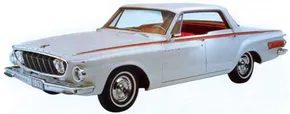
The 1962 Dodge Dart and Polara marked a disastrous moment for the brand. Just as the Ford Edsel remains the textbook definition of a mistake, these new Darts are the wrong vehicles in the wrong aesthetic, in the wrong size class, and made at the worst possible time. The 1962 Dodge Polara 500 featured a bold center-mounted grille, sculpted fenders, fully exposed wheels, and long hoods, short deck proportions that defined the late Virgil Exner’s “pure automobile” design philosophy. Mr. Exner touted these cues in early “idea cars,” but the public wasn’t ready to for the execution.
Of course, you could argue that this aggressive design is a perfect match for the sporty Polara 500 role. But what about family sedans? It doesn’t work. The market is not looking for high-art automotive sculpture. They want reliability and tradition.
The Colorado Test
ダッジ エクステリア スタジオのアシスタント マネージャーであるボブ ゲイルは、1962 年の夏にこの理論を検証しました。 彼は新しいポララ 500 コンバーチブルに乗ってコロラドの山々へ行きました。 はい、結果は注目を集めましたが、ダッジが望んでいたようなものではありませんでした。 人々はそれが何であるかを知りません。 彼らはそのようなものを見たことがありませんでした。
「それがどんな車なのか誰も知りませんでした」とゲイルさんは振り返る。 「彼らはThey’d never seen one like it。」
スケールダウンされたダッジがついにショールームに登場したとき、反応は耳をつんざくような沈黙でした。 ディーラー、忠実なダッジ購入者、そして一般の人々は唖然としました。 当初の説明は「異なる」でした。 これはすぐに「普通ではない」ものになり、次に「奇妙」、「奇妙」、そして最後には「醜い」ものになりました。 反発は即座にそして深刻なものとなった。
The Irony of Positioning
This situation is full of irony. Dodge downsized its full-size platform, but competitors didn’t follow suit. Chevrolet maintained its position in traditional full-size cars and introduced a new product, the 110-inch wheelbase Chevy II. Ford kept its large cars unchanged and introduced the Fairlane, a midsize model with a 115.5-inch wheelbase that sits between the Falcon and Galaxie.
Without traditional full-size siblings in the lineup, the Dart and Polara are by default “intermediate.” Buyers who wanted a large, full-size American car scorned the downsized Dodge. Too small for a full size audience and too weird for an average audience.
The Sporty Exception
However, there is a twist here. The 1962 Polara 500 really succeeded with its bucket seats and vibrant interior. One car enthusiast magazine named it “Performance Car of the Year”. About 12,268 units rolled off the production line, making up a significant portion of the total Dart/Polara production.
This success started a trend in the middle of the year. Plymouth launches the Sport Fury hardtop coupe and convertible. Ford responded with the 1962 Galaxie 500/XL. Mercury added the Monterey S-55. Buick brought the Wildcat. The Pontiac Grand Prix also debuted that year with bucket seats.
Despite its controversial styling, the 1962 Polara 500 sold better than its more traditional 1963 successor. The market finally decided that weird is better than boring. Or maybe, just maybe, buyers are tired of the same old rectangles. The 1963 model tried to play it safe. They failed to capture the magic of the 1962 oddballs.
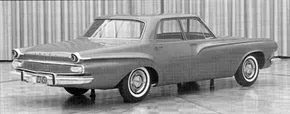
1963 Dodge Polara 500 Facelift Evolution
Dodge’s stylists didn’t hold back on the 1963 Polara 500. The amount of work was the same as the previous year, and several simultaneous development programs dragged on.
Originally, the 1963 was planned as a simple facelift. The body panels above the beltline remained unchanged, while new panels were reserved for the lower parts. That plan fell apart. The new rear parts were completely scrapped. Instead of a mid-cycle update, Dodge decided to update the existing 1962 bodies only the front end.
The changes started with a new hood, grille and fenders. The old trapezoidal grille has been decommissioned. This allowed the grille structure to extend completely over the front fascia. Between the inherited bumper and the new, fluider hood was a body-colored grille frame. It organized the bright vertical texture into six different segments.
The placement of the headlights has changed significantly. The exterior lights were moved to the top of the new fenders. The design process itself was fluid. In October 1960, the original concept called for single seven-inch headlights. In two months, the idea changed. The design used five-inch duals. The high beams were embedded in the outer segments of the grille structure.
The final layout in 1963 was specific. The Low beams was high and outboard. The high beams were lowered to the low and inboard position.
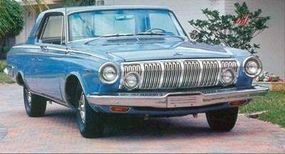
Amber turn signals made their debut for the first time, a subtle but distinct shift in automotive lighting standards. The design language of the 1962 model, specifically the horizontal blade running along the front fender and door, was discarded. It proved too busy for the sleeker aesthetic Chrysler was now pursuing. Instead, the body lines were defined by the outer curve of the headlamp, accented by a slim undercut element. This line sloped from the peak of the fender into the new front door skin, hooking downward before fading out completely.
The Compact Car Shift
Chrysler executives were confident about the direction the corporation was taking when this version of the 1963 Dodge was in the styling phase. The American car market was exhibiting a decided shift toward smaller vehicles. Ford’s Falcon had become the most successful new car ever introduced up to that point. Even compact models with longer wheelbases, like the 108-inch Ramblers and Studebaker Larks, were selling well.
Meanwhile, the smaller 118-inch wheelbase 1960 Dart was setting sales records for Dodge. Its popularity eclipsed that of the larger Dodges. Clandestine reports from Detroit-area tooling shops confirmed that medium-price competitors—Pontiac, Oldsmobile, Buick, and Mercury—were scrambling to add smaller cars to their product offerings. They recognized the trend and were moving quickly to address it.
A False Sense of Security
Retired product-planning executive Gene Weiss recalls that during 1960, many in Chrysler’s senior management were convinced they had the 1962 market “aced.” They believed the downsized, lightweight, fuel-efficient 1962 Dodge and Plymouth would usher in a new generation of engineering and styling leadership for Chrysler. The Polara 500 would be the icing on the cake.
By early 1961, however, those executives suddenly discovered to their consternation that they had been outmaneuvered. They didn’t have the market aced. On the contrary, new “spy” reports confirmed that competitors’ big, full-size cars would still be around in 1962. The shift toward compact cars was not as absolute as Chrysler had predicted.
The Rush to Redesign
Their reaction was immediate. They scrapped the ongoing 1963 facelift program and hastily embarked on more ambitious changes. Once again, there wasn’t time to start over. The nearly finished new Dodge and Plymouth front ends were kept as starting points, but designers were ordered to create virtually new cars from the doors back.
Once more, the harried Dodge and Plymouth stylists racked up the overtime in a desperate dash to design, release, and tool new sheetmetal in time for 1963 production. The target was set for late summer 1962, a scant year and a half away. The pressure was immense, and the margins for error were non-existent.
1963 Dodge B-Body Cars
The result was a car that looked completely different from the 1962 model, despite sharing many underlying components. The styling was cleaner, more modern, and better suited to the evolving tastes of American buyers. The use of amber turn signals and the refined body lines signaled a new direction for Dodge.
The market, however, continued to shift. The compact car craze was not slowing down. Chrysler’s decision to stick with full-size cars in 1962 had been a miscalculation. The 1963 Dodge B-Body was an attempt to correct that error, but the window of opportunity was closing fast. The competition was fierce, and the consumers were demanding more variety and efficiency.
The story of the 1963 Dodge is one of rapid adaptation and high stakes. It was a car born out of necessity, designed in a hurry, and launched into a market that was changing faster than anyone could predict. The details of its development reveal the pressure cooker environment of
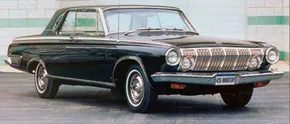
The 1963 model year wasn’t just a refresh for Dodge’s B-body lineup; it was a desperate pivot to relevance. The 1962 introduction had been a flop, criticized for being too weird, too small, and entirely too expensive for the average buyer. To fix this, engineers stretched the wheelbase to 119 inches.
That number wasn’t random. It matched the Chevy Impala and the Ford Galaxie. The trick? They moved the rear wheels back three inches. This simple mechanical shift pushed the rear seat back by 1.5 inches, finally giving adult passengers in the back some legroom. (Note: Station wagons kept their shorter 116-inch wheelbase, a compromise that likely hurt their cargo versatility slightly but kept costs down.) Overall length grew by 6.1 inches. The car finally looked like a proper family hauler.
Styling a Long, Continuous Line
Styling started with the new front fenders. From there, designers carved a long, smooth bodyside that ran straight from nose to tail. Gone were the sharp, “start and stop” character lines of the 1962 blades that had made the previous year look disjointed.
Instead, an undercut detail began at the headlights. It didn’t just stay there; it grew deeper as it moved rearward, finally angling down sharply in profile to meet the new rear bumper. Moldings followed this path, highlighting the continuity.
The execution was deceptive. The shape looked simple from a distance, but the sheetmetal work was complex. A subtle vertical peak sat centered above the outboard headlight. This plane widened as it moved back, becoming flush with the new C-pillar. This created the visual upper sides of the trunk lid. Below that plane, the body rolled outboard, meeting the undercut to form a shoulder that developed gradually from headlight to taillight. It was a masterclass in using light and shadow to elongate a car without adding metal.
The Roof War
The roofline told a different story—one of copycat panic. The new roofs featured wide, sloping C-pillars. They were a frank imitation of the Ford Galaxie’s Thunderbird-inspired hardtop look. General Motors was pursuing a similar aesthetic, but Ford was ahead in the marketing war.
At the 1963 auto shows, Ford taunted its rivals by branding the Galaxie’s roof “The Roof That Tops Them All.” They were right, at least in terms of public perception. The sleek, pillarless look screamed luxury and modernity. The Dodge matched it, trying to shed the “weird” label for good.
The Rear and The Wallet
At the back, the decklid was wide, low, and flat. Again, the goal was optical illusion: make the car look as big as possible. Usable trunk capacity jumped 10 percent over 1962. Practicality mattered now.
But here is where the cost-cutting became obvious. Most of the tooling budget went into the exterior sheetmetal to make the car competitive. The interior got a slap-dash treatment. New door panels. New seat styles. A reworked instrument cluster. Conventional round-hub steering wheels replaced the unusual designs of the previous year. They didn’t reinvent the wheel inside; they just polished it.
The financials tell the real story. Tooling costs for the 1963 B-body program for Dodge and Plymouth combined totaled $26.7 million. Compare that to the $87.5 million spent on the 1962 models. They slashed spending by two-thirds. They didn’t need to innovate. They just needed to blend in.
The Verdict on the “Normalization”
When these cars hit showrooms on October 2, 1962, the reaction was immediate. They were good-looking. They were big. They were “commercial.” In size and styling, they were a complete repudiation of the much-maligned 1962 Dart and Polara.
Virgil Exner, Chrysler’s legendary styling exec who had pushed the wild, forward-looking designs, didn’t live to see the 1963 results. He had been replaced by Elwood Engel, who arrived in Highland Park in November 1961. The 1963 B-bodies were designed under Exner’s leadership but finalized under Engel’s.
It was a weird transitional period. Exner’s vision was dead, but his team built the car that buried it. The 1963 Dodge B-body didn’t win any design awards for originality. It won because it stopped trying to be a statement piece and started trying to be a car people would actually buy.
Whether Exner approved of the conservative shift is unknown. History
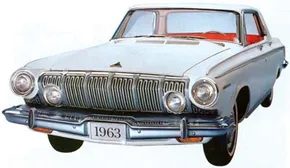
エルウッド・エンゲルは 1963 年のダッジに対するビジョンを持っており、それを実行することに躊躇しませんでした。 クライスラーの新しいデザイン担当副社長として、彼は 1963 年の B ボディ車に小さいながらも具体的な変更を加えました。 彼はフロントにメッキを多く配置したいと考えていました。 これにより、ボディ同色のグリルフレームが陽極酸化アルミニウム製に変更された。 ノーズをより広く見せるために、外側ヘッドライトの下までグリル模様を延ばすために、三角形のダイキャストエクステンションを追加しました。
生産中ですか?いいえ。
1963 年のダッジ ニュースの写真のほとんどには、これらの拡張部分が示されています。 実際、彼らはショールームに登場することはありませんでした。 おそらくエンジニアが正しくフィットさせることができなかったからだろう。
Polara 500’s unique decoration
The current 1963 Dodge Polara 500 two-door hardtop and convertible retains its distinctive styling. The eye-catching color extends throughout the car, just above the “shoulders” on the sides of the body. You also get メッキのシルドアトリム. メッキのホイールリップトリム. Ribbed quarter panel decals visually extend the wraparound rear bumper. A horizontal メッキのドリップモールディング runs along the bottom of the C-pillar and completes the look.
エンゲルはオリジナルのリアクォーター装飾を嫌っていました. Its front edge slopes back parallel to the side view of the bumper. 彼はそれが不自然だと考えていました. He insisted on tilting it forward parallel to the trailing edge of the rear wheel opening.
独占的な優位性の喪失
From the side, the Polara 500 still looks special. Do you see it from the front or the back? There aren’t that many of them.
Gone is the 1962 blackout grille, the distinctive look that set it apart. 不可解なことに欠落していました. The removal of the vertical beam from the six-segment grille was natural. しかしエンゲルは明らかにそのような処理を好んでいませんでした.
At the rear, the rectangular lights are mounted in a bright die-cast frame that runs the width of the car around the license plate. Horizontal lenses on both sides handle the rear light and backlight functions.
This back treatment is also used in the revived Polara series. これには4ドアクーペ(セダン)およびステーションワゴンが含まれていました. So while the side trim remains unique to the 500, the rest of the car looks the same as a standard Polara hardtop or convertible. Like the regular Polars, the 500 appears to be just a trim version.
インテリアの対比と経営陣の自信
Inside, the 500’s bucket seats retain the high-contrast colors. There are five two-tone color combinations. Alabaster replaces beige as the main color. A color-matched two-tone steering wheel is standard.
ダッジのゼネラルマネージャー、ニコルスはプレスプレビューで自慢しました. He said the 1963 Dodge was designed and engineered to meet the needs and wants of most American car buyers. Chrysler president Lynn Townsend called the new Dodge “a versatile, full-size, iconic American family car.”
are they right?
At the end of 1963, Dodge dealers were smiling again. 新しいコンパクト・ダートが大ヒットしました. 大型の880は年配の層に対応しました.
But the redesigned and extended B-frame is the real star. These car dealerships compete directly with Chevrolet and Ford. The Dodge also had the advantage of a 3-inch wheelbase, which made it attractive to Plymouth customers. Plus, it’s covered by Chrysler’s new 5-year, 50,000-mile warranty. The best in the business.
The new B-frame was well received. Production in the United States increased to 181,600 units in the model year.
Polara 500 quietly rejected
Just a sour taste. For some reason, the components of the Polara 500 have been significantly reduced. Only 7,256 cars made it to the list.
Compare that to Plymouth’s equally sporty Fury. Production increased to 15,319 units. Why is there a gap?
The price difference between the Polara 500 and the equivalent V-8 Polara is $233. The price between the Sport Fury and the Fury is $158. However, the 500 has a larger standard V-8 engine. Whatever the reason, this bill does not bode well for the 1964 edition.
有关汽车的更多信息,请参阅:
-
老爷车
-
肌肉车
-
跑车
-
新车搜索
-
二手车搜索
1963 ダッジ ポララ 500 エンジン
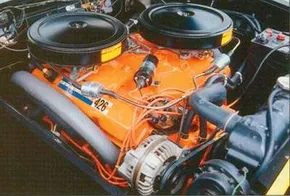
The 361cc V8 was bolted to the dirt, leaving the 1963 Dodge Polara 500 with more displacement to compete for supremacy. The base engine was a 383-cubic-inch V-8 that produced 305 horsepower through a simple two-barrel carburetor. But if you need more power, Dodge offers a “Power Pak” upgrade. This is not just an attachment. Features a high performance camshaft, distributor with two switches, dual exhaust system and 4-barrel carburetor. Total production? 330 horsepower.
Motor Trend ran this lineup with a four-speed manual transmission. The result is blistering acceleration. Acceleration from standstill to 60 mph takes just 7.7 seconds. The quarter mile time is 15.8 seconds. That’s impressive considering our test car’s final drive ratio was a modest 3.23:1. At Riverside International Raceway, the 4,400-pound Polara 500 convertible hit 116 mph in reverse.
ラムチャージャーモンスター
次に、ラムチャージャーがあります。 彼らは古い413エンジンを置き換えました。 これらは専用に作られた獣であり、全長 426 立方インチのモンスター V-8 でした。 味は2種類ありますが、どちらも美味しいです。
2 台のうち小さい方が 415 馬力を発生します。 11:1の圧縮比、「ポップトップ」アルミニウムピストン、マニュアルスロットル、デュアルカーター4バレルキャブレターを備えていました。
その兄はさらに憎たらしい。 最高出力は 425 馬力、トルクは 480 ポンドフィートで、圧縮比は 13.5:1 という驚異的です。 このエンジンには、オクタン価 102 以上の高オクタン価燃料が必要です。 これに普通のガソリンを入れても、動くことを期待することはできません。
「排気量が 426 立方インチの 425 馬力は、その排気量に非常に近く、この車はあらゆるドラッグ レースで権威を持って否定できない雷鳴を生み出します。」 – ダッジ販売アラート
设计进气量
他们是如何将如此巨大的动力装置安装到 B 型车身底盘中的呢? 秘密在于进气歧管。 两款发动机均采用带有上斜排气口的短管冲压进气歧管。
设计紧凑。 歧管组件紧贴在两个气缸组之间。 歧管的底部实际上用作挺杆盖。 这种巧妙的包装使发动机轮廓足够低,可以安装在引擎盖下,同时最大限度地提高气流以获得高转速功率。
Ease of use and hidden options
Unlike the Chrysler 300-J of the same year, the Ramcharger system was not equipped with a manifold heater. This means less complexity, but also less cold start improvements. Most of these wedge-headed monsters were packed into the 330 skinny two-door sedan. These cars became legends in the drag racing world.
But Polara 500 is not ruled out either. I ordered five Polara 500 hardtops with a 426 engine. rare. Valuable. Quickly.
More options appeared in Chrysler’s January 1963 internal design brochure. They list single four-barrel versions of the 426 at 370 and 375 horsepower. There was also a 383 engine with a compression ratio of 11:1 and an output of 320 horsepower (one 4-cylinder) or 325 hp (two 4-cylinders).
The hierarchy is clear. The basic model has a two-barrel 383. The fans can be upgraded.
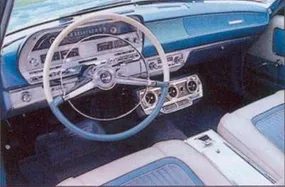
Transmission options and 426 Hemii setup
Getting power down has never been easier with these large blocks. Chrysler is fully committed to the powertrain issue, offering both manual and automatic manual and automatics that vary greatly depending on engine choice. Usually, the V-8 is mated to a new BorgWarner T-10 four-speed manual transmission. Of course it’s a solid unit. But don’t even think about putting it in the 426 Max-Performance. Certain high rev monsters require something completely different.
Chrysler’s patented A-745 heavy-duty 3-speed manual transmission was introduced in place of the factory. It comes in four different variants, all designed to handle the abuse. Again, none of these are connected to 426. If you need a manual transmission for your 426, the BorgWarner T-85 3-Speed Manual Transmission is the answer. Not the most sophisticated lever action in the world, so pair it with the Hurst-Campbell floor set. The goal is to move faster. There is no time for sloppy moves when there is so much torque to spin the tire.
Automated devices tell a different story. When the TorqueFlite was bolted onto the 426, Chrysler tweaked the internals. They installed a high-speed governor designed to delay upshifts and keep the engine revving high for horsepower. This is a brute force way to keep the power band active.
All TorqueFlites also feature new parking sprag. It is activated by a small lever next to the transmission pushbuttons. This allows you to lock the transmission in place when parked, eliminating the need to pull the handbrake to hold it in place. For larger vehicles, this is an extra level of safety.
1964 Dodge Polara 500 development
Polara 500 is more than just an equipment level. That’s the high point of the Dodge’s ambitions this year. Development focused on tightening the chassis and updating the interior to compete with the Cadillac Eldorado and Lincoln Continental.
Engineers strengthened the frame rails to handle the added weight of the optional V-8 engine and heavier suspension components. The suspension itself has been updated with stiffer coil springs and improved dampers to reduce body roll in hard corners. This is not about turning a land yacht into a sports car. The purpose of this is to making the ride more composed without compromising the luxurious, secluded feel that buyers expect.
Interior updates are important. The 500 series comes standard with bucket seats that replace the front of the bench in many configurations. Trim levels include vinyl, fabric and even leather options on request. The chrome trim has been improved and bright accents have been added to the grille, bumper and side molding. The dashboard features a new instrument cluster with clearer gauges and a more modern look, moving away from the cluttered design of the early 1960s.
The Polara 500 offers the full range of Dodge V-8s under the hood, from the 318 CID to the top-of-the-range 426 Hemi. The 440 CID Magnum V-8 is a popular choice.
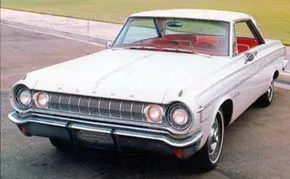
1964 年モデルは一連の混乱を打破しました。 1961 年の版以来初めて、デザイン プロセスはパニックに陥った編集や企業の二番煎じの寄せ集めではなくなりました。 これは通常のプロセスです。 危機管理の代わりに、ダッジのスタイリストとエンジニアは毎日の残業を楽しむことができます。 これは、エルウッド・エンゲルが完全に管理した最初のプロジェクトでもありました。 彼はついに、ヴァージル・エクスナーの未練を払拭し、彼自身のビジョンを押し付ける余地を手に入れた。
この任務は典型的なデトロイトの改装でした。 新しいフロント板金。 新品の2ドアハードトップルーフです。 プリマスから飛び出した新しいチーフスタイリスト、ビル・ブラウンリーが先頭に立っている。 彼はスーツとネクタイを着た紳士ですが、デザインスタジオではサメです。 彼は有利な立場を望んでいる。 ダッジをプリマスやポンティアックよりも押し上げる可能性のある何か。
New user interface
His expression completely changed. New mudguards, a renewed bonnet and an updated protective shell form the basis. Dick Watson designed the grill and made extensive use of the bar pattern. The external headlights (low beams) are located inside the oversized frame. These frames form a full-width vertical grille. The high beams are embedded directly into the grille and hidden inside the low beams.
This is a convex version of the 1962 Plymouth grill. Plymouth discontinued this look in 1963, but Brownlee liked it so much he couldn’t give it up. This theme was so effective that it was carried over to the all-new large Dodge vehicles of 1965-1966.
The bumper follows. The outer edge is recessed in the light to improve the shape of the bar. It was heavier than the 1962-1963 units. Wraps around the sides of the fender for added protection. A hem is a deep skirt that touches your back. Triangular yellow turn signals mirror the triangular inserts and each fender features Dodge’s “fratzog” logo. The Polara and 500 have satin silver and chrome moldings on the centerline of the hood, which reveals a V-shaped wind deflector.
Shape and size of the back
The back cover has new exterior engravings. The double wind deflector on the Polara and 500 models is accented with a bright black pad. The rear bumper has also been replaced. The 1963 body color was replaced with a darker skirt.
Cars have grown. The 1964 model was 1.6 inches longer and 1.5 inches wider. The rear rail is 2.1 inches wider.
屋上バトル
ベルトラインの変更により、新しい 2 ドア ハードトップ ルーフが採用されました。 1962 年と 1963 年には、コストと時間の問題から、セダンとハードトップはルーフ パネルを共有せざるを得なくなりました。 現在、彼らは予算を分割しています。
ダッジとプリマスは最終的なデザインをめぐって競争しなければならなかった。 スタジオ間の「競争」によって勝者が決まります。 ダッジの提案の 1 つは、オリジナルの 1962 年プリマス「スーパー スポーツ」ルーフを大幅に変更したバージョンでした。 ブラウンリーはそれが気に入りました。
プリムスのデザインが勝利した。 狭いベースに向かって先細になっているくさび形の C ピラーが特徴です。 微妙な折り目が柱の表面に現れます。 角度のついたリアウィンドウがピラーを包み込みます。 ガラスの面積は前年の 917 平方インチから 1964 年には 1,275 平方インチに急増しました。 ガラスの面積が増えました。 もっと光を。 見た目がすっきりします。
1964 ダッジ B ボディ車のデザイン
1964 年のデザインはエルウッド エンゲルが全面的に指揮した初めての作品であり、ヴァージル エクスナーのアイデアを彼自身のアイデアに置き換える機会が増えました。
この変化は表面的なものではありません。 これは文化です。 スタジオは反応を停止し、デザインを開始します。 ブラウンリーのバーベルのテーマは、単にトリックを磨くことだけではありません。 これは声明です。 屋根戦争ではプリマスが勝ったかもしれないが、ダッジは 60 年代半ばのモパー時代を特徴づけたフロントエンドの性格を保持していた。
サイズも重要です。 余分な幅とトレッドは、単に広く見えるだけではありません。 車の乗り方が変わります。 もっと硬く。 減らす。 たくさんの種類があります。 リアバンパースカートにより、ボディラインの視覚的な崩れを解消します。 この車には、1963年バージョンにはなかった上から下への流れがあります。
ガラス面積は約 400 平方インチ増加しました。 これは決して小さな飛躍ではありません。 視認性に影響します。 車内の雰囲気に影響します。 窓が大きいということは、内部が箱ではないことを意味します。 ここは空間です。
ブラウンリーとプリマスの対立は単なるエゴ以上のものだった。 それは市場シェアに関するものです。 プリマスが優勢なら、ダッジには他に目立つ何かが必要だ。 バーベルグリルはまさにそれを実現します。 それは認識できます。 これは攻撃的です。 これは微妙なことではありません。
1964 年のポララ 500 は革命ではありませんでした。 これは訂正です。 リセットします。 今回、デトロイトは初めてうまくいきました。
老爷车
肌肉车
跑车
新车搜索
二手车搜索
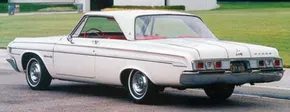
The 1964 Dodge B-body series, including the 1964 Dodge Polara 500, featured a roofline designed specifically for NASCAR. This is more than just an aesthetic tweak. The vertical pillars of the previous generation have been replaced by a brisk, sloping profile that makes the car look fast even when stationary.
But don’t be fooled by its aggressiveness.
In fact, the 1964 Dodge roof was much less eye-catching than the best-selling semi-fastbacks introduced by Ford and Mercury in mid-1963. These Ford models were innovative. Designed to cut through the air. Dodge’s approach is more subtle. It’s not just about style, it’s about aerodynamic efficiency.
The comparison puts Dodge’s chief stylist Bill Brownlie in a difficult position.
Brownlee returned from a media preview at the Chrysler Proving Grounds in Chelsea, Michigan with good news, but also a headache. The car press loves the new hardtop roof. They also asked a simple but shocking question: “What do you call it?”
Mr. Brownlee did not answer. He had to come back the next day. He needs a name. Quickly.
Her stylist spent hours thinking of her nickname. Nothing grabbed me. The ceiling remains anonymous. that’s it.
The Windshield and Cowl Overhaul
屋顶并不是唯一的变化。 挡风玻璃也进行了重大更新。 克莱斯勒设计副总裁埃尔伍德·恩格尔决心抹去他的前任维吉尔·埃克斯纳的记忆。 Exner’s “speedboat” cowl was dead. Long live the flat cowl.
恩格尔为预算而战。 新的前围板是汽车上最昂贵的零件之一。 但他拿到了钱。
新的整流罩没有像旧设计那样升起与玻璃接触。 This forced a new windshield. 结果是玻璃面积大幅增加。
- 1964 年玻璃面积: 1,304 平方英寸
- 1962-1963 玻璃面积: 1,147 平方英寸
新玻璃的倾斜度也较小。 A柱变得更窄。 它在顶部稍微向前移动。 车外的视野更加开阔。 更干净了。
The Cost of Design
これらの変更は無料ではありません。 They added about $3.60 to the build cost of each vehicle.
It sounds small. It wasn’t.
Tooling costs for the 1964 models hit $24.7 million. これは、大幅に改造された 1963 年代とほぼ同じ額です。 Why spend that much? Because Dodge could spread the expense over two model years and four successful cars. The 1964 Dodge and Plymouth shared the platform. The 1965 Coronet and Belvedere intermediates followed suit.
The economics worked. The design was expensive, but it was also shared.
Inside the Cabin
A new cowl means a new instrument panel. Engel hated Exner’s minimalist motif. He despised the free-form cluster pods that had dominated previous sprints.
Straight boards prescribed by Engel. Full width. spread the lips. On the Polara 500, that lip was padded.
The layout is predictable. Gauges, dials and controls are arranged in a common combination of circles and rectangles. It’s not exciting. It was functional. This is exactly what Engel wanted.
Why the 1964 Dodge B-Body Matters
The 1964 Dodge B body was not the most radical car on the market. It doesn’t have the flashy styling of some of its competitors. But it’s a careful balance.
It offers NASCAR-ready aerodynamic performance without compromising everyday usability. The windshield is wider and visibility is improved. It has a simpler and more durable dashboard. The company does all this by sharing costs with its sister brands.
The roof line may not have a name. But the engineering behind it didn’t need one.
1964
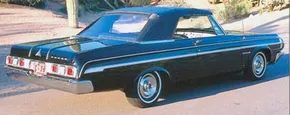
Chrysler’s Technical Data Department didn’t pull punches. On May 8, 1963, they issued a booklet outlining the 119-inch-wheelbase Dodge for 1964. The 1964 Dodge Polara 500 described in that internal memo looked nothing like the car that eventually hit the showroom floor.
In the original blueprint, the 500 had a distinct, clean side profile. A diecast, horizontally ribbed texture nested in the U-shape on the front fender. From that focal point, a single bright molding flowed along the undercut body-side contour. It was austere. It was clean. Bright sill and wheel-lip moldings carried over from 1963, but the bumper extension casting was scrapped. Instead, the sill molding was lengthened aft of the rear wheel, outlining the bumper end where it belonged. The 1964 Dodge Polara 500 nameplate was integral to the front-fender casting itself.
The details were specific. The hood windsplit molding was all bright, abandoning the two-tone silver and bright look. In the back, triple square taillights—three per side—sat inside a carwide textured chrome panel. Vertical backup lamps flanked the license plate.
It was a cohesive design language. A premium look.
Then, on May 23, the letter went out.
Recipients of the original report were informed that in 1964, the Polara 500 would no longer be marketed as a separate premium-line automobile. It would become a “sport option” on the Polara highline series.
Consequently, all of the 500’s unique exterior trim was cancelled.
The Compromise Trim
Production 500s ended up wearing the cluttered Polara side trim designed by ex-Packard stylist George Krispinski. This used the low-line 330-series “trace” molding. Below that ran a wider, black-paint-filled double-rail molding, a few inches down, running the length of the bodyside. It ended in an enlarged portion containing the series name.
On Polara 500s, the black was replaced with an engine-turned silver insert. A separate “Polara 500” nameplate was added to the front fender. The chrome lower deck panel was retained, but it was added to all Polaras, not just the 500s.
The taillight groupings—red/white/red—smacked quite a bit of Chevy’s Impala. At least the new convex wheel covers with fratzog spinners remained 500 exclusives.
The Engine Question
The demotion didn’t stop at cosmetics. The letter explained the powertrain situation bluntly. Since an engine was not included in the sport option package, the 230-horsepower 318-cubic-inch V-8 became the standard powerplant for the new Polara 500 sport option.
Sticker price for the 500 package was $170.
The two-barrel 383-cubic-inch V-8 was available for another $71. The four-barrel job offered for $122 extra.
Why the downgrade? Simple economics. The “take rate” for the Polara 500 had dropped dramatically during 1963. Dodge product planners felt that the tooling required for the originally planned ornamentation on the 1964 500 was no longer a good business decision.
They were justified. 17,787 customers opted for the less-distinctive-but less-expensive-1964 Polara 500. That’s more than double the sales of 1963.
Pentastar Logo
1963 年のダッジ ポララ 500 モデルの生産中に、クライスラーのビジュアル イメージは微妙ではありますが永続的な変化を遂げました。 金色の五芒星は会社全体の新しい企業ロゴで、前輪開口部のすぐ後ろの助手席側フェンダー下部に貼られています。 この位置は任意ではありません。 ドライバーの視界や車の対称性を妨げることなく、通行人がバッジに気づくように、意図的に助手席側フェンダー (縁石側) に配置されています。
インテリアの変革と黒の到来
ポララ 500 の外装の変更は 1964 年には最小限でした。 前年の独特の装飾は取り除かれましたが、内装はその特徴を保っていました。 ビニール製のバケットシートは対照的な色で用意されていますが、現在は狭いU字型のアクセントバンドに限定されています。 これらのバンドは、滑らかなボルスターを垂直のプリーツインサートから分離し、500 シリーズの豪華さにさりげなく敬意を表しています。
インテリアカラーは、新たに追加されたブラックを含む基本6色からお選びいただけます。 これは大きな変化です。 クライスラーのデザイン担当副社長であるエルウッド・エンゲル氏が就任したとき、ラインナップに黒のインテリアが存在しないことに驚いたという。 彼はこれを修正するために迅速に行動し、1964 年には黒が実行可能な選択肢になりました。
プッシュボタン時代の終焉
For hobbyists still clinging to the “advanced” mentality, 1964 was a year of failure. This marked the end of クライスラーの有名だった自動変速機用プッシュボタン。 In the 500 series, these buttons have been removed and replaced with a new floor console. The console has either a four-speed manual transmission or a TorqueFlite automatic transmission. コンソールの前方端にはタコメーターの設置スペースがあり, which is an attractive feature for the performance minded.
The new Bボディ用コンソール also has a padded armrest with a lockable storage space underneath. This shift to practicality will disappoint some purists.
Engine and transmission upgrades
Under the hood, the engine selection was largely carried over from 1963, but with significant changes. The base 426立方インチのウェッジエンジン is now a more controllable version. It had a single 4-bar carburetor, a マイルドなカムシャフト, and a compression ratio of 10.3:1. The power is 365 horsepower. It’s worth noting that every time the 426 engine was ordered, more powerful brakes were standard equipment.
As for the transmission, a Chrysler-designed A-833 four-speed manual replaced the ボーク・ワーナー T-10。 The torque capacity of the new transmission has increased by 11% and is better suited to the increased power.
The more powerful 426 engine is available with two special versions of the A-727B TorqueFlite automatic transmission. These upgrades are important to handle the extra torque and power of the high-performance models.
パフォーマンス指標
モーター トレンド は、365 馬力の 426 と 4 速マニュアル トランスミッションを搭載した 1964 年製ポララ 500 ハードトップをテストするためにリバーサイドに戻りました。 結果はよく知られています。 この車は0-60mph加速に7.7秒を要し、1963年の結果と一致した。 1/4マイルタイムは 15.9 秒とわずかに遅かったが、これはおそらくギアリングやテスト条件の違いによるものと思われる。 ただし、最高速度は時速118マイルまで上昇します。
車に関する詳細情報は以下をご覧ください:
- 老爷车
- 肌肉车
- 跑车
- 新车搜索
- 二手车搜索
道奇50
1964 was a big year for Dodge. This is the division’s 50th anniversary as a car manufacturer, and we’re celebrating this milestone in unique style. There’s also a special exterior paint option called “Anniversary Gold” that sounds even better than it looks. There is also a concept car simply called “Charger”. Based on the 1964 Polara 500, this prototype show car was a two-seater roadster finished in Candy Apple Red. It features a frameless tapered windshield and squat anti-roll bars with integrated headrests for the driver and passenger.
The first charger is still there. It is now in private hands and serves as a reminder of what could have been.
This concept is powered by a 426 cubic inch Hemi V-8. Chrysler introduced this engine in February 1964 exclusively for circle-track and dragstrip duty. The stakes are high. Chrysler executive Elwood Engel was driving home one summer night. His stylists watched the traffic slow down and secretly hoped for rain. They didn’t hate Engel. They didn’t want him to get sick. They couldn’t ignore the image of their boss stuck in a luxury convertible, stuck in slow-moving traffic. This picture is too delicious to pass up.
On September 20, 1963, the nation faced another surprise. Dodge launched the 1964 B-bodies at 3,305 dealers nationwide. This is the earliest launch in the brand’s history. The strategy worked. The annual production of this model is 248,700 units. That’s just 26,000 units behind the equivalent Plymouth. Including the Dart and 880 lineups, the division crossed the 500,000 mark for the first time in its 50-year history. This was almost a 12% increase over 1963. After a disastrous loss two years ago, Dodge has finally broken into the “mainstream”. This is an area that Chrysler President Lynn Townsend and Engel have been passionate about.
The Personal Luxury Failure
Although sales were successful, attempts to produce a “cheap” personal luxury car between 1962 and 1964 failed. Objectively speaking, the Polara 500 is just a side project that considers other things in this area. In 1965 the car was replaced by the new Monaco with premium bucket seats. The Monaco is led by Dodge’s new 121-inch wheelbase.
Plans for the Monaco to be Dodge’s personal luxury car were scrapped just a year after its launch. In 1966, the Monaco name was replaced by Custom 880. This moved the 1966 Monaco 500 to the renamed model. The 500-piece package was still a Polara accessory in 1969, but things have changed. Dodge designers forgo personal luxury. Instead, they turned to muscle cars. The big engines Coronets, Chargers and Challenger are the main characters.
Which Polara 500 should you collect?
In terms of collecting, the 1964 Polara 500 is generally the least popular. It was the most-numerous 500 produced, lacking exclusivity. It is also the least noticeable from an appearance point of view. This reflects its declining status as an option package rather than as a model itself. In addition, it has a standard V-8 engine, which is the smallest of the three engines available.
The 1962 and 1963 models were much closer. Both have unique side trim and are sold as separate models. Production was at its lowest in 1963. However, it is indistinguishable from lesser Polaras from the front or back. The 1962 model was the most unique in appearance with its black grille and unique tail and reverse light assemblies.
The 1962 Polara 500 was the most unusual style. However, the standard engine was the 361 V-8. The 1963 had the larger 383. If you’re looking for value, the best value is a 1962-1964 Polara 500 with a 413 or 426 Ramcharger V-8. But it’s not as easy to drive as the more manageable standard V8 engine.
“Dodge designers abandoned personal luxury to build big-engine muscle cars like the Coronet, Charger and Challenger.”
For more information about the car, see:
-
a classic car
-
muscle car
-
sports car
-
Search for a new car
-
Search for used cars