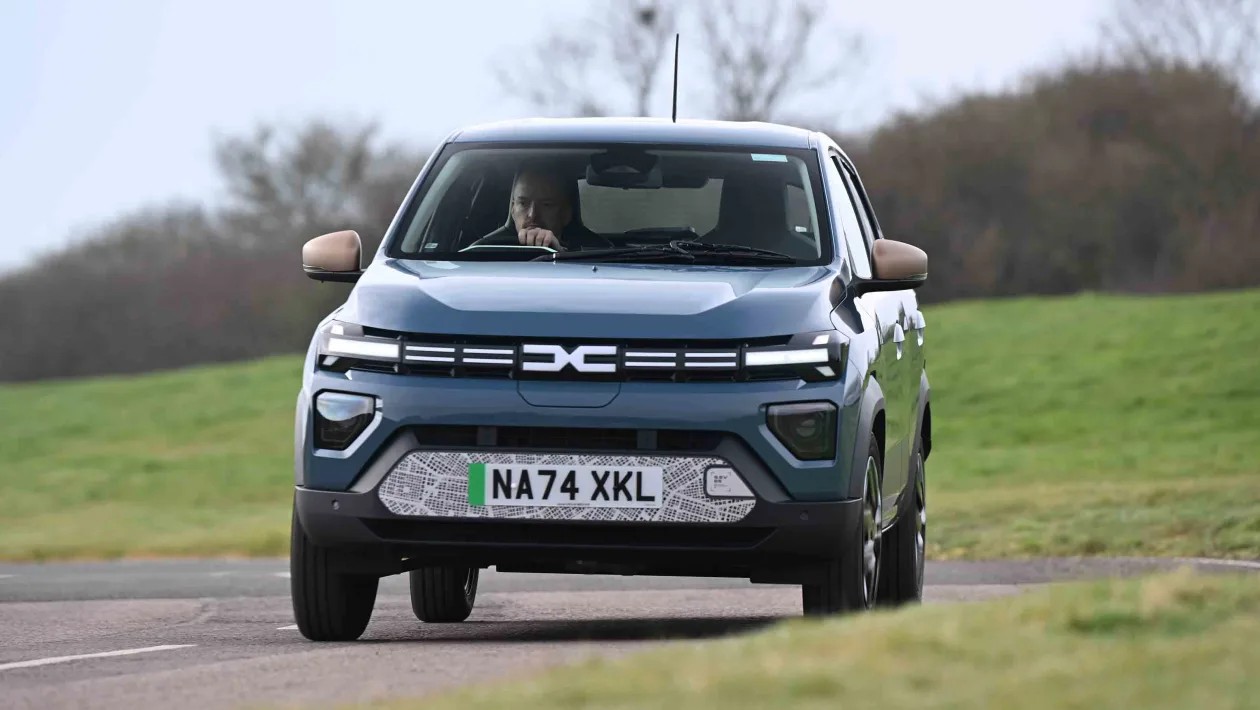
The UK’s Zero Emission Vehicle (ZEV) mandate is currently limiting Dacia’s sales potential, but the automaker plans to overcome this with four new electric vehicle (EV) launches by 2030. Dacia UK’s brand director, Lina Ribeiro, has outlined a strategy for controlled expansion, acknowledging that the ZEV regulations will act as a constraint unless adjusted by the government.
The Impact of the ZEV Mandate
Currently, UK car brands must sell at least 33% pure electric vehicles this year, rising from 28% in the previous year. Dacia’s only EV, the Spring, accounted for 17% of its total registrations last year. Ribeiro stated that the ZEV mandate will likely “control our growth,” as the company balances sales volume with regulatory compliance.
This restriction is significant because it forces automakers to prioritize EV sales, even if consumer demand for combustion engines remains high. The mandate reflects a broader push by the UK government to accelerate the transition to electric mobility, aligning with net-zero targets.
Upcoming EV Models to Drive Growth
To meet emissions obligations, Dacia is developing four new EVs. The first will be a small SUV, designed to replace the Spring. This new model will be based on the Renault Twingo, sharing battery and motor technology to lower production costs and maintain Dacia’s value proposition.
The target price for this vehicle is under €18,000 (approximately £16,000), making it one of the most affordable EVs on the market. Unlike the current Spring, which is assembled in China, the successor will be manufactured in Slovenia, potentially qualifying it for UK Electric Car Grants.
The next-generation Sandero, expected in 2028, will also include an all-electric version. Additionally, a Dacia version of the Renault Bridger is under consideration.
Leveraging Renault’s EV Technology and Avoiding Penalties
Dacia is currently compliant with the ZEV mandate by pooling emissions with its parent company, Renault. The launch of EVs like the Renault 5 and Alpine A290 helped the group achieve the 28% threshold last year, with electric cars representing 23% of the total UK market.
Failure to meet the ZEV mandate can result in fines of around £15,000 per car, making compliance crucial. Dacia benefits from leveraging Renault’s established EV technologies at a lower cost, as the company prioritizes affordability in its product strategy.
Competition from New Entrants
Dacia faces increasing competition from Chinese automakers such as BYD, Chery, and Jaecoo. While acknowledging the impact of these newcomers, Ribeiro believes Dacia’s design, cost-of-ownership, and established brand reputation will help it maintain its market position.
The entry of Chinese brands into the UK market is reshaping the automotive landscape, forcing established players to innovate and compete on price. Dacia’s strength lies in its 70-year history in Europe, which provides a level of brand trust that newer entrants lack.
Dacia’s future growth in the UK hinges on its ability to deliver affordable EVs that meet regulatory requirements while maintaining its core value proposition. The upcoming models are designed to address these challenges, ensuring the brand remains competitive in a rapidly evolving automotive market.