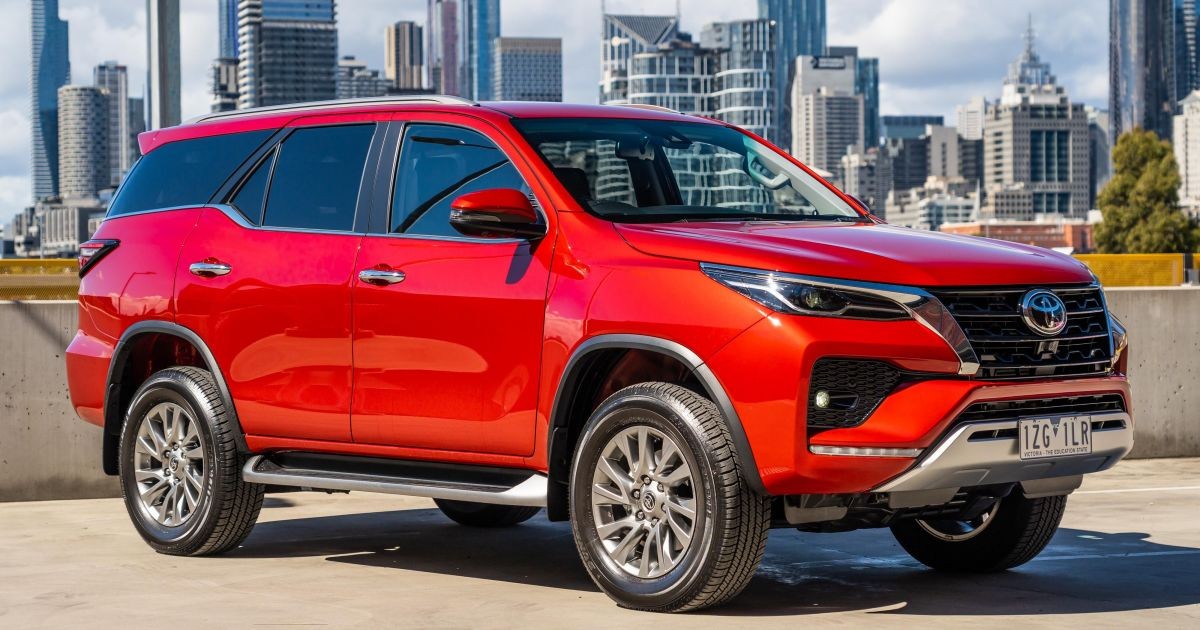
After over a decade on Australian roads, the rugged Toyota Fortuner SUV has driven off into sunset. Toyota Australia cited shifting customer preferences as the reason behind axing the slow-selling vehicle in mid-2026. Though it attracted a dedicated group of buyers, the Fortuner couldn’t keep pace with rivals like the Ford Everest and Isuzu MU-X.
“Fortuner has been a great product for us over the years and found a relatively small but enthusiastic customer base,” said Sean Hanley, Toyota Australia’s vice president of sales and marketing. “But with customer preferences shifting in Australia, we made the decision to discontinue the Fortuner.”
The company acknowledged that existing Fortuner owners are migrating to other models within their lineup, particularly the popular HiLux ute or venturing into larger SUVs like the LandCruiser Prado and LandCruiser 300 Series.
Launched in 2015 with an enticing starting price below $50,000 AUD, the Fortuner aimed to capture buyers seeking a diesel alternative to the petrol-only Kluger SUV (now exclusively available as a hybrid). Sharing its underpinnings with the HiLux, it boasted a potent 2.8-liter turbo-diesel engine and offered both rear- and four-wheel drive configurations.
Price Point and Competition
The Fortuner’s competitive pricing strategy placed it below the Ford Everest, another newcomer to Australia in 2015. While both vehicles targeted buyers drawn to off-road capability, Ford positioned the Everest as a more upscale alternative to Toyota’s established LandCruiser Prado.
Despite its lower price tag and diesel powertrain advantages, the Fortuner consistently lagged behind its rivals in sales figures. Its best year was 2022, with 4614 units sold compared to the Everest’s 10,314 and the MU-X’s 10,987. The Prado, priced higher than both, still dominated the segment with 20,710 sales that year.
Over its lifespan in Australia (2016–2024), the Fortuner averaged a meager 3481 annual sales, consistently trailing even the more expensive LandCruiser Prado.
Toyota’s Perspective: A Niche Player with Purpose
Toyota maintains that the Fortuner fulfilled its intended purpose within their portfolio. While it wasn’t designed to be a top-selling model like the HiLux, it carved out a niche for itself among buyers seeking specific attributes.
“Each product we put in the market has a role; Fortuner had a role we knew was never going to be the number one selling Toyota,” Hanley explained. “It [the Fortuner] was a success in what we wanted it to do, but with the expansion of the HiLux range and rationalisation of the product offering, it’s just a normal business case for us.”
Toyota’s decision emphasizes the dynamic nature of the automotive market. Consumer tastes are evolving rapidly, with SUVs becoming increasingly popular while traditional utes maintain their strong appeal. This shift in demand forces manufacturers to make tough decisions about which models remain viable in specific markets.
The discontinuation of the Fortuner highlights how even established brands must adapt to changing consumer preferences and optimize their offerings for sustained success.