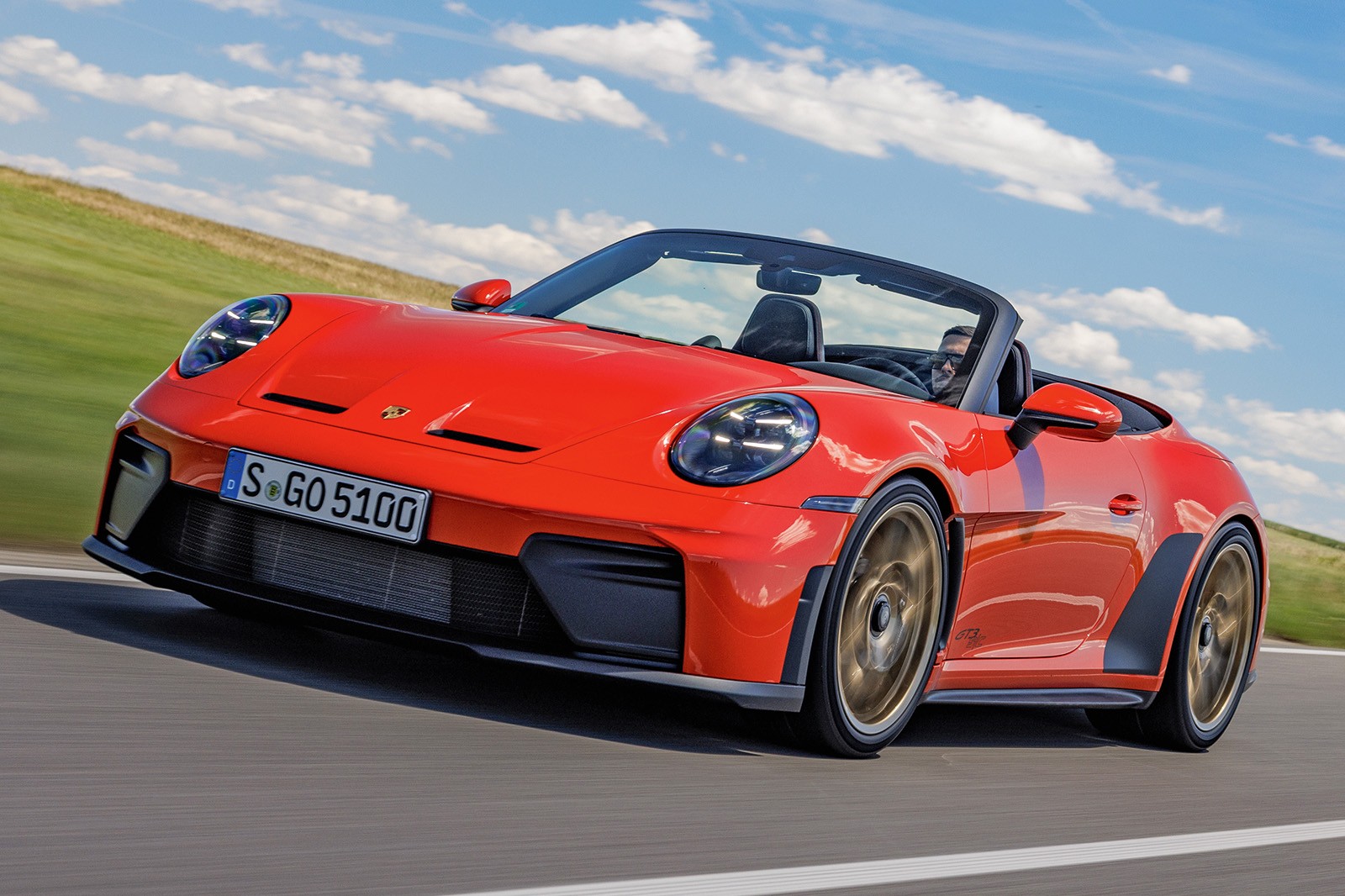
Why do it. That’s the question everyone asks.
Andreas Preuninger, boss of the Porsche GT division, admits it. “The number one talking point is ‘why?’” he says.
It’s a fair question. A convertible GT? It sounds like an oxymoron. Usually, chopping the roof off a car invites flexibility, floppiness, a loss of purity. The coupe is always the hero. The roof is always the problem.
But look at it differently. What if this isn’t for the track. What if it’s for your road. The empty one at 6 pm in late June. Sun warming the asphalt. Air conditioning off. Windows down. The engine screaming.
Noise is “one of the top three reasons” people buy a GT car.
Preuninger gets it. Previous owners of Speedsters and Spyders loved the experience. They hated the fiddly, manual hoods. They told Porsche: give us an electric roof. We’ll take the weight penalty. 10kg extra. That’s all we need for convenience.
So they built it. The S/C. Short for Sport Convertible. The initial orders came in fast. Fast enough that the engineers are probably kicking themselves for not launching this years ago.
It is heavier, of course. By 74kg to be precise. But here’s the twist. Only about 30 of those kilograms are actually in the hood itself. Why. Magnesium. Lots of it. The roof mechanism comes from the Turbo S. It’s light. It’s expensive. It’s smart.
The other weight goes into the bones of the car. The body-in-white has to be stronger to handle the missing pillar. They wanted to keep torsional rigidity at around 27kNm/deg. Close enough to a coupe. Good enough to not feel like a boat.
The trick was finding 75kg somewhere else to lose. To bring the S/C back down to earth. Near the weight of a manual GT3 coupe.
They went shopping for grams.
- Wheels: Magnesium centre-lock rims. Standard issue now. Shaves 9.1kg.
- Brakes: Carbon-ceramics. Lose another 20.3kg right there.
- Bodywork: Carbonfibre wings and doors. Borrowed from the 11 S/T project. They look different. Sharper lines.
- Suspension: Parts from the Weissach Package. More carbon. Less steel.
Then they cut the dead weight. Literally. No rear seats.
And the gearbox? Manual only. No PDK dual-clutch here. No automated shifting for this driver. You work for your gear.
The result? 1,497kg. Fully fuelled. Wash fluid included.
Compare that to a manual GT3 coupe at 1,462kg. It is heavier. Technically.
But try that on for size. Add the PDK gearbox to a standard GT3. Add a few options. Maybe someone leaves a tuba on the deleted back seat (wait, no they can’t, but you get the idea). The gap disappears. The difference becomes theoretical.
You get the noise. You get the wind. You get a car that feels like it wants to be driven. Not studied.
So yes, it is a convertible. Yes, it is slightly softer than a glass-greenhouse GT3. But maybe that doesn’t matter when the sun goes down and the road opens up.