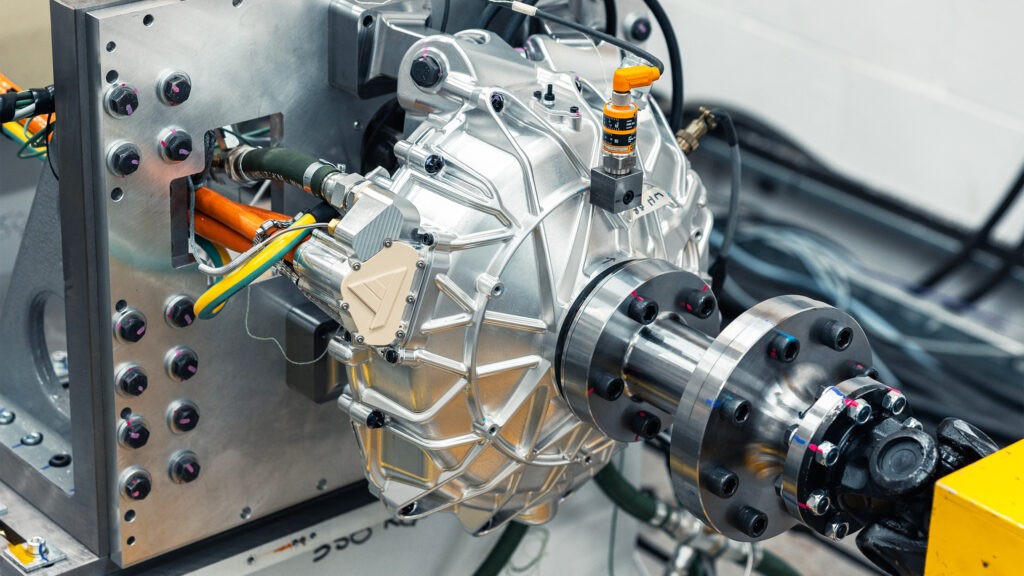
Mercedes-Benz, through its subsidiary Yasa, is developing electric motor technology so efficient that traditional rear brakes may become obsolete in future electric vehicles (EVs). This radical shift is enabled by a new axial flux motor capable of delivering up to 1,006 horsepower (750 kW) while weighing just 28 pounds (12.7 kg). The innovation lies in unprecedented regenerative braking capabilities, allowing the motor to recapture so much energy during deceleration that conventional braking systems could be scaled down or even removed entirely.
The Breakthrough: Axial Flux Motor Technology
Yasa’s new motor achieves a power density of 59 kW per kilogram (35 hp/lb) – an unofficial record. This means it is exceptionally powerful for its size and weight. The motor can produce between 469 and 536 hp continuously, paired with a 33-pound dual inverter.
While in-wheel motors aren’t new, their widespread adoption has been hampered by weight and power limitations. Yasa’s design overcomes these hurdles, making it viable for high-performance EVs, including hypercars.
Why This Matters: Weight Savings and Efficiency Gains
The potential elimination of rear brakes – along with driveshafts – could result in significant weight savings: up to 441 pounds (200 kg) in existing models and even 1,100 pounds (500 kg) in ground-up designs. This reduction in weight directly translates to improved efficiency and potentially increased range for EVs.
“Thanks to its exceptional regenerative capability, this system has the potential to dramatically downsize rear brakes on an EV – or even remove them entirely in certain architectures,” says Yasa’s chief of New Technology, Simon Odling.
This is more than just a mechanical change; it opens up opportunities for automakers to rethink vehicle packaging, aerodynamics, and suspension design. By freeing up space previously occupied by heavy braking components, manufacturers can optimize vehicle performance and aesthetics.
Implementation and Future Models
The new axial flux motors are already slated for use in the all-electric Mercedes-AMG GT 4-Door sedan and SUV. However, these initial applications will utilize one motor at the front and two at the rear, not as an in-wheel configuration. The true potential of this technology—eliminating rear brakes entirely—will likely emerge in future EV architectures designed from the ground up.
This development represents a major step toward simplifying EV design and maximizing efficiency, potentially reshaping the future of electric vehicle engineering.