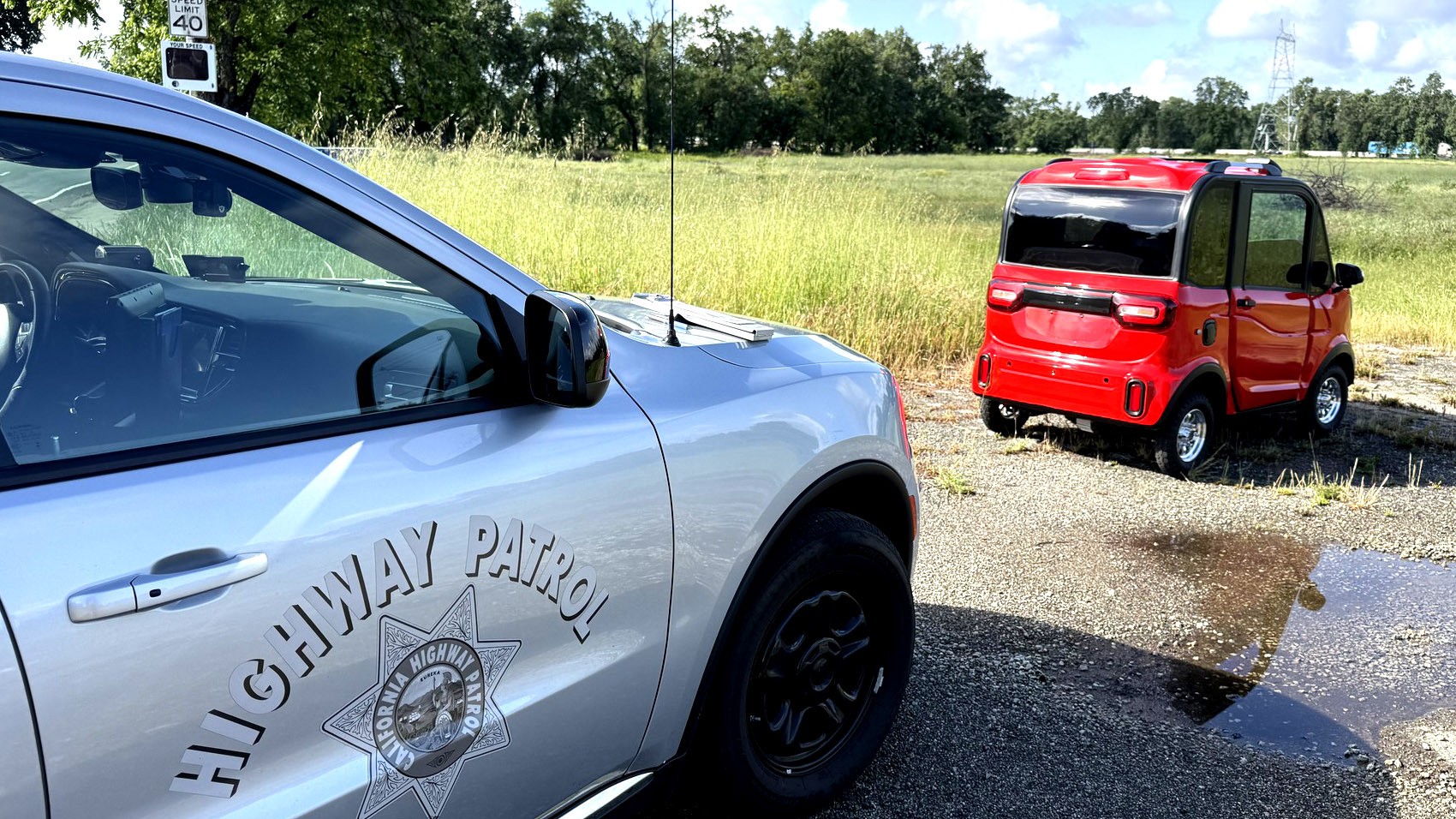
A routine traffic stop in California has highlighted the often-overlooked regulatory reality of low-speed electric vehicles (LSVs). While these small, car-like scooters—often imported from China—are designed for short, slow trips, they are still subject to standard traffic laws. In this incident, California Highway Patrol (CHP) officers in Redding pulled over a tiny EV not just for moving too slowly, but because the driver was operating the vehicle with a suspended license.
A Traffic Hazard Disguised as a Novelty
The encounter began when the LSV was identified as a moving obstruction. According to CHP reports, the vehicle was traveling at speeds significantly below the flow of traffic, causing backups on the road. This is a common issue for LSVs, which are typically capped at a maximum speed of 25 mph (40 km/h).
However, the situation escalated from a simple speeding or obstruction citation when officers checked the driver’s credentials. The individual behind the wheel was allegedly driving with a suspended license, turning a quirky roadside moment into a serious legal infraction.
The Key Takeaway: Despite their toy-like appearance, low-speed vehicles are legally classified as motor vehicles. This means drivers must possess a valid license, registration, and insurance, just like any other car owner.
What Are Low-Speed Vehicles?
To understand the legal framework, it is important to define what an LSV is under California law. These are four-wheeled motor vehicles capable of traveling between 20 and 25 mph (32–40 km/h) with a gross vehicle weight rating under 3,000 pounds (1,361 kg).
While they may resemble the middle ground between a Fisher-Price toy and a compact car, they are fully legal on public roads if they meet specific safety standards. Required equipment includes:
* Headlights and taillights
* Brake lights and turn signals
* Side mirrors
* Seat belts
* Windshield wipers
* A parking brake
* A backup camera
Why Location Matters for Safety
Even if the driver in this incident had a valid license, the vehicle’s presence on that particular road was likely problematic. California law prohibits LSVs from operating on roads with speed limits above 35 mph (56 km/h).
These vehicles are designed for specific environments:
* Dense urban areas with low-speed limits
* Retirement communities
* Beach towns
* Short neighborhood errands
Placing a 25 mph vehicle on a road where traffic flows at 40 mph or faster creates an immediate safety concern. The significant speed differential turns the LSV into a traffic impediment, increasing the risk of rear-end collisions and disrupting the flow of legitimate traffic.
Conclusion
This incident serves as a reminder that the rise of affordable, compact Chinese EVs does not exempt them from standard traffic regulations. Whether it is a full-sized sedan or a tiny low-speed vehicle, drivers must hold a valid license and operate their vehicles in appropriate environments to ensure public safety.