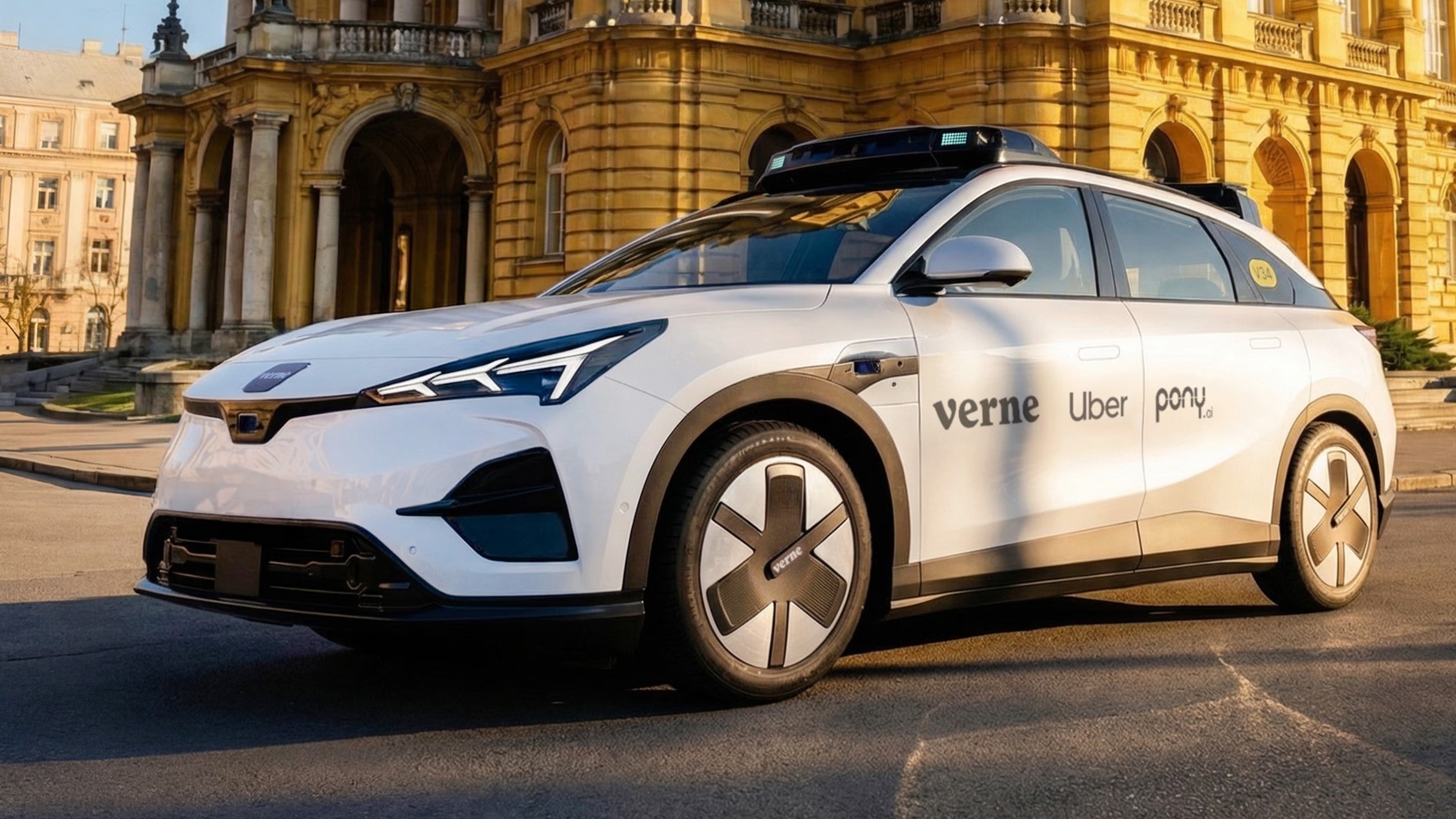
Croatia has officially entered the autonomous vehicle race, launching Europe’s first commercial robotaxi service. The venture, led by startup Verne and backed by electric hypercar magnate Mate Rimac, is offering self-driving electric vehicles to the public in Zagreb.
The launch marks a significant milestone for the European Union, which has largely watched the United States and China dominate the early stages of autonomous mobility. By introducing a highly affordable pricing model, Verne aims to accelerate public adoption and demonstrate the viability of Level 4 autonomy in a complex urban environment.
A Disruptive Pricing Model
To incentivize early adoption and generate buzz, Verne has set a flat fare of €1.99 ($2.22) per trip. This rate is significantly lower than traditional taxi services or ride-hailing apps like Uber, making it cheaper than many commuters spend on a single bottle of water.
This introductory price covers any trip within Verne’s initial operating zone, which spans 35 square miles (91 square kilometers). This area includes key parts of the Croatian capital and Zagreb Airport. The company plans to expand this geographic footprint in subsequent phases.
Technology and Fleet Composition
Verne’s current fleet consists of 10 electric SUVs based on the Arcfox Alpha T5, a model produced by Chinese automaker BAIC. The complex autonomous driving capabilities are powered by Pony.ai, one of China’s leading self-driving technology firms.
Users can book rides through Verne’s proprietary mobile application. While access is currently limited to 300 verified users, with several thousand more waiting in line, the company plans to integrate with Uber in the near future. This partnership is expected to drastically increase demand and streamline the user experience.
Safety Regulations and Human Oversight
Despite the “autonomous” label, the service is not entirely driverless. To comply with current local regulations during this initial rollout phase, each vehicle carries a trained safety operator behind the wheel. These operators are prepared to take control in emergency situations but do not drive the vehicle under normal conditions.
Verne has stated its intention to remove human overseers from the vehicles by the end of the year, transitioning to fully unsupervised operations as regulatory frameworks evolve and technology proves its reliability.
Performance on the Road
Early tests suggest the technology is mature enough for real-world traffic. Journalists from the Agence France-Presse (AFP) reported that the vehicles navigated Zagreb’s streets with confidence. Key observations included:
- Smooth Navigation: The cars handled standard traffic flow, overtaking slower vehicles without hesitation.
- Obstacle Management: The systems successfully reacted to unexpected obstacles and erratic behavior from other drivers.
- User Interaction: In one instance, after a sudden stop caused by another driver entering the wrong lane, the robotaxi’s electronic voice assistant offered a polite apology—a level of courtesy often lacking in human-driven services.
Future Expansion and Ambitions
Mate Rimac, known for his work with Bugatti Rimac and high-performance electric hypercars, is leveraging Verne to pivot from luxury performance to mass-market mobility. The startup’s ambitions extend far beyond Croatia.
Verne is currently in discussions with 11 cities across Europe, the UK, and the Middle East, with more than 30 additional cities under evaluation for future expansion.
Long-term plans include replacing the current modified SUVs with purpose-built, two-seat autonomous pods. These custom vehicles, first revealed a couple of years ago, are designed specifically for robotaxi operations, promising greater efficiency and a distinct user experience compared to adapted consumer vehicles.
The launch of Verne’s service signals a shift in the European mobility landscape. By combining aggressive pricing with proven Chinese autonomous technology, Croatia is positioning itself as a testing ground for the next generation of urban transport.