Regional differences kill global products.
It’s simple as that.
Audi knows this better than most.
The brand launched in China way back in 1988. Before BMW. Decades before Mercedes caught the wave. They quickly realized a funny thing: Western luxury meant one set of rules, but Chinese luxury demanded another. Specifically: space. Big back seats. Stretching the wheelbase became the default strategy. Then came SUVs. Then whole models built only for the market.
Now, with SAIC’s help, they are pulling a Houdini act. A separate brand.
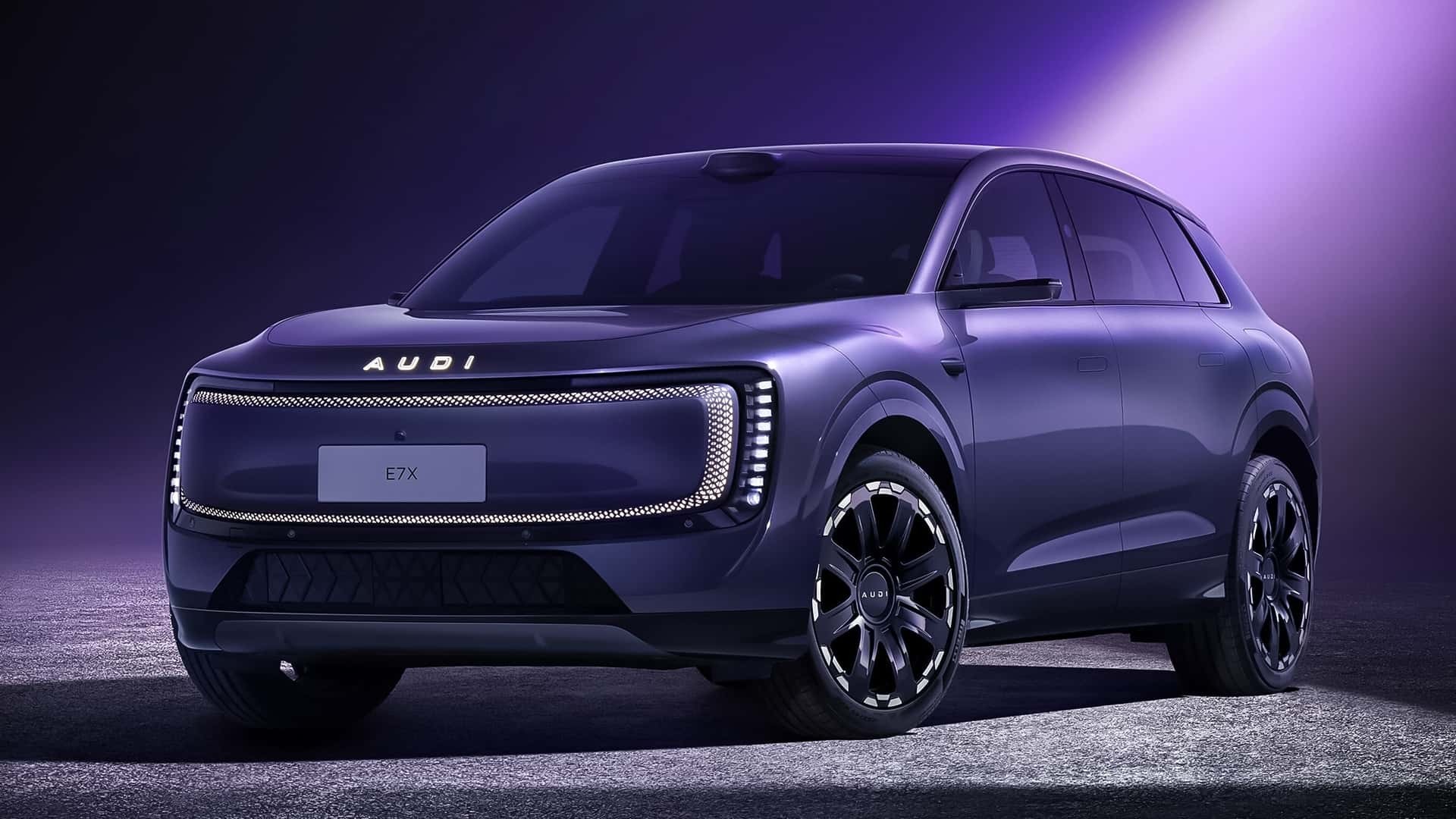
Meet AUDI.
Note the spelling. All caps. No four rings.
This is strictly for China.
It exists nowhere else on earth.
First came the E5 Sportback. Then the E7X SUV. A sedan follows soon.
Why bother? Why build two entirely separate identities?
Rouven Mohr, Audi’s chief technical officer, put it bluntly to GoAuto :
The idea of the global car — one car that fits the whole world — this is gone, honestly. It’s just not fitting in the US or China. You need local-for-local.
It’s a philosophical split. Europeans? They want knobs. They want buttons that click. They want cars that survive five owners. Chinese buyers want screens. Voice control. Smart cockpits. AI-first experiences.
Two different planets.
Tactile durability vs. digital connection.
— Audi Executives
Does this mean the Four Rings are dead in China?
Not entirely. The heritage nameplate stays. It keeps the German soul for purists. But the growth? That’s in the AUDI badge. These cars look different inside and out. They feel different. The 1932 Auto Union heritage takes a back seat to immediate local relevance.
Interestingly, the global brand is shaking up too.
Design philosophy shifts. “Strive for Clarity.”
The upcoming electric A4 (2028) leads this charge. More physical switches return to interiors. Quality focus returns.
It feels like a panic response, really.
Or perhaps just honesty.
Legacy automakers rested on laurels for too long. Audi, BMW, Mercedes? No competition. Until now. Chinese brands stopped copying designs. They started building.
Cheaper.
Better equipped.
Prestige used to win sales. Does it still?
Maybe. Maybe not.
The gap closed fast. Two decades ago, local brands got laughed at for bad imitation. Now, they force legacy giants to invent new identities just to survive in their own living rooms.
Brand loyalty is a fragile thing when a younger company offers 80% of the prestige at 40% of the cost.
The global car is dead.
What happens next remains…
…interesting.