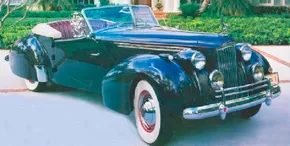
Packard couldn’t keep the V-12 alive. Not really. Only 446 of those expensive, lumbering engines rolled off the line in 1939. The math was simple. The market was shifting. So for 1940, the company made a pivot that changed everything. They didn’t just tweak the lineup; they consolidated. Senior Packards like the 1940 Packard Darrin One-Eighty Victoria Convertible shared assembly space with the junior models. It was a move toward efficiency, but the heart of the beast remained pure luxury.
The Straight Eight That Beat the V-12
What replaced the twelve-cylinder? The Custom Super-8 One-Eighty.
On paper, it looked like a downgrade. The price tag dropped by $2,000. You’d expect performance to follow suit. You’d be wrong. Packard didn’t just trust its engineering; they proved it. They staged a race at their own Proving Grounds. The stakes were high. The result was a landslide. The 160-horsepower straight-eight engine won easily.
“It was, after all, America’s most powerful production engine, save for the Cadillac V-16.”
Let that sink in. For 1940, if you wanted raw power from a production car, you had two choices. You bought a Cadillac V-16. Or you bought the Packard Custom Super-8 One-Eighty. It wasn’t just competitive. It was dominant. The straight-eight proved that you didn’t need twelve cylinders to dominate the highway. You just needed the right engineering and the confidence to race your own replacement.

The Darrin Transformation
Packard’s corporate identity was stiff. Conservative. Safe. But Howard “Dutch” Darrin, a legendary designer known for custom coachwork, had been spicing up Packards since 1937. Management noticed. The result? 1940 saw the introduction of the Packard Darrin. Two models got the treatment. A Convertible Sedan cost $6,332. The Convertible Victoria was the cheaper option at $4,593.
Glamour Car Status
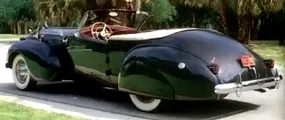
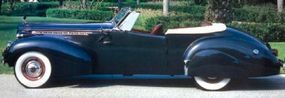
The Victoria wasn’t just a car. It was a statement. Saturday Evening Post advertisements called it the “Glamour Car of the Year! (Of course, it’s a Packard).” The design changes were drastic. Darrin cut down the doors. He raked the windshield forward. Running boards were sawed off. The hood and grille were lowered. The result was rakish. Sporty. Unmistakably different from standard Packards.
Classic Car Club Recognition
Did it work? Yes. The Packard Darrin Convertible Victoria earned “classic” status from the Classic Car Club of America. Decades later, it’s still recognized. Not for its reliability. Not for its speed. For its style. The Victoria survived. The standard Packards faded. Darrin’s touch stuck.


The Celebrity Halo Effect
Word spread. Fast. The convertible wasn’t just a machine; it was a statement wrapped in vinyl and chrome. And the right people noticed.
Gene Krupa didn’t hesitate. The drummer bought one. Just like that.
Then came the Hollywood splash. Carol Lombard didn’t just buy one for herself. She used it as a Valentine’s Day gift for her husband, Clark Gable. The image stuck. It wasn’t marketing. It was organic, star-studded validation. Suddenly, owning the ragtop wasn’t about horsepower. It was about being seen.

Clark Gable was riding high in 1939. He spent the year wrapped up in Idiot’s Delight and locked into the role of Rhett Butler. The studio knew they had a winner. It likely explains why Carol Lombard decided to gift him something truly extravagant.
She gave him a Darrin Victoria.
This specific car wasn’t just any custom build. It rolled out of the old Auburn facility in Connorsville, Indiana. Production numbers are fuzzy, but historians estimate they only built about fifty of these. The Darrin Gable received was unique. Reports suggest it was the only one ever fitted with wind wings. It also came loaded with Tripp driving lights and a radio.
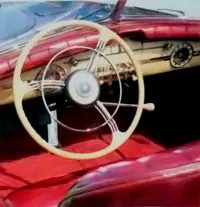
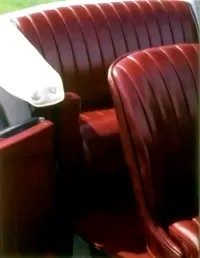
The color scheme is striking. Gun metal grey paint on the outside. Red trim to break up the monotony. Inside, a deep maroon leather interior. It looks like a car built for drama.
Picture them stepping in. Lombard and Gable. Two of Hollywood’s biggest stars. The car probably felt like a scene from their blockbuster. Just like that, they were Gone With the Wind.
Darrin Victoria Custom Specifications
The Darrin brand relied on Chrysler chassis, but the bodywork was handcrafted. This gave each vehicle a distinct presence. The Victoria model was a touring car. It offered luxury without the heaviness of a limousine.
- Chassis: Chrysler-based
- Body Style: Victoria Touring Car
- Production Run: Approximately 50 units
- Unique Features: Wind wings, Tripp driving lights, factory radio
- Exterior Color: Gun Metal Grey with red trim
- Interior: Deep maroon upholstery
The attention to detail in the Connorsville plant was high. These weren’t assembly line specials. They were bespoke pieces. That’s why this particular Darrin stands out. It survives today as a relic of Hollywood glamour.
Most custom cars from that era don’t last. Rust takes over. The wood rots. But this one did. It remains a testament to a specific moment in time. When stars drove cars that matched their on-screen personas.
The link between film and automotive culture has always been strong. Gable and Lombard were the apex of that trend. Their gift wasn’t just metal and rubber. It was a prop for their real-life romance.
You can find more information on classic automobiles through various guides.
- Classic Cars
- Muscle Cars
- Sports Cars
- Consumer Guide New Car Search
- Consumer Guide Used Car Search
But nothing beats the original. The story attached to these vehicles adds value. A number plate is just a number. A car with a celebrity history carries weight.
That’s why collectors hunt for them. They aren’t just looking for horsepower. They want the narrative. The Darrin Victoria provides that. It offers a tangible connection to 1939.
When you see one on a show floor, you don’t just see chrome. You see Rhett Butler. You see Carol Lombard. You see a Hollywood legend.
The wind wings are gone now. Likely stripped off in later years. But the silhouette remains. Distinctive. Unmistakable.
It’s a reminder of an era. Before modern safety standards. Before corporate mass production. When a gift could be a masterpiece.
Gable