


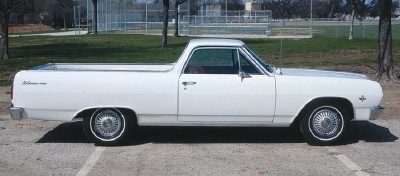
The first generation of Chevy’s dual-purpose vehicle had already proven the concept worked. But when production halted after the 1960 model year, the nameplate wasn’t dead. It was just taking a breath.
Chevy knew it needed a better foundation for the revival. The original El Camino rode on a full-size platform. It was big. It was heavy. It suited a specific era of American muscle. But by 1964, the landscape was shifting. GM’s intermediate class offered something the full-size cars didn’t: agility. And a younger demographic with more disposable income.
Enter the 1964 Chevrolet El Camino.
Why the Second-Generation El Camino Worked
Chevy didn’t just slap a truck bed onto another car and call it a day. They leveraged the new body styles coming out of their intermediate lineup. This was the “A-body” platform at work. It was lighter. It handled better. And crucially, it had plenty of room under the hood for big engines.
The second-generation El Camino wasn’t a niche curiosity anymore. It was a serious contender in the performance market.
- Moderate Size: Easier to park. Easier to drive fast.
- Proven Powertrains: Chevy’s small-block V8s were already battle-tested.
- Plentiful Options: You could spec it from a modest commuter to a street-racing weapon.
This combination of practicality and raw potential made it an instant hit. It wasn’t just a truck. It wasn’t just a car. It was both, and it did both well.
The Return of a Nameplate
Few people in 1960 guessed that the El Camino name would return. They thought Chevy had simply moved on. But the market remembered. Enthusiasts wanted utility without sacrificing style.
By 1964, Chevy had the perfect vehicle to meet that demand. The intermediate field was growing. Competitors were entering the space. But Chevy had first-mover advantage on a new, smaller platform.
The result? A winner.
“Its combination of moderate size, proven powertrains, and plentiful performance options would make the second-generation El Camino a winner.”
This wasn’t just a revival. It was an evolution. And it set the stage for everything that followed in the El Camino’s long, storied history.

The 1965 El Camino Revival: How GM Reclaimed the Sedan-Pickup Segment
Ford fired the first shot in the sedan-pickup wars with the Ranchero. Built from 1957 to 1959 on a full-size platform, it proved there was an appetite for a vehicle that sat somewhere between a coupe and a pickup. Chevrolet answered quickly with its own full-size El Camino in 1959. But they only stuck with that large format for two years. Then they walked away.
Meanwhile, Ford shrank its Ranchero down to fit the new Falcon compact chassis. From 1960 to 1963, the compact Ranchero moved about 20,000 units annually. It was a steady seller. Small, conventional, and reliable.
Then Chevrolet unveiled a new El Camino in 1964. Ford was immediately on the defensive. The landscape had shifted.
Tracing the exact timeline of this revival is tricky now. Details are fuzzy after sixty years. But Eugene “Geno” Skowronski, a member of the original concept team, remembers how the intermediate El Camino came to be. He started at Campbell-Ewald Advertising on September 8, 1960. This was the beginning of a thirty-year career. His first task? Helping Chevrolet Truck Sales Manager James Conlon research a replacement for the 1960 El Camino.
Dealers were unhappy when Chevy dropped the El Camino for 1961. They liked the extra sales volume. They also knew Ford was still in the game with the Falcon Ranchero.
Chevrolet’s quick fix was the 1961 Corvair Rampside. Rear engine. Bi-level load floor. It was too weird to compete with Ford’s small, conventional truck. Plus, Ford had the Econoline to counter it. The dealers wanted another El Camino.
Skowronski says the team first flirted with a concept called the Trailblazer. It would have used dual Corvair engines. The name would return decades later, but this concept went nowhere fast.
Next, they looked at the upcoming Chevy II compact. Conventional rear-drive chassis. Skowronski recalls modifying a wagon prototype into a pickup. Evaluations showed the Chevy II wasn’t suited for truck duties.
By early 1961, the focus shifted to the 1964 Chevrolet intermediate. A two-door wagon was already planned for the lineup. It could provide structure. Maybe some body panels. The robust powertrains under development would provide the muscle. And the new full-perimeter-frame chassis offered the durability an El Camino needed.
The only snag was timing. Ford would own the passenger-car-pickup field for three model years. Despite that, the decision was made. The new El Camino would ride on the forthcoming intermediate platform.
Thus, the 1964 El Camino was a work in progress when Semon E. “Bunkie” Knudsen replaced Ed Cole as GM in late 1961. Knudsen was a car guy. He had turned stodgy Pontiac into a sales juggernaut and style leader in the late fifties. He was about to lead Chevrolet into some of its most exciting years.
The Chevelle was the division’s fifth car line. It joined the regular Chevrolet, Corvair, Chevy II, and Corvette. Knudsen didn’t “father” the Chevelle, but he proudly introduced it to the press months before the public debut.
The El Camino’s unique attributes were designed in a special GM Styling studio. This was the same studio that handled station wagon development. Photos from the studio show the basic styling and details were worked out by autumn 1962.
Like the original, the cab and box were an integrated assembly. The long rear-quarter panels of the two-door wagon formed the exterior sides of the six-foot cargo box.
The wagon’s sloping B-pillar evoked the 1955-1957 Nomad. It was adapted for the El Camino. In some dimensions, the bed was larger than its 1959-1960 ancestor. Depth and length increased.
It shared the Chevelle’s 115-inch wheelbase. Full-coil suspension. A four-link rear setup, which was impressive for the era. Inflatable rear air shocks were standard. They leveled the vehicle when carrying a load.
Weight distribution was biased to the front. Typical for pickups of the time. Base models put about 60 percent of their weight on the front suspension.
This had a negative impact on traction and handling compared to pure Chevelle passenger cars. Payload capacity maxed out at 1,200 pounds with a six-cylinder engine. Or 1,100 pounds with V-8 power.
Standard trim included bright moldings. They highlighted the rear roofline, pickup box, tailgate, and rear window. Starting price was $2,260 with a six-cylinder. $2,368 with the base V-8.
The Custom model added $81 to the cost. It brought bright wheelhouse moldings, lower-body trim, and shiny accents for the roof drip gutters, upper door frames, and windshield pillars. All models carried “Chevelle” nameplates on the front fenders.
The machinery was there. The styling was sharp. But the driving dynamics told a different story. The front-heavy bias meant the rear end could get light. Or loose. It was a compromise. You got the utility. You got the looks. You lost a bit of the cornering grip that defined the Chevelle SS.
Did buyers care? Sales numbers would say yes. But behind the wheel, the El Camino felt like a Chevelle that had lost its rear tires. Or gained a load of concrete in the bed. It was a sedan-pickup. Not a sports car with a bed.
The 1965 model year brought subtle updates. A new grille. A revised bumper. The interior got a fresh dashboard layout. The engine options expanded. The 327 cubic-inch V-8 became the default performance choice for many buyers.
Yet the fundamental character remained. It was a car with a trunk that opened to the sky. A truck that drove like a car. Or tried to.
How did it handle on a rainy day? The front-heavy bias meant hydroplaning risk increased. The rear air shocks helped, but they weren’t magic. They just leveled the stance.
Where did it fit in the market? It sat between the full-size trucks and the compact pickups. It offered more space than a Ranchero. Less utility than a C10.
Which model was the best? The Custom. It had the better trim. The better suspension tuning options. But the base model was popular among budget-conscious buyers. They just needed a pickup that didn’t look like a tool truck.
The El Camino survived. It thrived. It became a legend. But in 1964 and 1965, it was still finding its footing. A work in progress. A risky bet.
And then the muscle car wars started. The El Camino got bigger engines. Faster suspension. Lower prices. It became something else. Something more aggressive.
But it started with a compromise. A wagon with a bed. A car with a load floor.
It worked. For a while.
The El Camino’s Mechanical Heart
It makes sense that the El Camino shared roots with the Chevelle. General Motors Assembly Division built both in the same plants, which meant the El Camino inherited the full color palette of the mid-size sedan. If you wanted a specific shade of paint, it was likely available. The wheels matched the body color, accented by a small bright center cap. If you wanted to go old-school, you could option the Chevelle Malibu-style full wheel covers or simulated wires.
Under the hood, the early lineup offered a mix of utilitarian and performance.
Chevy started with two inline-six engines. The base unit was the 120-horsepower Hi-Thrift, a conservative 194-cubic-inch motor. But there was a twist. The 230-cubic-inch six got a special camshaft that bumped output to 155 horsepower. That’s up from the 140 horsepower it produced when installed in full-size Chevrolets.
That 230 wasn’t just a power upgrade. It wore a plated valve cover and an air-cleaner top plate. Bright touches everywhere. Special front-fender emblems identified it as the better of the two sixes.
Then there were the V-8s.
The standard engine was the Turbo-Fire 283. It made 195 horsepower using a two-barrel carburetor. For those who actually wanted to move, there was an optional four-barrel version. Paired with dual exhaust, it pushed 220 horsepower. You didn’t need a big-block to get attention.
For more information about cars, see:
-
Muscle Cars
-
Sports Cars
-
Consumer Guide: New Car Search
-
Consumer Guide: Used Car Search
Chevy stacked the deck in mid-1964. They slapped 250- and 300-bhp 327-cid Turbo-Fire V-8s onto the Chevelle and El Camino options lists. There was a hiccup, though. An exhaust-manifold clearance issue reportedly held up deliveries of that 300-horse mill until summer. The numbers for that engine tell the real story. Only 1,737 Chevelles got the upgrade total. That includes what were likely a handful of El Caminos.
Then came March 1964. Chevy announced the L76 365-bhp 327—the same powerplant topping the Corvette—would be available in these cars. The whispers started immediately. Rumors of sub-six-second 0-to-60 times floated around the enthusiast circles. The catch? Availability was canceled after just a few weeks. We don’t know if any pilot-line prototypes slipped through. It’s equally unknown if any El Caminos were among them. If you have one, it’s a ghost.
Transmission and Braking Specs
Powertrain choices were straightforward but capable. A three-speed manual was standard. You could add an overdrive if you wanted to stretch the gears on the highway. The only automatic option was the two-speed Powerglide. It was air-cooled for inline-sixes but switched to water-cooling when paired with V-8s. For those who wanted real control, a GM-sourced Muncie wide-ratio four-speed manual was optional—but only with V-8s.
Stopping power was another area where Chevy got ahead of the curve. Sintered metallic brakes were available from day one for “special service” use. It wasn’t just a track-day add-on; it was factory-ready hardware for people who needed to stop harder than the average driver.
Interior Configurations and Seat Belts
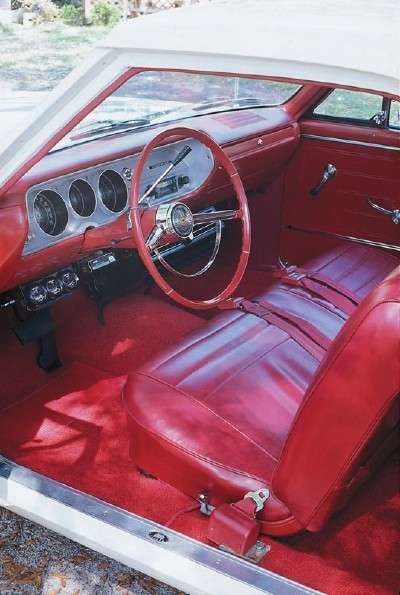
Inside, the 1964 El Camino offered three colors: aqua, fawn, or red. Base models wore all-vinyl upholstery. Step up to the Custom, and you got a cloth-and-vinyl combo. The door trim got an upgrade too. The steering wheel was two-tone, except when you picked the red interior—that got a solid color wheel.
Safety was shifting, too. After January 1, 1964, driver and right-front passenger seatbelts became standard across the board. Floor coverings started with rubber mats in a spatter color treatment. The Custom trim upgraded that to carpet.
Bucket seats were a distinct option for Customs. They came in textured vinyl. Crucially, they included a matching vinyl cover for the spare tire, which stowed behind the seat with the jack. This wasn’t a small change. By February 1964, ordering information clarified that choosing bucket seats automatically included four Super Sport-style wheel covers. Pick the four-speed transmission with those seats, and you got a console too. The price bump reflected that extra hardware.
The 1964 Market Hit
The 1964 El Camino was a massive hit. Buyers, particularly in the nation’s midsection, loved it. It offered city style with country utility. That “gentleman’s pickup” concept resonated.
The sales figures prove it. 32,548 units sold for 1964. That represented 8.8 percent of total Chevelle production. It handily outdid any single-year showing for either a Ranchero or El Camino up to that point. Meanwhile, the restyled 1965 Ford Ranchero struggled by comparison. It drew 17,316 orders, about 1,200 fewer than the year before. Chevy had the market cornered.
1965 Chevrolet El Camino
Hauling into its second year, the 1965 El Camino got a new face. Again, it shared the look with the Chevelle. The new grille, hood, and front bumper peaked slightly at the center. It replaced the flat-faced 1964 aesthetic. The change added 2.5 inches to the overall vehicle length.
Chevy’s advertising slogan for the redesign was blunt: “Good looks never carried so much weight.” They weren’t joking about the weight either. It was a subtle shift in stance, but it made the truck look more substantial. The El Camino was no longer just a car with a bed. It was becoming its own distinct entity.
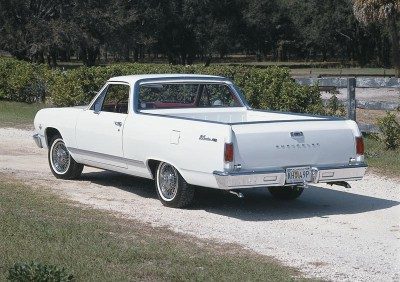

1965 El Camino: Stripping the Badge and Tuning the Ride
The 1965 El Camino stopped pretending to be just another Chevelle. Chevy pulled the “Chevelle” script from the doors. It stood on its own now.
A single-lens taillight design defined the rear end. This wasn’t just cosmetic. Back-up lamps moved to the bumper. Standard models got dummy lenses to fill the holes. Real ones lit up your path. The tailgate emblem border changed too. White on top. Red on the bottom. Lower body moldings were fresh for standard models.
El Camino Customs got special treatment. A bright bodysill molding ran along the side. But there was a catch. No lower-body molding extension behind the rear wheels this year. You had to choose your style carefully.
Color and Interior Upgrades
Twelve exterior colors were on the table. Ten of them were new. Inside, the cabin got smarter. A two-key locking system replaced the old setup. Ignition security improved. Sound-deadening insulation increased. Cabin noise dropped.
Options lists expanded. An AM-FM radio appeared for the first time. Standard two-horn systems got a “low D-note” option. It sounded distinct. Dealer-installed gear included an auto compass and cruise control. Chevelle wheel covers were available. So were simulated wire wheel covers.
Performance didn’t stagnate. The 194-cid six-cylinder remained standard. Rated at 140 bhp. It lost its special camshaft. Chrome accents vanished.
V-8 buyers had better choices. The 195-bhp two-barrel 283 stayed. But the four-pot version got cut. The 300-horse 327 became available. A 250-bhp version of that engine used new cylinder heads. A larger-diameter single exhaust system came standard. Dual exhaust was optional.
For serious power, the L79 350-horse 327 was offered. It was exceptionally strong.
Ride Quality and Concept Cars
Suspension got retuned. The ride was softer. Quieter. Low-profile tires changed the geometry. Their smaller rolling radius lowered the El Camino’s height. Handling might have tightened. Comfort improved.
Chevy showed off the Surfer 1 El Camino concept in 1965. It was a topless roadster pickup. It towed a custom drag boat. Both were powered by the new 396-cid Mark IV V-8. That engine lived in full-size cars and Corvettes. Only 201 Chevelle Z16s had it. This concept showed Chevy’s future direction.
1966: A New Face
Fresh styling hit in 1966. The Chevelle and El Camino looked brand new. The substructures stayed the same as 1964-1965 models.
The El Camino rear quarters were now unique. The Chevelle two-door wagon was dropped. That left the El Camino’s body lines distinct. Vertical taillamps matched the wagon. Back-up lights merged with taillamps again. Just like 1964.
The front got the nameplate for the first time. “El Camino” sat on the emblem at the center of a new wraparound grille.
Interior updates followed. A new instrument panel. Blue replaced aqua as a standard interior color. Black interiors became available with the Custom bucket-seat option. Headrests were a new option. In March, shoulder belts arrived.
Safety caught up to style. The car looked faster. It rode smoother. It didn’t need the Chevelle badge to prove it belonged.

The 1965 model year brought serious hardware to the El Camino, catering specifically to buyers who wanted muscle car performance in a utility body. Chevrolet finally unlocked the big-block potential for this pickup, offering the 396-cubic-inch Turbo-Jet V-8 in two primary flavors: 325-hp and 360-hp. But the real headline came mid-year. Chevrolet dropped the L78 solid-lifter variant, a beast rated at 375 horsepower.
For those willing to spend the extra $425, the L78 was a game-changer, though Chevrolet never officially stated how many of the 3,125 total L78s built that year actually went into El Caminos. The majority likely landed in Chevelles or Corvairs. Still, the performance data from era road tests is clear. A stock 1965 El Camino with the 325-hp 396 could dip under 16 seconds in the quarter-mile. Add the 375-hp motor and you are looking at a full second shaved off that time, assuming you had stock tires and suspension components.
Engine Options and Transmission Choices
Not everyone needed 375 horsepower. Down the lineup, Chevrolet kept the 327 cubic-inch small-block alive. It had absorbed the specs from the older 250- and 300-hp versions, settling on a 275-hp rating. The 283 cubic-inch engine also returned, this time as a 220-hp four-barrel option. The base six-cylinders and standard V-8s carried over without change, keeping entry-level costs down.
Transmission selection was where the real driver choice lay. The heavy-duty, fully synchronized Warner floor-shift three-speed manual was available with the big-blocks. Mid-1966, this robust gearbox became an option across almost the entire El Camino range, even for smaller engines. If you wanted a four-speed, you needed a V-8. And if you opted for the 360- or 375-hp big-blocks, that four-speed was a close-ratio unit designed to keep the engine in its power band.
Custom Trim Details
Visually, the Custom trim level distinguished itself with specific lower-body bright moldings. On Custom models, these moldings extended aft of the rear wheelhouse, a subtle but distinct styling cue. The ribbed sections were filled with black paint, mimicking the aesthetic of the Chevelle SS.
Enthusiasts often complain about one missing piece from the factory catalog: the domed hood. While standard on the Chevelle SS396, Chevrolet never offered it from the factory on the El Camino. Owners had to source aftermarket or custom solutions if they wanted that aggressive hood bulge.
1966 Chevrolet El Camino Sales Surge
The 1966 El Camino continued the visual language with bright wheelhouse moldings, another Custom-exclusive touch. Chevrolet introduced six new colors to the Magic-Mirror acrylic palette, bringing the total to 15 options. Prices ticked up slightly. The popular Custom V-8 model started at $2,504, up from $2,461 in 1965.
Despite the price hike, demand did not waver. Sales topped 35,000 units, marking the second consecutive year of growth. The
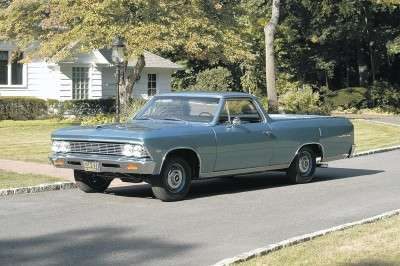

The 1967 Chevrolet El Camino got a sharp look over its predecessor. While Chevy restyled the regular pickup lines for the year, the El Camino shared a facelift of its 1966 design with the Chevelle. The front end grew bolder. A larger grille and redesigned front fenders added squared prominence to the frontal appearance. A chrome block-letter El Camino nameplate appeared on the leading edge of the hood. It was a subtle but distinct marker.
At the rear, “cheese-wedge” taillights improved nighttime visibility of the vehicle from the sides. These vertical units were a distinct shift from previous horizontal layouts. Back-up lamps moved back down into the bumper. This change cleared up the rear fascia, making it look less cluttered.
Custom Trim and Body Details
The El Camino Custom newly featured a full-width woodgrain trim panel on the tailgate. It was a tony touch that seemed a bit out of place on the hotter-performing El Caminos. The wood grain added a residential vibe to a truck designed for work or show.
A new thin molding that edged a lower-body sheetmetal crease replaced the rocker moldings of previous Custom models. Standards had a less-detailed molding in the same location. There were no wheelhouse moldings this year. The body lines became cleaner. The removal of extraneous chrome gave the sheetmetal a tighter look.
New Colors and Options
Ten of the 15 colors offered for the 1967 Chevrolet El Camino were new. The palette shifted. Chevrolet introduced fresh shades to attract buyers who wanted something beyond the standard offerings. A black vinyl roof covering available with all exterior colors was added to the options list. It mimicked the hardtop look of the Chevelle coupe.
Chassis and Brake Upgrades
Chassis upgrades included a new front-disc-brake option. This was a significant performance addition. Slotted argent “rallye” wheels with bright trim rings and small center caps were included with the disc brake package. They looked fast even when standing still.
El Caminos with the standard drum brakes came with small hubcaps. But new-design Chevelle wheel covers were also available. So were covers that simulated the look of wire wheels or the aftermarket magnesium wheels then becoming the rage with muscle car owners. The ability to mimic expensive aftermarket parts appealed to budget-conscious enthusiasts.
Per federal mandate, a dual master-cylinder system was now standard with all brake types. This was a safety requirement driven by government regulations. It improved braking reliability by isolating the front and rear hydraulic circuits. If one line failed, the other still had pressure.
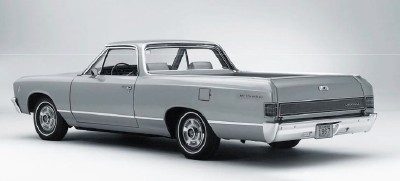

The 1967 El Camino: Power, Handling, and the End of an Era
The changes in the 1967 Chevrolet El Camino were subtle on the surface but significant under the hood. It was the final year for this specific A-body chassis generation before the all-new 1968 Chevelle platform arrived.
Inside, the cabin saw minor updates aligned with broader GM safety initiatives. A new key design replaced the old ones. The steering wheel switched to a three-spoke design. More importantly, GM installed an energy-absorbing steering column to reduce injury risk in crashes. The rest of the interior remained largely unchanged from 1966.
Engine Lineup Overhaul
Under the hood, GM reshuffled the deck for 1967. Only about 12 percent of buyers ordered the inline-six, yet the engine lineup shifted. The base six-cylinder was now the 230-cubic-inch unit. Stepping up gave you a 250-cube engine rated at 155 bhp. The old two-barrel 283 V-8 was gone for good.
V-8 buyers had better options. The 283 remained the entry point. The 327 carried over at 275 horsepower. But a new high-performance option appeared. This extra-cost 327 made 325 bhp with an 11:1 compression ratio.
Big-block choices also saw a shift. The 396 remained a favorite. In 1966, the top big-block was the 360- or 375-bhp version. In 1967, a 350-horsepower 396 took the top spot.
Transmission and Axle Choices
Power delivery got more refined. The three-speed Turbo Hydra-Matic automatic was now available with the 396 V-8s. Manual buyers could pair the close-ratio four-speed stickshift with either the 325-horse 327 or the 350-horse 396.
Rear axle ratios expanded significantly. You could choose from standard, economy, performance, and special-performance gearsets. Ratios ranged from the 2.73:1 highway cruiser down to 4.56:1 and 4.88:1 setups. Those high numbers were for drag racers and anyone who needed maximum torque off the line.
Handling and Market Dominance
Road testers praised the handling improvements. GM added performance suspension components to the larger engine options. This made the truck feel less like a farm tool and more like a car.
The competition was losing ground. The Ford Ranchero had recovered after its 1964 redesign, hitting 21,760 units in 1966. But for 1967, Ford kept the 113-inch wheelbase. They gave the Ranchero Fairlane styling and optional 390-cid big-blocks. It wasn’t enough. Ranchero sales dropped to 17,243.
That was roughly half of the El Camino’s output. From 1964 to 1967, the El Camino had clearly won the car-based pickup wars for Chevrolet.
1967 Production Numbers
The final year of this generation saw consistent production.
| Model | Weight | Price | Production |
|---|---|---|---|
| Sedan Pickup, I-6 | – | – | 2,963 |
| Sedan Pickup, V-8 | 3,193 lbs | $2,613 | 5,387 |
| Total El Camino | – | – | 8,350 |
| Custom Sedan Pickup, I-6 | – | – | 1,098 |
| Custom Sedan Pickup, V-8 | 3,210 lbs | $2,694 | 25,382 |
| Total El Camino Custom | – | – | 26,480 |
| Total 1967 El Camino | – | – | 34,830 |
The chassis was about to change. A totally new Chevelle arrived for 1968. The El Camino followed, updated annually throughout the seventies. But the 1967 model stood as the swan song for the original design.


