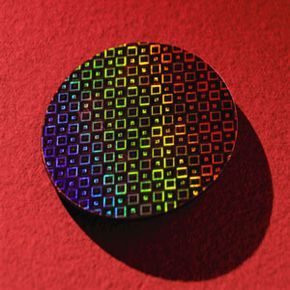
You don’t have to plug them in. That’s the main selling point. These devices run on free energy that isn’t going anywhere. They rely on photovoltaic (PV) cells to do the heavy lifting.
Here is the physics, stripped down. Light hits the silicon. Specifically, photons strike the medium. This triggers photoelectric action. Electrons get knocked loose. They surge through a circuit. The flow powers a small fan. When the electrons return, they either start the cycle again if the sun is still beating down, or they settle back into the silicon if clouds roll in.
The hardware is simple. A bank of solar cells connects directly to a low-voltage fan. You hang the unit from your window. It dangles from a gasket-like strip at the top of the glass. The array and the fan sit against the interior pane. This keeps them safe from rain and prevents tourists from stealing your gadget.
The vents work in tandem. Hot air pushes out. Cool air gets pulled in.
Is The Airflow Enough?
You need to look at the numbers. Real numbers. Not marketing fluff.
Cooling capacity is measured in cubic feet per minute (CFM). One major manufacturer claims their unit cycles the air in a car once every 20 minutes. Let’s apply that to a real vehicle. Take a Toyota Camry. It has about 101 cubic feet of passenger space.
Do the math.
101 cubic feet / 20 minutes = ~5 CFM.
That is the output of the solar fan.
Compare that to a standard household appliance. A 16-inch, three-speed, oscillating table fan moves between 1,300 and 1,700 CFM.
The solar ventilator is not going to replace an air conditioner. You won’t step into a cabin that feels like a walk-in freezer on a 90-degree day. That is unrealistic. But it does more than just sit there.
It keeps air moving. Stagnant air is the enemy in a sealed car. Heat builds up. Humidity spikes. Odors set in.
If you leave smelly gym shoes in the backseat, or if you forgot to toss out half-eaten fast food, the car becomes a biohazard. Friends will notice. It is embarrassing. This gadget mitigates that. It evacuates the bad air before it becomes permanent. It prevents the cabin from reaching the peak temperatures it would otherwise hit in direct sunlight.
It is not perfect. The tech has limits. To understand where it fails, you need to look at the downsides.