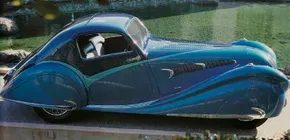
Pre-war custom coachwork hits different. It has a pulse. You can feel it. The 1936 Delahaye 135 Competition Coupe from the Blackhawk Collection in Danville, California, proves that point. It is not just a static artifact. It is a machine built with sporting blood in its veins.
Delahaye had been building cars in France since 1894. Most of them were standard fare. Reliable? Sure. Exciting? Rarely. But 1935 changed everything. The company dropped two new six-cylinder models. They were a tonic. A shock to the system. The Delahaye 135 Competition Coupe stands out as a prime example of that shift in engineering philosophy.
“Delahaye had been making cars in France since 1894; with a few exceptions, they were fairly conventional. But in 1935, the company launched a pair of six-cylinder cars that were a genuine tonic.”
This specific chassis bridges the gap between industrial convention and raw performance. It is not a museum piece for the faint of heart. It is a slice of automotive history where French engineering dared to be fast. The Blackhawk Collection holds it, but the car’s story belongs to the road it was designed for.
The 135 was not just an upgrade. It was a reimagining. Enthusiasts know that pre-war French sports cars are often about elegance over brute force. The 135 challenged that norm. It kept the elegance. It added the force. This is what makes the 1936 Delahaye 135 Competition Coupe a standout in any lineup.
Why do we care about a car from nearly a century ago? Because the fundamentals remain. The way it handles. The sound of that straight-six. The craftsmanship. These things do not age out of relevance. They just get quieter.
The Delahaye name is not a household word like Ford or Chevrolet. But among those who know, it carries weight. The 135 was their answer to the racing world. It was not a mass-produced toy. It was a serious tool for serious drivers.
There is a reason collectors chase this specific model. It represents a moment where Delahaye found its voice. It was not listening to the market. It was listening to the track. The Competition Coupe variant amplifies that intent.
The Blackhawk Collection in Danville, California, is known for quality. They do not just store cars. They curate them. This Delahaye is part of that legacy. It sits in a place where other legends reside. But it stands on its own merits.
The straight-six engine is the heart of the matter. In 1935, power outputs were modest by today’s standards. But they were significant then. The delivery was linear. The torque was accessible. It required skill to drive. Not just acceleration. Control.
Custom coachwork added to the allure. Pre-war bodies were unique. No two were exactly alike. The 135 Competition Coupe likely wore a bespoke shell. This was common practice. It allowed owners to express personal style. It also reduced weight. Performance was the goal.
Looking at the 1936
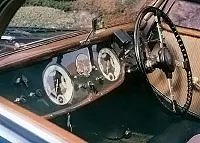

The bigger engine was the story. We are talking about the 120-horsepower 3.5-liter unit. It lived inside the new Type 135. This wasn’t just a pretty car. It won the Monte Carlo Rallye. It also took the checkered flag at Le Mans in the late 1930s. Those wins weren’t accidents. They were engineering dominance.
This specific car is a short Competition model. It has a different lineage than the rally-winning siblings. It belonged to a Parisian industrialist. He had money. He had taste. Specifically, he liked the flowing coachwork of Figoni et Falaschi. They were the masters of that aerodynamic, swept-back look that defined French luxury in the pre-war era.
Inside, there is room for two passengers. They sit comfortably. The driving experience is mechanical and direct.
Under the Hood: The Ohv Six
The heart of the machine is an overhead valve (ohv) six-cylinder engine. It breathes through triple carburetors. Three carbs for six cylinders? That is an aggressive setup for the era. It ensures the air-fuel mixture is delivered efficiently under load.
Power moves from the engine to the wheels via a four-speed synchromesh gearbox. Synchromesh was still somewhat of a luxury feature then. Most cars used sliding-mesh transmissions that required double-declutching. This box makes the shifts smoother. It takes the guesswork out of downshifting.
“Two passengers can ride in style as triple carburetors feed the ohv six…”
The combination of the Figoni et Falaschi body and the racing-bred chassis makes this Type 135 variant a rare bird. It balances high-speed endurance with urban elegance. The Parisian owner didn’t just want speed. He wanted to arrive in it. The triple carb setup suggests he wasn’t afraid to open the throttle, though. You don’t buy Figoni coachwork and drive quietly.
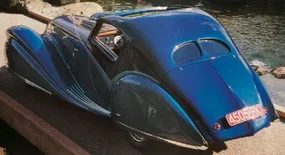

By the late forties, the car had already cycled through several American hands. It wasn’t a static relic. It moved. It changed hands in the used car markets of the US, slipping through the cracks of private collections. Then came the eighties. A Japanese collector spotted it. He didn’t just buy it. He fixed it. The restoration was thorough. Every panel, every bolt, checked against original specs.
Then it hit the California coast. Pebble Beach. 1980s era judging required precision, and this build delivered. The judges saw it. The crowd saw it. It wasn’t just displayed. It was validated. After the show, it didn’t stay in the States. It went back across the Pacific. The car returned to Japan, where it has likely remained under careful watch since.
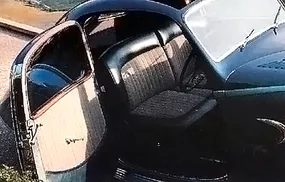

The Blackhawk Collection snapped up the coupe about three years ago. The restoration held up surprisingly well. They didn’t need to touch much. Just polished the chrome and set it on the floor. It sat there, gleaming under the museum lights, untouched by time or traffic.