Cars burn gasoline. That’s the basic deal. But combustion is a chemical reaction that demands oxygen. Usually, we just suck in the air around us. The atmosphere is roughly 21 percent oxygen. The rest? Mostly nitrogen. Nitrogen doesn’t care about burning. It’s inert. It just hangs out in the cylinder, taking up space that could be used for more oxygen.
Oxygen dictates how much fuel an engine can consume. The stoichiometric ratio for gasoline is about 1:14. One gram of fuel needs 14 grams of oxygen to burn completely. If you have excess fuel, it just exits the tailpipe as unburned hydrocarbons. Pollutant. Waste.
Here is the thought experiment. What if a car didn’t rely on ambient air? What if it carried its own supply? Pure oxygen.
Inhaling 100 percent oxygen instead of 21 percent changes the math. You are looking at roughly five times more oxygen intake. More oxygen means more fuel can be burned in every stroke. And more fuel burned means more power.
A 100-horsepower engine would effectively become a 500-horsepower engine.
That sounds like the ultimate upgrade. More power. Less fuel waste. But there is a catch. A big one.
The heat problem
Fire loves oxygen. More oxygen makes fire hotter. And faster.
Internal combustion engines already operate at temperatures that melt steel. They manage this with cooling systems, specialized materials, and careful timing. Pumping pure oxygen into that mix? It’s going to get hot. Really hot.
“The combustion temperature would skyrocket, likely destroying the engine components almost instantly.”
You would need materials that can withstand extreme thermal stress. Standard aluminum pistons would likely melt. Steel valves might warp or crack. The engine block could fail under the thermal load.
Storage and safety
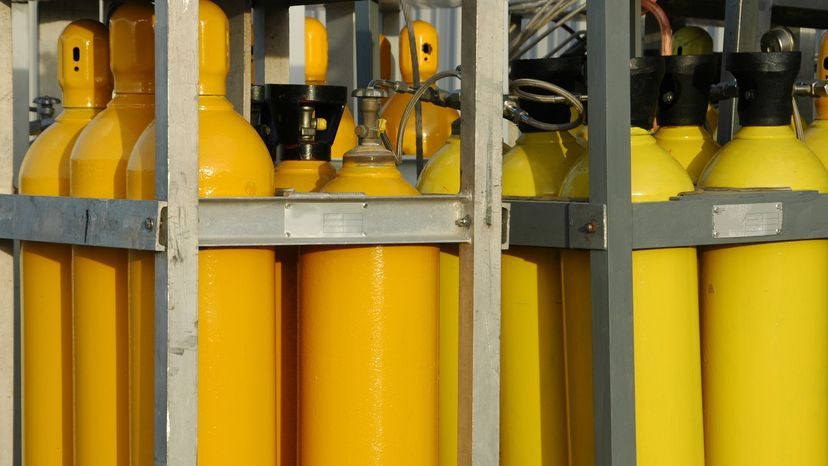
Oxygen isn’t just a gas you can keep in a standard fuel tank. It requires high-pressure storage vessels. Think heavy-duty composite tanks. That adds weight. A lot of it.
Then there’s the safety aspect. Oxygen supports combustion. It makes fires start easier and burn harder. A leak in the oxygen system near hot exhaust components? That’s not just a fire hazard. It’s an explosion hazard.
Handling pure oxygen requires specialized equipment. Seals must be oxygen-clean. Lubricants must be non-combustible. Ordinary grease can ignite in an oxygen-rich environment. The maintenance overhead for such a system would be massive.
Efficiency vs. practicality
On paper, the efficiency gains are real. You can burn more fuel, extract more energy. But the practical barriers are immense. The heat management alone would require a complete redesign of the engine’s cooling and exhaust systems.
Most cars don’t carry pure oxygen. They rely on the free supply in the air. The trade-off is simplicity. And reliability.
If you could solve the heat and storage problems, you’d have a hyper-efficient engine. But for now, the engineering challenges outweigh the horsepower gains. The air we breathe is diluted for a reason. It acts as a natural buffer.
So, while the idea of a five-power boost is tempting, the reality is a logistical nightmare. We stick with air. It’s messy. It’s
The Volume Problem with Pure Oxygen
You might wonder why we don’t just strap a tank of pure oxygen to the hood of a car and let it breathe easier. The short answer is physics. Oxygen is incredibly bulky. Even when you compress it, the sheer volume required to burn fuel makes it impractical.
Let’s look at the numbers. A single gallon of gasoline weighs 6.2 pounds. To burn that fuel completely, an engine needs 86.8 pounds of oxygen. That’s a 14-to-1 ratio by weight. But weight isn’t the storage issue; space is. Oxygen is a gas, meaning it’s light and expansive. One pound of oxygen occupies 11.2 cubic feet.
Do the math for a gallon of gas and you get 972.16 cubic feet of oxygen needed. Now, imagine a standard 20-gallon gas tank. You’d need to carry nearly 20,000 cubic feet of oxygen to match that fuel. That volume would fill a house with 2,500 square feet of floor space just for the oxidizer.
Compression Doesn’t Solve the Space Issue
Compressing the gas helps, but not enough. If you pressure the oxygen to 3,000 psi, you reduce the storage requirement to about 100 cubic feet. Is that manageable?
Consider a standard scuba tank. It holds roughly 80 cubic feet of air. To store the oxygen for a full tank of gas, you’d need 250 scuba tanks. That’s not a small canister. That’s a warehouse.
Nitrous Oxide: The Practical Compromise
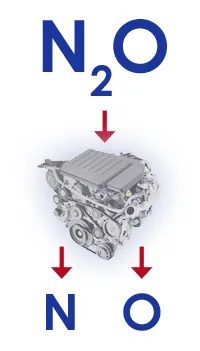
This is why racers and tuners use nitrous oxide instead. Nitrous oxide ($N_2O$) is a gas that liquefies under pressure. This phase change allows you to store a massive amount of oxidizer in a relatively small bottle. When injected into the intake, it breaks down into nitrogen and oxygen. The engine cares about the oxygen. The nitrogen is mostly inert filler.
The trade-off is duration. A typical nitrous system only supplies one to three minutes of boost before the bottle is empty. But in that short window, it can add about 100 horsepower to a big block engine.
The Danger of Too Much Air
There is a catch. Adding that much oxygen allows the engine to inject more fuel. More fuel means more power, but also significantly higher cylinder pressure. Unless the engine is built to handle the stress, the extra pressure can blow it apart.
This is the same fundamental problem you’d face with pure oxygen. The engine components would need to be beefier, stronger, and heavier to survive the load. For a daily driver, the bulk of the oxygen tanks and the fragility of the engine make it a non-starter. Nitrous oxide offers a potent, if fleeting, solution without requiring a complete engine rebuild.
The engineering reality is that air is already the cheapest, most available oxidizer. Modifying it is easier than carrying it.
Where to Go From Here
If you want to dig deeper into the mechanics of internal combustion, start with the basics of how gas burns and how horsepower is generated. Understanding the limits of your engine’s strength is just as important as understanding its potential.
- How Car Engines Work
- How Gasoline Works
- How Horsepower