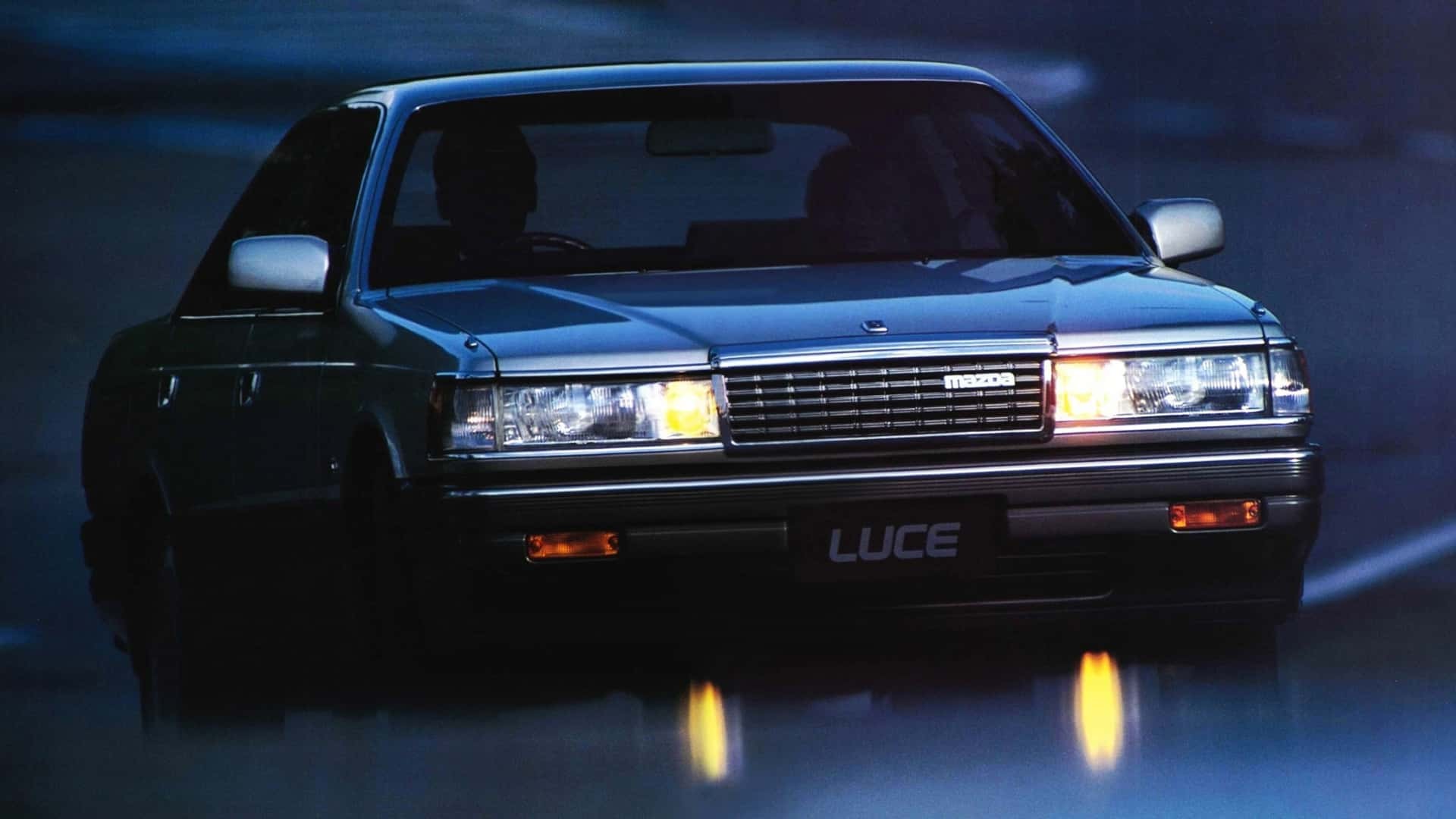
The recent announcement of Ferrari’s new electric vehicle, dubbed the “Luce,” has drawn attention not for its innovation, but for the revival of a name already used decades ago. Mazda first introduced the “Luce” (Italian for “light”) in 1966, establishing the moniker in automotive history long before Ferrari considered it.
The Mazda Luce: A Historical Overview
Mazda unveiled the Luce as its flagship model on August 20, 1966, a rear-wheel-drive sedan designed by the famed Giorgetto Giugiaro of Bertone. The Luce was not merely a car; it was a statement of Mazda’s ambition.
In 1969, Mazda followed up with the Luce Rotary Coupe, a strikingly designed vehicle of which fewer than 1,000 units were produced. This model combined a rotary engine with front-wheel drive – a configuration never revisited by the company. Today, Mazda’s MX-30 e-Skyactiv R-EV employs a similar setup, though the rotary engine serves as a range extender rather than a direct drivetrain component.
Global Branding and Evolution
Like many Japanese automakers of the era, Mazda adapted the Luce’s name for export markets, branding it as the 929 or RX-4 in different regions. A rebadged version was even sold in South Korea as the Kia Potentia. The Luce remained in production until 1991, with later generations receiving Mazda’s first V6 engine.
Before its discontinuation, Mazda’s luxury division, Eunos, launched the Cosmo, while the Sentia served as the Luce’s direct successor. The Sentia, too, was sold as the Kia Enterprise in Korea.
Ferrari’s Revival and Automotive Naming Trends
After a 35-year hiatus, Ferrari is resurrecting the “Luce” name for its upcoming electric vehicle. The company has also stated that this signals a new naming strategy for future models, with plans for 20 vehicles by the end of the decade.
This trend of repurposing old names is common in the automotive industry, as automakers seek to leverage nostalgia and brand recognition. However, there is often little continuity between the original model and its modern iteration.
Examples include the Ford Capri and Mitsubishi Eclipse, where the new models bear little resemblance to their predecessors. Other unusual pairings, such as the Ferrari/Chevrolet Monza or the Ferrari/Volkswagen California, highlight the frequent overlap in automotive naming conventions.
The revival of “Luce” by Ferrari is less about originality and more about a calculated marketing strategy. The automotive landscape often relies on familiar names to evoke consumer interest, even if the connection to the past is tenuous at best.