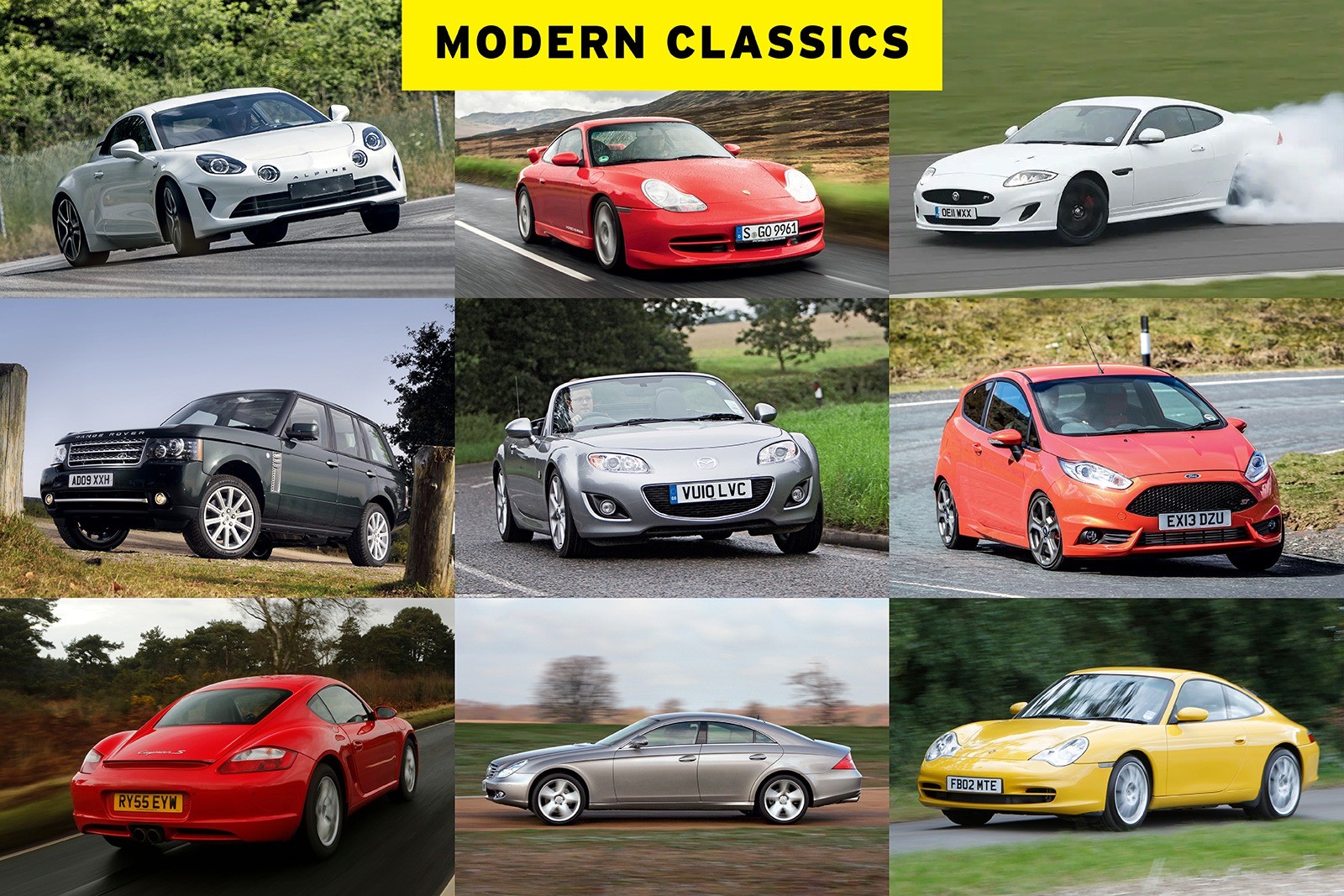
Modern classics sound like a contradiction. You look at one and think, that’s just another commuter car. It sits on the street like any other piece of urban clutter.
But Penguin Books gets away with it. So why not we?
Back in the day, ‘classic’ meant old guys driving rust-buckets to car swaps. It was niche. Modern motoring sites avoided the term. They wanted to sell speed and new tech, not history.
Classic car mags? They didn’t want to scare their readers by suggesting a Toyota Yaris could ever be cool. It belongs in a fast-food queue.
Things changed. Electric mandates, clean air zones, speed traps. These forces are pushing enthusiasts from both extremes into the middle. The Venn diagram is closing. We’re all meeting here: in the modern classic sector.
What counts as a classic now?
Like the books, the timeline is blurry.
Ed Callow at Collecting Cars says modern classics are just the democratic entry point to the hobby.
“It’s not easy to pinpoint specific start/end years… but what we tend to mean… is vehicles from the 80s, 90s and early 00s.”
For this list though? We’re starting post-2000. Keep it recent. Keep it relevant.
Mercedes-Benz CLS (2003–2010)
Price: £2,500–£10,000
An oxymoron inside an oxymoron. It is a four-door coupé based on an E-Class sedan but built to look like nothing else on the road. It kept the prestige of Mercedes. It had the flair.
Everything comes with rear-wheel drive and that seven-speed automatic. Air suspension wasn’t standard. But you got climate control. Electric seats. Part-leather everywhere. Adaptive cruise. Parking sensors.
The prices today? Dirt cheap. That’s why you buy them. And why you must inspect them carefully.
Early petrols have a problem with their balancer shafts. One owner said skip the early years entirely.
Gearbox speed sensors fail too.
Diesel owners? Watch the inlet port shut-off motors.
Don’t ignore it just because the sticker says ‘£2,500.’
Porsche Cayman (2005–2012)
Price: £7,500–£30,000
The 987 Cayman makes everyone’s wishlist. For obvious reasons. It is a Porsche with the engine where it belongs—middle-mid. A sensible spot. This lets you drive it like you dream you can drive a 911 without the heavy nose.
There is a six-speed manual. It feels analogue. Physical. The pedals give feedback. It rewards attention.
Porsche sells you a PDK auto that shifts lightning fast. It unlocks the car. But then you have those tiny steering wheel buttons to fight with. It works, yes, but is it as honest? Maybe. Or maybe it’s just a different kind of friction.
Prices are rising anyway.
So why wait?
We watch these numbers tick upward every quarter.
The CLS looks odd in traffic now. It looks strange, angular. The Cayman still looks clean. Sharp.
They used to be boring. Then they were practical. Now? They’re scarce.
Is it the metal? The engineering? Or just the feeling of being wrong on purpose in a world of right choices?
Look closely at the rust.
Listen to the engine.
Maybe nothing happens today.
Maybe tomorrow is too late.