Despite becoming the world’s largest producer of new vehicles – with over 34.5 million units in 2025 – the chairman of Great Wall Motors (GWM), Wei Jianjun, warns that a “significant gap” remains between Chinese automakers and established global competitors. This gap isn’t merely about production numbers; it’s about fundamental quality, brand perception, and sustainable profitability.
The Reality of Growth
Chinese automakers are expanding aggressively, leveraging competitive pricing to gain market share – but this approach is unsustainable long-term, especially in markets with import tariffs. Profit margins for Chinese firms remain slimmer than those of established players in Europe, Japan, the US, and South Korea.
The industry’s growth is also fueled by domestic overcapacity, with production capacity utilization at just 49.5% in 2024, despite a potential output of 55.5 million vehicles. This oversupply creates pressure for price wars, which Wei describes as “slow suicide.” The Chinese market itself is crowded, with many automakers maintaining multiple brands to compete internally. GWM, for example, operates five brands within China.
Lessons from Industry Leaders
Wei emphasizes the need for humility and diligent learning from industry benchmarks like Toyota. He points out that Toyota’s consistent, proactive approach to recalls – even for minor issues – builds trust with customers because the company takes responsibility rather than avoiding it.
This contrasts with some Chinese automakers relying on short-term price promotions rather than addressing underlying quality concerns.
The EV Pivot and Global Expansion
China’s shift toward new-energy vehicles (NEVs) – including plug-in hybrids (PHEVs) and electric vehicles (EVs) – has given it greater control over key components like motors, batteries, and electronic controls. This is a major improvement over the combustion-engine era, where supply chains were more reliant on foreign technology.
GWM’s own sales figures reflect this growth: 1,323,672 vehicles sold in 2025, a 7.3% year-on-year increase. NEVs accounted for 30.5% of total sales, despite Ora (GWM’s EV brand) being its lowest-volume seller.
The company is also expanding globally, with sales of 506,066 vehicles in 2025 and production facilities in Thailand and Brazil. In Australia, GWM has risen to become a top-10 brand, delivering 52,809 vehicles in 2025 and aiming for a sustainable top-five position by 2030.
The Competition is Heating Up
Other Chinese brands like BYD, MG, and Chery are also aggressively pursuing market share, with ambitious goals for growth in key markets. BYD aims to be “close to the top three” by 2026, MG wants to be in the top five by 2027 and top three by 2030, while Chery (and its Omoda Jaecoo sub-brand) target the top five by 2027.
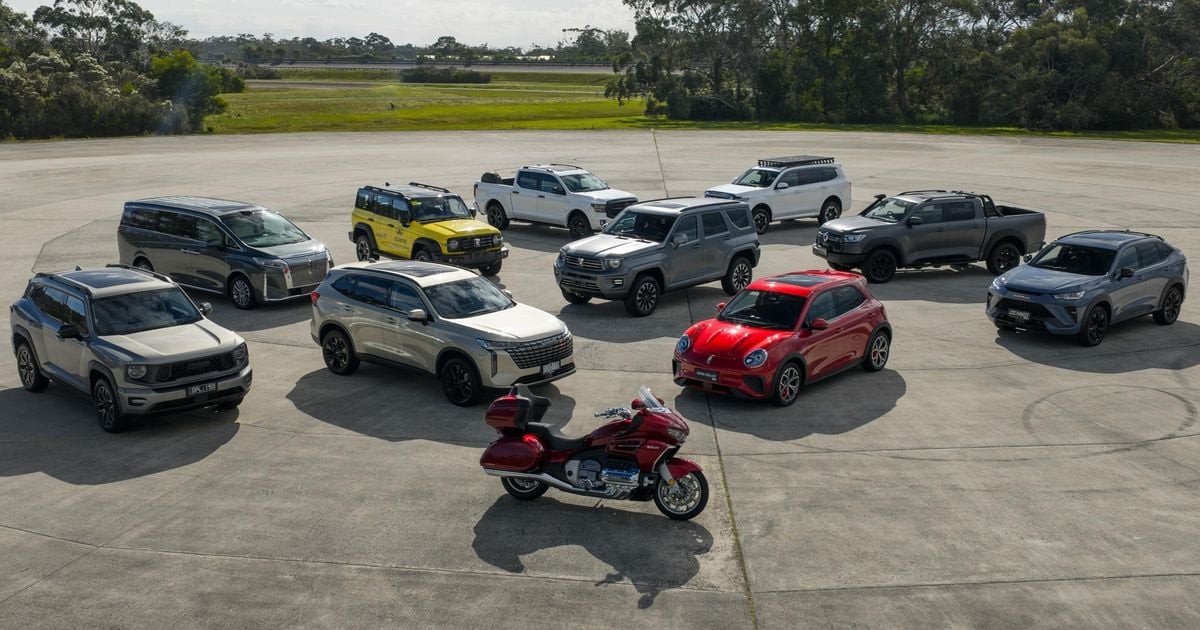
GWM’s strategy of consolidating sales under a single brand in Australia, with Tank and Haval as sub-brands, streamlines marketing and maximizes reported figures. This contrasts with some competitors who operate multiple distinct brands.
While Chinese automakers have made remarkable progress, sustained success requires more than just aggressive pricing. It demands a commitment to quality, transparency, and genuine customer responsibility—lessons that industry leaders like Toyota have long understood.