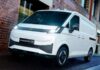
BYD is expanding its reach in the Australian market with the launch of Denza, a new brand positioned to compete directly with established luxury marques. The Denza B8, a large plug-in hybrid SUV, is leading the charge. This isn’t just another Chinese import; it’s a calculated move to capture a share of the premium segment, aiming to rival Lexus and Land Rover while offering a compelling value proposition.
Denza vs. BYD: A Strategic Split
To streamline its global strategy, BYD is using Denza as the exclusive channel for its premium models outside of China. Other high-end BYD sub-brands like Yangwang and Fangchengbao will remain China-only for now, but their vehicles will be rebadged as Denza for export. The initial lineup includes the B5 and B8, both featuring robust ladder-frame construction and plug-in hybrid powertrains, promising improved off-road performance compared to earlier BYD models sold in Australia.
The B8’s powertrain is particularly noteworthy, as it previews updates for the BYD Shark 6 ute, suggesting a shared mechanical foundation across these vehicles. This cross-platform approach allows Denza to enter the market quickly with proven technology.
Size and Positioning: A Heavyweight Contender
The Denza B8 is a substantial vehicle, tipping the scales at just under 3.3 tonnes. This makes it heavier than most cars Australians are familiar with. Denza is targeting legacy brands head-on, aiming to become a top-five luxury marque in Australia. With a starting price under $100,000, it undercuts competitors like the LandCruiser 300 Series while offering similar capabilities.
This pricing strategy is deliberate: Denza intends to deliver Lexus-like luxury at Toyota-like prices. The B8 competes directly with the Land Rover Defender 130 and Toyota LandCruiser 300 Series, but offers a hybrid powertrain as a key differentiator.
Interior: A Mixed Bag of Premium and Peculiar
The B8’s interior blends luxurious appointments with some odd design choices. Electrically retracting door handles, while aesthetically cleaner, can be slow and frustrating to use. The lack of ventilation for the wireless phone charging pads is another oversight, given that the B5 offers this feature.
However, the cabin features soft-close doors, a premium steering wheel, satin-finished buttons, and unique crystal-look switches for key controls. The cooled and heated center console box is a standout feature, exceeding the functionality of similar systems in Toyota SUVs.
The massive 17.3-inch infotainment display dominates the dashboard, offering a wealth of settings and apps. Wireless Apple CarPlay and Android Auto are standard, but the climate control system remains purely physical. Overall, the interior is well-appointed but includes some questionable decisions that detract from the luxury experience.
Powertrain and Off-Road Capability
The B8 is powered by a 2.0-liter turbocharged four-cylinder engine paired with electric motors on both axles, producing a combined 425kW and 760Nm. This powertrain will also be used in the updated BYD Shark 6 ute. The B8 features a “Dual-Mode Offroad” system that prioritizes electric drive while using the engine to charge the battery, simulating low-range gearing without a traditional transfer case.
Mechanical locking rear and optional front differentials enhance off-road capability, allowing for maneuvers like the “Leopard turn” (spinning wheels independently for tighter turns). Towing capacity is rated at 3500kg.
Driving Dynamics: Weighty and Firm
The Denza B8’s driving experience is a mixed bag. Despite the advanced DiSus-P hydraulic suspension, the ride is surprisingly firm due to the vehicle’s substantial weight. Handling feels cumbersome, lacking the polish of competitors. The suspension can be adjusted, but the B8’s mass remains noticeable in corners.
Acceleration is brisk (0-100km/h in 4.8 seconds), but the delivery feels delayed due to the powertrain’s complex operation. The B8’s off-road capabilities are impressive, but on-road dynamics are less refined.
Conclusion
The Denza B8 is an ambitious attempt to disrupt the Australian luxury SUV market. It offers a compelling combination of technology, off-road capability, and competitive pricing. However, the vehicle’s weight, firm ride, and some odd interior choices prevent it from fully competing with established brands like Lexus and Land Rover.
Denza’s long-term success hinges on refining the driving experience and addressing these minor but noticeable shortcomings. For now, the B8 is a bold statement of intent, but it remains to be seen whether it can deliver on its promise of Lexus-like luxury for Toyota-style money.