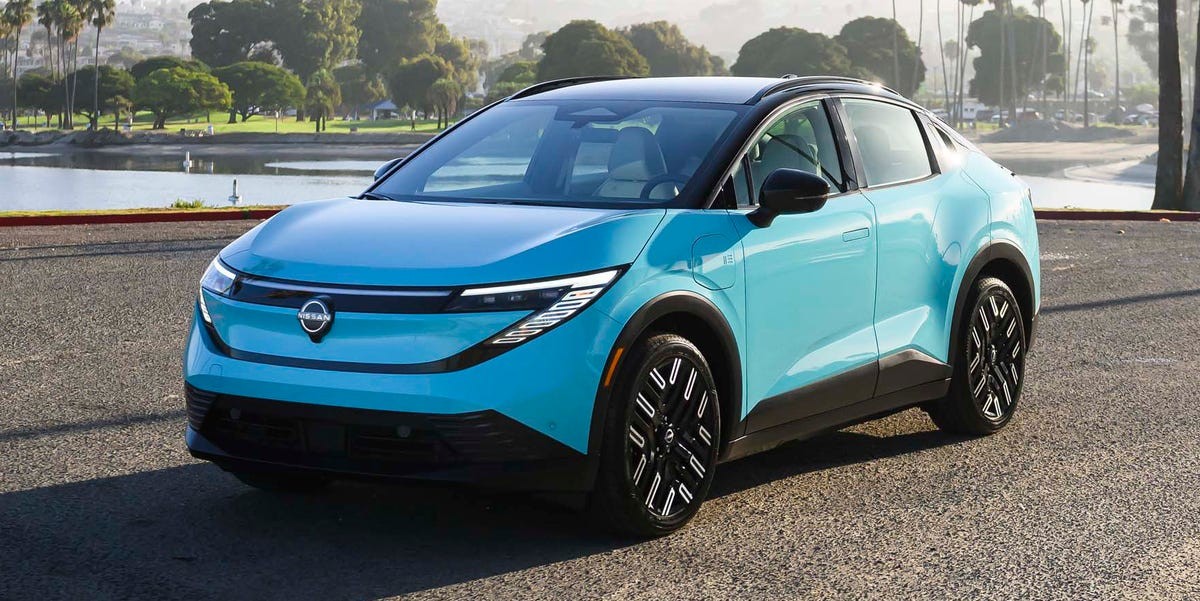
The Nissan Leaf has undergone a major overhaul for the 2026 model year, abandoning its traditional hatchback shape for a more contemporary small SUV design. This shift brings a longer driving range, faster charging, and a host of standard features. While the Leaf retains its front-wheel-drive configuration with a single 214-horsepower electric motor, it now offers a claimed maximum range of up to 303 miles on the S+ trim level. The redesign prioritizes comfort and efficiency over sporty handling, making it a practical choice for daily commuting and longer trips.
What’s New and Why It Matters
The 2026 Leaf represents a significant departure from its predecessors. Previous Leaf models were known for their quirky styling and limited range, but this new generation addresses those shortcomings with an entirely new platform. The increased range is crucial for EV adoption, as it reduces range anxiety and makes the Leaf a viable option for more drivers. The faster charging capabilities – up to 150 kilowatts – further enhance usability, allowing for quicker top-ups during road trips.
Nissan has also equipped all trims with advanced driver-assistance features, including ProPilot Assist, a system combining adaptive cruise control with lane-centering technology. This adds another layer of convenience and safety for everyday driving.
Pricing and Trim Levels
The 2026 Nissan Leaf starts at just over $31,000 for the base S+ trim, which offers the best range of all variants. The SV+ and Platinum+ trims add more features and larger displays, but at the cost of slightly reduced range. The S+ is the sweet spot, providing an excellent balance of range, features, and value.
The Platinum+ model, while the most luxurious, comes with a higher price tag ($40,485 as tested) and a shorter range of 256 miles. This highlights a common trade-off in EVs: more features often mean reduced efficiency.
Performance and Handling
The Leaf’s electric motor delivers 214 horsepower, which is adequate for everyday driving but doesn’t provide thrilling acceleration. In testing, the Platinum+ model reached 60 mph in 6.9 seconds. The car prioritizes quietness and ride comfort over sharp handling, resulting in noticeable body roll in corners. The regenerative braking system is adjustable, but lacks a true one-pedal driving mode, which is becoming increasingly common in other EVs.
Range and Charging
The Leaf comes with a 75-kWh battery pack, offering up to 303 miles of range in the S+ trim. Real-world testing showed a range of 250 miles on a 75-mph highway loop. All models support DC fast charging at up to 150 kilowatts, allowing for a 10-to-80 percent charge in approximately 35 minutes. A key feature is the inclusion of both a J1772 port and a NACS hookup, ensuring compatibility with both older and newer charging networks, including Tesla’s Supercharger system.
Interior and Technology
The Leaf’s interior features a modern, minimalist design with horizontal lines that create a sense of spaciousness. Standard equipment includes dual 12.3-inch displays, wireless Apple CarPlay and Android Auto, and USB-C charging ports. Higher trims upgrade to dual 14.5-inch displays and a more sophisticated Google-based infotainment system. The sloping roofline slightly compromises cargo space, but with 56 cubic feet behind the rear seats, it remains practical for most needs.
Safety and Warranty
Nissan’s Safety Shield 360 suite of driver-assistance features is standard across all trims. The Leaf’s basic warranty covers 3 years or 36,000 miles, with the powertrain covered for 5 years or 60,000 miles. The battery warranty extends to 8 years or 100,000 miles, providing peace of mind for long-term ownership.
The 2026 Nissan Leaf marks a significant improvement over its predecessors, offering a competitive range, fast charging, and a host of standard features. While it doesn’t excel in performance, it prioritizes practicality and efficiency, making it a solid choice for EV buyers seeking a well-rounded and affordable electric SUV.