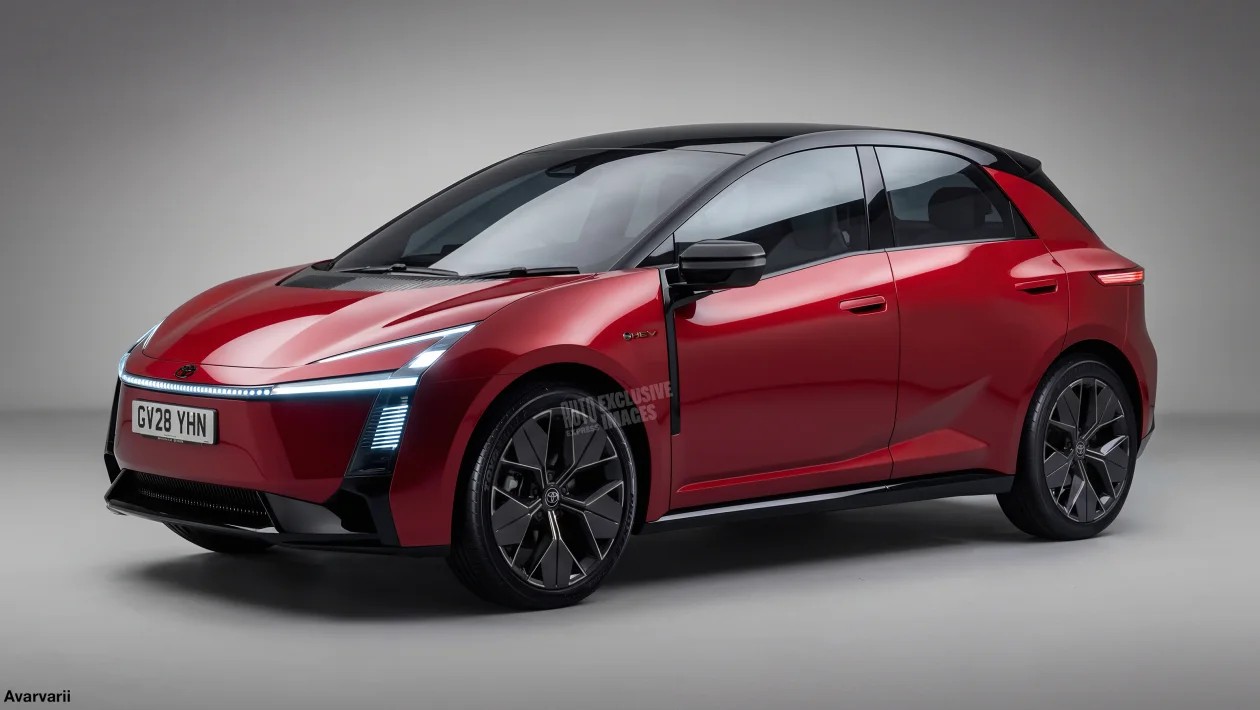
Toyota is preparing a new generation of its popular Yaris supermini, slated for release around late 2027 or 2028. The company aims to offer a single model platform capable of accommodating fully electric (EV), hybrid, and internal combustion engine (ICE) powertrains globally. This strategy reflects a broader industry shift toward multi-energy options, driven by both consumer demand and tightening emissions regulations.
Balancing Electrification with Existing Demand
Toyota’s European VP of Strategy and Marketing, Andrea Carlucci, emphasized the company’s commitment to providing choice. “If electrification is the direction, we cannot avoid having a fully electrified version,” Carlucci stated, acknowledging the growing preference for EVs while ensuring that hybrid options remain available. The decision stems from Toyota’s established leadership in the small car segment and its desire to avoid alienating customers loyal to traditional powertrains.
The move contrasts with competitors like Volkswagen and Renault, who are pursuing distinct models for ICE/hybrid and all-electric variants. Toyota’s approach, mirroring the strategy for the next-generation Corolla, prioritizes a unified platform capable of supporting multiple powertrain configurations. This simplifies production, streamlines branding, and allows for consistent design and interior technology across all variants.
Performance and Range Targets
The new Yaris EV is expected to deliver a range of approximately 250 miles, positioning it competitively against rivals like the Renault 5, Volkswagen ID. Polo, and Cupra Raval. The ICE-powered Yaris, already known for its efficiency, will aim to match or improve upon its current near-80mpg rating.
Toyota’s new platform will be engineered for flexibility, accommodating the varying requirements of each powertrain. This includes a focus on performance: the EV version must meet consumer expectations for range and acceleration, while the hybrid model must maintain its fuel efficiency.
Design and Interior Evolution
The next-generation Yaris will adopt a more modern design language, featuring sharper lines, a futuristic aesthetic, and improved forward visibility. The exterior will retain typical supermini proportions—short bonnet and rear overhang—but will incorporate new design cues such as technical-looking headlights and a single lower grille.
Inside, the Yaris will feature simplified surfaces, floating screens, and improved storage solutions. The current model’s complex dashboard will be replaced with a more open, minimalist layout. Toyota also plans to expand color, wheel, and trim options, potentially including contrasting roof finishes inspired by the Corolla Concept.
Motorsport Influence and Performance Variants
Toyota’s successful GR Sport trim will play a role in the new Yaris lineup. The company is evaluating the possibility of a high-performance variant, potentially powered by a new 2.0-liter four-cylinder engine or a turbocharged 1.3-liter three-cylinder. The latter engine is under development for a front-wheel-drive hot hatch designed to meet Rally4 homologation standards.
The Yaris will remain a five-door hatchback in its mainstream form, while a new generation of the three-door GR Yaris remains unconfirmed. Toyota plans to leverage its motorsport knowledge to create performance-focused models that offer enhanced driving dynamics.
Conclusion
Toyota’s strategy for the next-generation Yaris centers on versatility, offering a single model with multiple powertrain options. This approach reflects the growing complexity of the automotive market, where consumers demand both electrification and traditional engine choices. By prioritizing a flexible platform and a unified design, Toyota aims to maintain its leadership in the supermini segment while adapting to the evolving needs of its global customer base.