


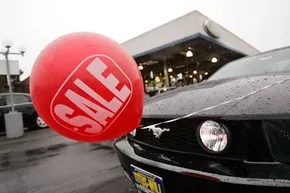
You found the car. The prices are very expensive. You should leave. Then I got a return message. Please buy it.
It felt like a victory. Save money. The dealer has completed the transaction. everyone is happy.
Retailers use coupons. Car manufacturers use discounts and incentives. These strategies can transfer money. they are not generous. These are sales strategies designed to increase sales.
There are three main types: cash discounts, low-interest loans and special leasing agreements. Retailers also have their own incentives. Knowing what incentives the dealer is offering can make negotiations more difficult. Knowing these strategies can help you find the best deals.
The slowest selling brands offer the best discounts. Easy calculation. If it’s a good month for manufacturers, there’s no need to exaggerate. Target a competitor whose sales are declining. They really need a quantity.
Winter 2010 Toyota is a perfect example. Model sales are poor. To win back customers, Toyota offers several incentives. Prices fell.
Keep an eye on the market. Observe the incentives. Get a huge discount on your next car.
New car rebate

You’ve probably seen the banner. TV commercial. A striking email. “Earn $3,000 cash back on your new Camry!” or “Save $5,000 on a Tesla Model Y.” This is the most common incentive in the retail market. But most buyers ignore this hidden truth before sitting down in the finance office.
New car discounts are not expenses. Discount on the purchase price.
When a manufacturer offers a rebate, they don’t cut you a check. Never receive cash in hand in the parking lot. Legally, this doesn’t work. Credits can reduce the amount owed on your bill.
Think of it as a coupon. Highly accurate, manufacturer-backed coupons.
Car Dealers wants you to forget
Let’s look at the numbers. assume a car The list price or negotiated price is $20,000. A $3,000 cash rebate is available.
If my calculation is correct, you will pay $17,000. Simple.
But then the negotiations begin. The refund is a fixed amount. Your credit score doesn’t matter. It has nothing to do with negotiation. This is a flat rate discount.
Most people think of discounts as the final price. They see “$3,000 off” and think they’ve won. they don’t know. They just opened a discount trap.
Smart move? When you start negotiating, ignore the discounts.
Negotiate before giving incentives
If you walk into a dealer and say, “I know there’s a $3,000 discount, so I’d like to pay $17,000,” you’ve already lost. We tied prices to incentive structures. You told them the maximum amount you are willing to pay.
Instead, negotiate the price of the car as if the discount didn’t exist.
Consider the same car. $20,000 sticker. Just imagine. Take advantage of the competition. It turns out that retailers want to get rid of their inventory. They agreed to pay $18,000.
Then after that apply the $3,000 rebate. Pay $15,000.
Save $5,000. Not $3000.
Rebates are bargaining power multipliers, not substitutes. Reducing the price from $22,000 to $20,000 before the rebate is applied effectively uses the manufacturer’s funds to extend the rebate even further.
How to deal with sellers
Dealers are trained to offer incentives. They want you to be excited about “free money”. It interferes with the true value of the car. The conversation turns to “How much is this car worth?” “Look how much money I’ve saved!”
If they offer you a discount, don’t ignore it. Admit it. Then pivot.
“Thanks for telling me about the $3,000 rebate,” you say. “But I want to get the best deal.”

You know about buying a new car. You can save hundreds or thousands of dollars if the manufacturer offers discounts and you find it in a parking lot and drive home. It is very beautiful. Uniform.
Used car discounts are a completely different matter.
Not made by the manufacturer. They come from the dealer. And since the money comes out of the retailer’s own pocket, it’s not that common. If found, the effect is the same: lower price. But “why” do they exist and what is the logic behind them? This is where things get messy.
Why used car discounts are rare
Consider the all-new Honda Civic. There can be six of them in a dealer lot. Their purchase price is the same. The technical data is the same. The manufacturer tells the retailer, “If you sell this product for $25,000, we’ll give you a $2,000 discount.” Retailers know math. They know their interests. This is uniform. Predictable.
Now let’s take a look at 6 used Honda Civic cars.
These are not the same cars. One person has 15,000 miles. The other has 60,000 miles. One is in the garage. Another spent three winters in the land of salt. These are from different model years. The repair historyline also varies. Each unit has a different market value.
Because the fair market value of each unit is different, retailers cannot apply a one-time discount across the board. If they were to offer a flat $500 discount on all six vehicles, you’d probably lose money on the high mileage unit or keep the money on the original unit. It involves complex calculations.
That’s why discounts on new cars apply to the entire range, while discounts on used cars are for a specific VIN code. You won’t see “$500 off all used Civics” signs. Certain cars have yellow stickers that say “$300 off”.
Math still matters
This is what most buyers are looking for. Discounts on used cars are usually smaller than discounts on new cars. A $2,000 discount on a $30,000 new car looks better than a $300 discount on a $15,000 used car. But look at your total costs.
Buying used means you’ve avoided the steepest part of the depreciation curve. The $300 discount is a pure savings on a significantly reduced base price. Buying a used car at a small discount from a dealer often makes more financial sense than chasing huge incentives from new car manufacturers. Your advance payment is lower and the value of your insurance cover is lower, but you still get a discount.
Discounts on hybrid car purchases
When we focus on efficiency, the storyline changes again. Do you pay extra for green certificates or do you get a reward for green choices?
Federal Tax Credit: No refund
First, let’s clear up some common confusions. When people talk about “hybrid tax refunds,” they usually think of federal tax credits.
Federal electric vehicle tax credit rules will be strengthened significantly for 2024 and 2025. Most standard hybrids (such as Toyota)

State share
We’ve spent a lot of time researching manufacturer rebates and dealer withholding. But there is a third player in the pricing game. This is not a car manufacturer. This is not a reseller. This is the government.
Even if the signatory of the check changes, the calculation method remains the same. States want to reduce emissions. You want to save cash. In theory, everyone wins.
Public financing is currently available for selected buyers. We are talking about hybrid and alternative fuel vehicles. The logic is very straightforward. The government is fed up with our gas-guzzling habits and is encouraging the adoption of this technology. As cars become more efficient, we become less dependent on oil. The air is cleaner now. Less pollution. The environmental impact is reduced. Get discounts. They achieved their political goals. This is the deal.
But here’s the problem. Most discounts are immediate. You can see that the price decreases at the point of sale. State incentives? There aren’t that many of them.
These do not apply to dealers’ list prices. First, I buy a car. Then you have to deal with bureaucracy. This is usually done through a state or local agent after purchase. Most dealers will walk you through the paperwork process. It’s not difficult. However, the results are not immediately visible. You expect your money back in the form of refunds or rebates.
State limits and federal credits
The rules vary depending on where you live. Discounts vary widely from state to state. In some states, you may receive a check. You may receive a check in another state. Some people may ignore the program.
Next is the federal government. They don’t give you cash directly. They offer tax breaks.
This is important. Tax credits do not reduce the manufacturer’s recommended retail price. Your annual tax payment will be reduced. This credit reduces the amount you pay if you owe money to the Internal Revenue Service (IRS). This is your net annual savings. On paper, this significantly improves the total cost of ownership.
Take the Nissan Leaf as an example. When it landed in the fall of 2010, the federal tax credit was up to $10,000. This is an amazing figure for a small electric car. For most buyers, a $7,500 tax cut would make all the difference in affordability. Turn expensive specialty products into affordable ones.
Don’t miss the hybrids either. The maximum federal credit is $3,400. Exact amounts vary by manufacturer and model. Battery size is important here. Battery capacity is important. However, the upper limit is fixed.
Advantages of a new car
Things are changing. Programs expand or contract based on political will and budget cycles. But the key incentives remain. If the purchased products are clean, the system will reward you. You just need to know where to look and be willing to do the paperwork. The discount is real. The question is, are you willing to wait?
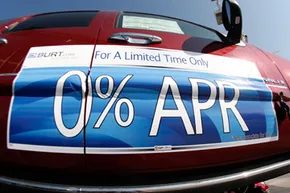
While discounts have received media attention, they are not the only leverage buyers use to move vehicles. Manufacturers and dealers hide these cost savings in plain sight with a number of new car incentives. The sticker price must be exceeded.
Low interest loans are a strong advocate of these hidden benefits. This is not just marketing. If you see a lower APR quote, it means the manufacturer has partnered with a bank or lender to help with loan costs. This is often a direct subsidy that makes your monthly payments look lower than they really are.
How interest-free loans really save money
Most buyers have leverage. You can’t put $40,000 into your savings account for every new car. I need a loan. And loans pay interest. These interest rates are purely overhead. This is money you pay back in addition to the principal without getting a return on the vehicle’s value.
Let’s think about math. If you borrow $20,000 at 5% interest, you’re not just paying back $20,000. Interest accrues during the term of the loan. Depending on the condition, you could end up paying close to $24,000. It’s like burning through $4,000.
Interest-free financing eases this burden.
If you get a 0% offer on the same $20,000, you only need to pay back the $20,000. No extra cents. There are no hidden fees. It’s just the price of the car.
Why don’t you own both?
This is the problem. Manufacturers rarely allow double dipping. You are often forced to choose between a cash discount or a lower interest rate. This is an either/or scenario.
This requires some calculations. You need to decide which option will ultimately yield the greatest savings.
Many shoppers blindly ask for a cash discount because they believe it will give them instant cash. But even if you have a good savings rating and a good loan offer, that’s a mistake. A 0% loan with a 60-month term can easily exceed a $1,500 savings.
Run the numbers before signing. Calculate the total amount of the loan using the subsidized interest rate. Compare this to the total cost of the standard market rate minus the discount. The winner may surprise you. I have very little cash.
Incentives other than cash or loans
Finance is not the only game in town. Dealers strongly promote leasing because they can recoup costs faster. Look for special offers. These often come in the form of lower monthly payments or lower financing rates. In some cases, you may be able to pay less at signing, reducing your upfront risk.
Next, there are “value-added” incentives. These are difficult to quantify, but they can add up.
- Free maintenance plan.
- Free accessories package that includes a DVD entertainment system.
- Extended warranty.
These benefits reduce the cost of ownership. Thanks to our free maintenance plan, you don’t have to pay for oil changes or basic services. The money stays in your pocket long after the car.
Inequality in education
Motivation is a powerful tool, but it’s useless if you don’t know how to use it. You need to be an informed consumer. Going to the dealer without doing your homework is a shortcut to overpaying.
Find out about available discounts before you go to the dealership. Check the invoice prices. Find out the fair market value of the model you want.
The golden rule of negotiation is: First negotiate the price.
Never allow the dealer to offer discounts or incentives on the negotiated price. They start with MSRP or trade-in value and then try to fudge the calculation by adding discounts. We negotiate the price of the vehicle to make it as low as possible. Once that number is confirmed, manufacturer incentives will be implemented “later.”
After you’ve done your math, smile and drive out of the parking lot.


