Alfa Romeo’s current efforts to challenge the “German trifecta” – BMW, Mercedes-Benz, and Audi – are ongoing, but the brand faces an uphill battle. While parent company Stellantis is taking its time with updates to the Giulia and Stelvio models, a compelling sports coupe could significantly boost Alfa’s image, especially one that avoids the stratospheric price tags of limited-edition cars like the 33 Stradale. This article explores one such unfulfilled ambition: the 1996 Alfa Romeo Nuvola concept, a design that captivated the Paris Motor Show and hinted at a bold future.
A Glimpse into the Future: The Nuvola Concept
Welcome to “Concept We Forgot,” a series highlighting innovative concept cars from history—many of which have faded from memory.
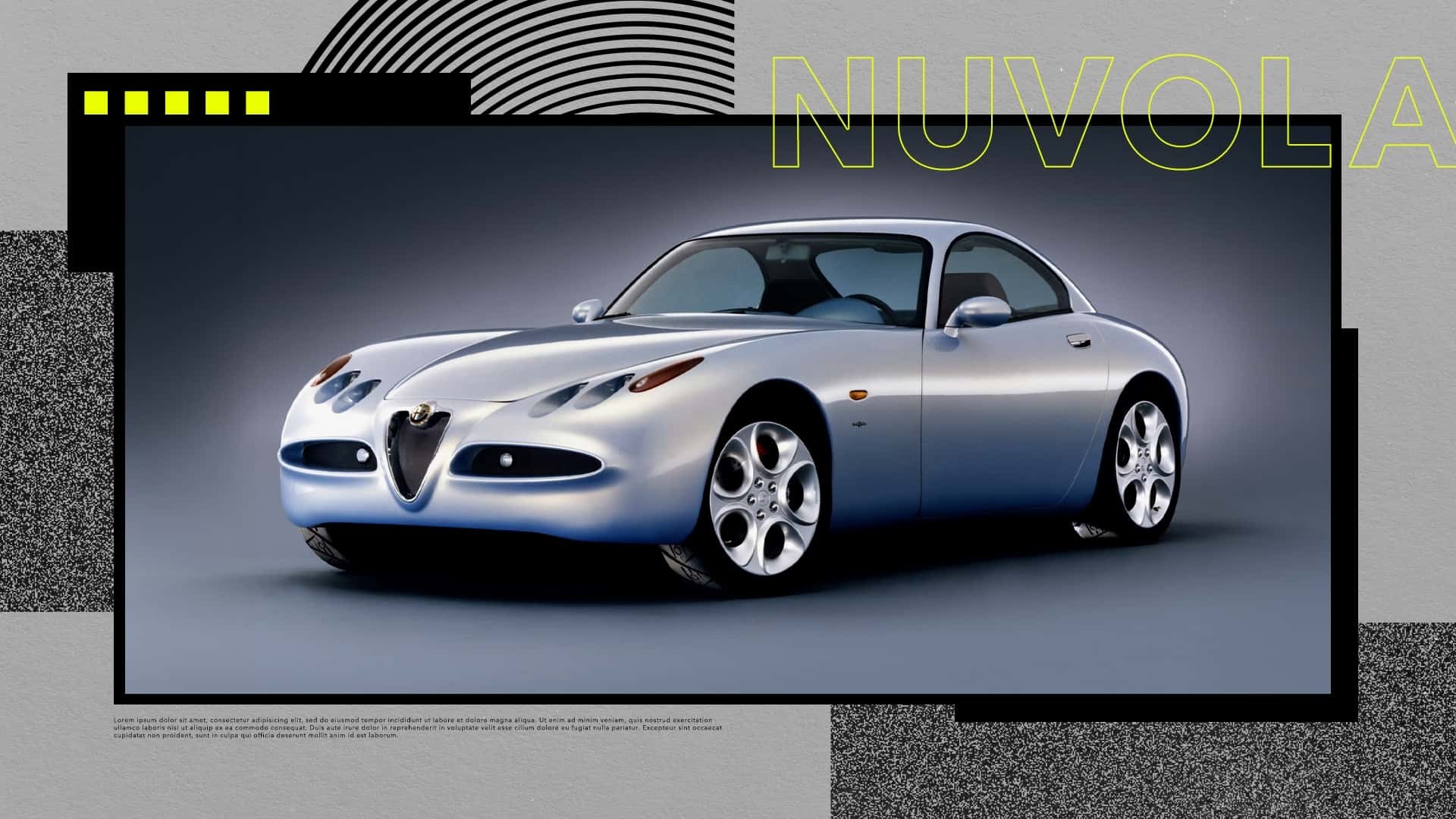
The Nuvola, named after legendary Italian racing driver Tazio Nuvolari, served as a pivotal moment in Alfa Romeo’s design language. Penned by Walter de Silva, the striking coupe provided a preview of the brand’s design direction and would prove to be one of his last projects before moving to Volkswagen Group to work on the Bugatti Veyron concept. Following the concept’s debut, the 156, 166, and 147 models quickly followed, and de Silva’s influence was evident.
At the time, Alfa Romeo described the Nuvola as a “extreme version of a coupe,” designed for two occupants in sculpted bucket seats. Its size was comparable to the then-current Toyota Supra, and a notable detail was the integration of bumpers into the body itself, minimizing visible shut lines. Custom Michelin tires, developed specifically for the concept, were fitted to 18-inch wheels, showcasing a commitment to detail.
A Revival of Coachbuilding?
Beyond its striking looks, the Nuvola presented an even more ambitious plan: reviving the tradition of coachbuilding. Alfa Romeo’s vision involved selling the car’s chassis to independent builders, allowing them to create their own versions, ranging from wagons and convertibles to 2+2 coupes and even off-roaders.
The idea was to streamline the homologation process, as Alfa Romeo would have already completed the foundational work. Interestingly, the company considered selling these custom creations through its own dealerships and applying the Alfa Romeo badge to those that accurately captured the brand’s ethos. The cars would have been built upon a spaceframe chassis with all-round independent suspension.
Power and Performance
Beneath the TVR-inspired exterior lay impressive engineering. A twin-turbocharged 2.5-liter V-6 engine produced 296 horsepower and 285 pound-feet of torque, delivered to all four wheels through a six-speed manual gearbox. The Nuvola could accelerate from 0 to 60 mph in six seconds and reach a top speed of 174 mph.
Alfa Romeo positioned it as “the ideal forerunner of a new generation of limited-series sports cars, which could differ greatly from one another.” De Silva himself acknowledged the concept’s potential to revitalize the brand, stating in an interview with The Classic Car Trust:
‘Out of every ten projects you do, only one makes it to production… It’s a shame, before the arrival of the 146 and the 147, Alfa needed a halo model; the Nuvola had everything Alfa needed to put it fairly and squarely back on the map.’
A Design Legacy and Missed Opportunity
Despite its compelling vision, the Nuvola ultimately remained a one-off, a beautiful but unrealized dream. While it influenced subsequent Alfa Romeo designs, it didn’t lead to a production model. The concept elegantly blended modern styling with nods to Alfa Romeo’s rich past, with its long hood echoing the 1930s 8C and the 1950s 2000 Sportiva prototype.
In many ways, the Nuvola served as Alfa Romeo’s equivalent of Audi’s Concept C. However, while Audi is proceeding with a production version slated for 2027, Alfa Romeo appears set to prioritize SUVs. A relatively affordable halo car could draw more potential customers into showrooms, even if they ultimately purchase a Tonale or Stelvio—representing a win for the brand.
Alfa Romeo hasn’t completely abandoned this dream. The company recently announced a partnership with fellow Stellantis brand Maserati to build “few-off” cars. However, these models are anticipated to carry price tags closer to the 33 Stradale, making them inaccessible to most enthusiasts.
The 1996 Alfa Romeo Nuvola concept remains a poignant reminder of what could have been—a chance to recapture a spirit of innovation and deliver a truly special sports car.