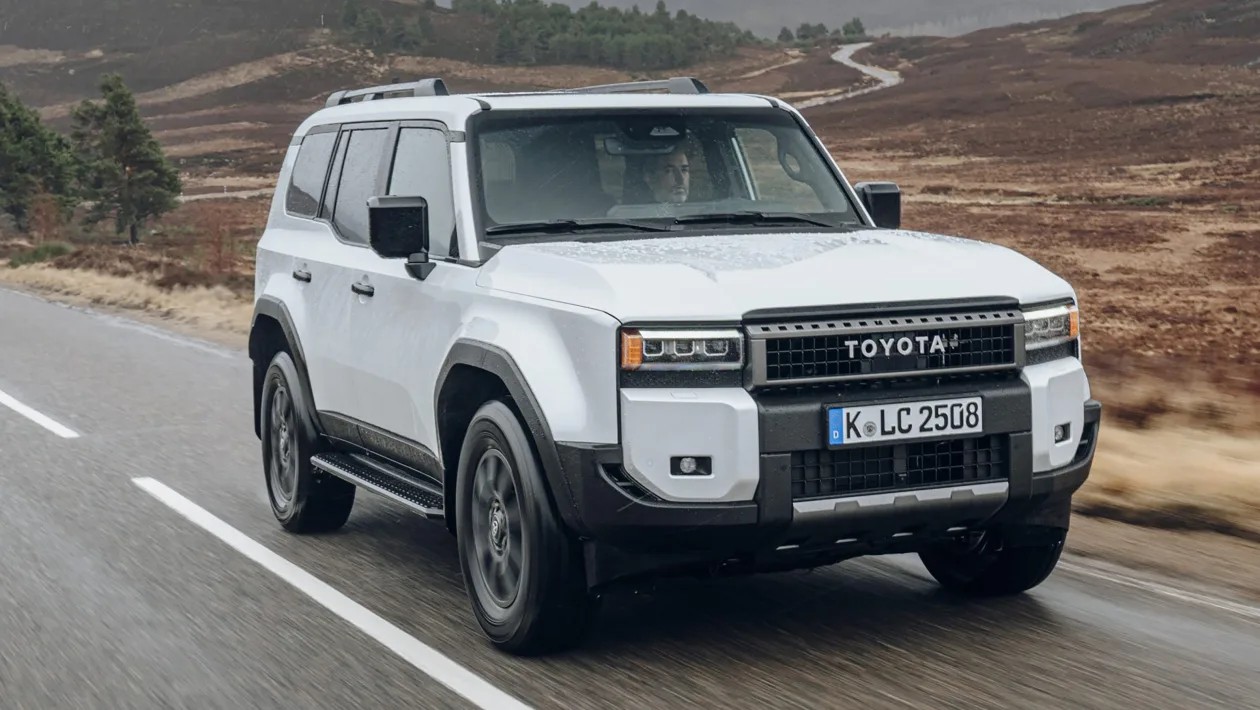
Toyota has updated its iconic Land Cruiser with a 48V mild-hybrid system, aiming to improve fuel efficiency and driving comfort without sacrificing off-road capability. However, this upgrade comes at a significant cost increase, positioning the Land Cruiser as a luxury off-roader with a starting price of £80,740 – roughly £3,000 more than the diesel-only version and a substantial £18,000 above its main competitor, the Land Rover Defender 110.
Hybrid System Details
The Land Cruiser’s new mild-hybrid setup isn’t a full hybrid like those found in Toyota’s Yaris or Corolla. Instead, it’s a less complex system designed to integrate seamlessly with the existing 2.8-liter turbodiesel engine. A small 48V lithium-ion battery and electric motor-generator add an extra 16bhp and 65Nm of torque. The primary benefits include a smoother, quieter stop-start system and improved acceleration consistency.
Toyota asserts that the hybrid system enhances off-road performance, rather than compromising it. The motor-generator recharges the battery through regenerative braking, eliminating the need for external charging. Drivers can monitor energy recuperation and assistance via the instrument display.
Engineering for Durability
To ensure the hybrid system survives the Land Cruiser’s intended use, Toyota has prioritized durability. The motor-generator is mounted high on the engine block, allowing the vehicle to maintain its 700mm wading depth. The battery is sealed against water ingress, and a dust filter protects the cooling system. A fan prevents overheating in extreme temperatures.
Price and Competition
The increased price puts the Land Cruiser firmly in the luxury segment, significantly above the Land Rover Defender 110. While the hybrid system adds refinement, potential buyers may find better value elsewhere, particularly given that the Defender can be purchased for thousands less.
The Land Cruiser’s hybrid update prioritizes incremental improvements over cost savings. The mild-hybrid system enhances the driving experience without fundamentally changing the vehicle’s rugged character. However, the higher price tag may deter buyers seeking the best value in the large off-road SUV market