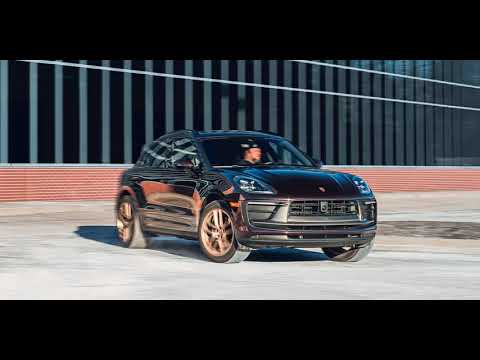
Porsche is preparing to discontinue production of the internal combustion engine (ICE) version of the Macan, its most affordable and one of its best-selling models. The company confirmed during a recent earnings call that manufacturing for the gas-powered SUV will cease this summer, specifically targeting July 2026 as the final month of production.
This move marks a significant transition for the luxury automaker. While the Macan nameplate will survive through its electric counterpart, the decision leaves a notable gap in Porsche’s portfolio for nearly two years, as a direct gasoline successor is not scheduled to arrive until 2028.
The End of an Era for Porsche’s Entry-Level SUV
The Macan has been a cornerstone of Porsche’s modern success story. Introduced in 2013, it followed the massive success of the Cayenne, which had previously rescued the brand in the 2000s. Over the past decade, more than one million Macans have been built, establishing the compact SUV as a critical revenue driver.
In the United States alone, Porsche sold 27,139 Macans last year. Although the company does not release sales data broken down by powertrain, industry estimates suggest that the vast majority of these units were powered by gasoline engines. In contrast, Cox Automotive estimates that only 8,799 Macan Electric models were sold in the U.S. in 2025.
“Production will be stopped in summer 2026, and during the last month that we have, we produce as much as we can,” said Porsche CFO Jochen Bruckner.
This statement highlights the urgency with which Porsche is managing the wind-down of the current generation, which last received a refresh in 2022. The automaker is maximizing output in the final months to meet remaining demand before the assembly lines go silent for the ICE variant.
The Electric Transition and Market Reality
Porsche introduced the Macan Electric alongside the gasoline model in 2024 as part of its broader strategy to electrify its lineup. The EV will continue production after the gas model is discontinued, ensuring that the Macan brand remains active.
However, this shift underscores a broader challenge facing luxury automakers: the slower-than-expected adoption of electric vehicles. Porsche had bet heavily on EVs, anticipating a sharper rise in demand. Instead, consumer preference has remained strongly tilted toward traditional combustion engines and hybrids, particularly in the compact SUV segment where the Macan competes.
By ending production of the gas-powered Macan without an immediate replacement, Porsche is taking a calculated risk. The company is prioritizing its long-term electrification goals while acknowledging that current EV demand does not yet justify maintaining both powertrains indefinitely.
A Two-Year Gap and Future Plans
The most immediate consequence of this decision is a potential dip in sales. With no gasoline-powered Macan available from mid-2026 until roughly 2028, Porsche’s sales figures may reflect this void. The company expects this period to result in “red figures” in its sales reports, as it loses a key volume driver in its most accessible price bracket.
Porsche has outlined a plan to address this gap. A successor to the gas-powered Macan is expected to launch in 2028. This new model will likely feature pure gasoline and hybrid powertrains, built on the Premium Platform Combustion (PPC) architecture shared with the latest Audi Q5. This platform is designed to offer greater efficiency and performance for internal combustion engines, signaling Porsche’s intent to remain competitive in the non-electric segment.
Conclusion
Porsche’s decision to end production of the gas-powered Macan reflects its commitment to electrification, even as it navigates a market that remains hesitant to fully embrace EVs. The two-year hiatus in gasoline Macan production presents a short-term sales challenge, but the planned 2028 successor aims to recapture market share with updated hybrid and combustion technologies. Until then, the electric Macan will stand alone as the brand’s most affordable entry point.