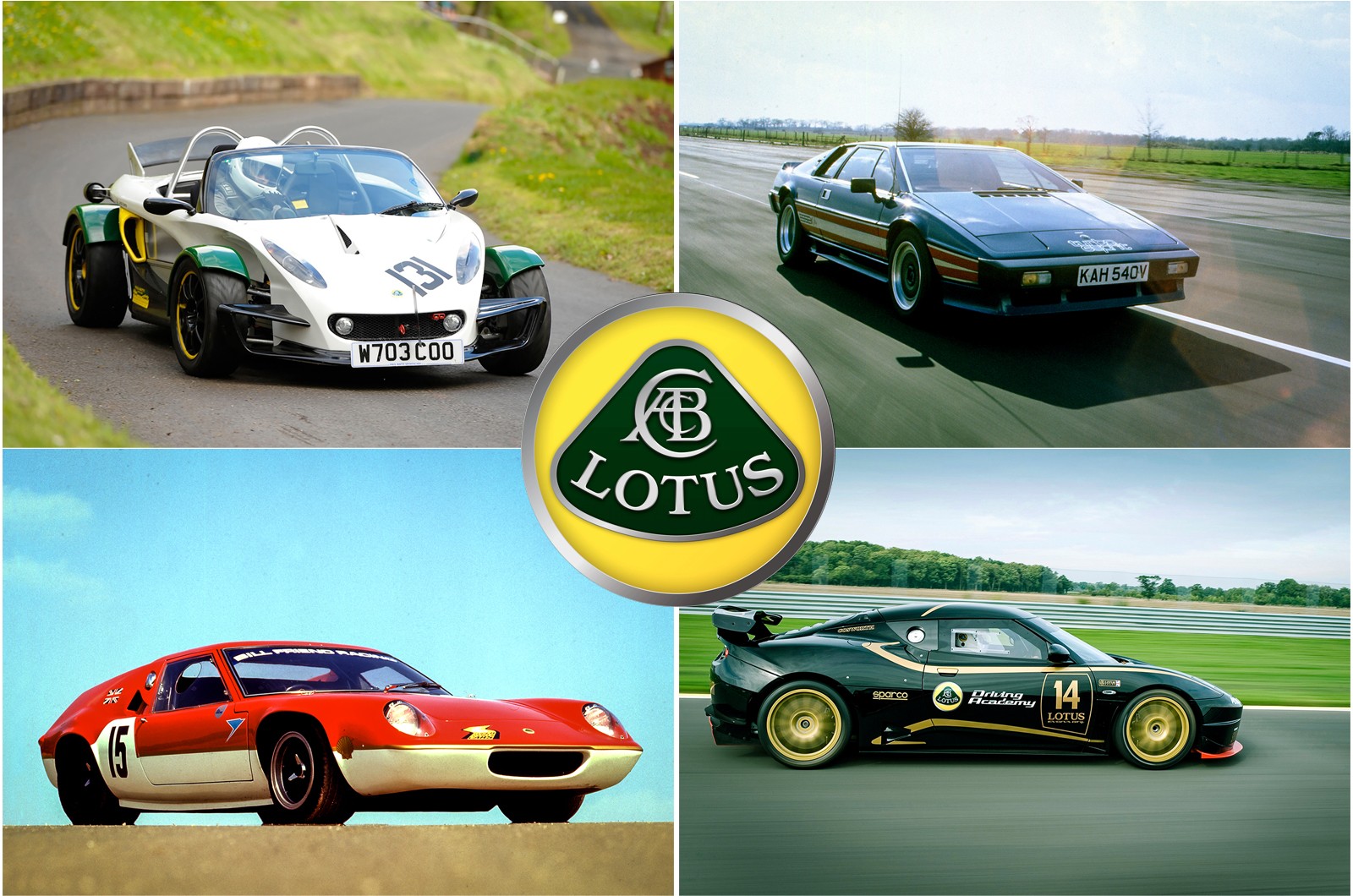
Colin Chapman founded Lotus in 1952 with a simple philosophy: handle better than everything else.
Decades later, that philosophy sold some cars by the thousands and others by the dozen. Some exclusivity was a choice. Others were just the market shrugging and walking away.
Here is where the bodies are buried, starting with the ones that actually kept the lights on.
The Heavy Hitters
Biggest – 10: Lotus Seven (1957–73)
- 2,477 sold
It looks like a go-kart. It handles like a race car.
The original Seven was Chapman’s idea of a pure machine. Open top. Two seats. Nothing else. The magic trick? You drove it to the office on Tuesday, stripped the seat cover off on Saturday, and raced it. Brave souls could even assemble it themselves from a knock-down kit, mostly to dodge taxes.
9: Lotus Esprit (1964–1980+)
- 2,919 sold (Note: figures often exclude rebadges or vary by source, sticking to provided stat)
One day in 1972—not 1976 as some myths claim, though the Bond premiere was ’76—Lotus pulled a prank on producer Albert ‘Cubby’ Broccoli.
They parked a new Esprit outside his office. Just like that. James Bond drove the wedge-shaped car into history, launching the Esprit into The Spy Who Loved Me stardom. Handling was good. Giorgetto Giugiaro’s design was sharper than a razor. Free publicity? Priceless.
“The car became a icon as much for the movie as for the asphalt.”
Did it fire real missiles? No. You couldn’t press a button and shoot people. But you didn’t need to. The fame was lethal enough for boring sedans.
8: Lotus Exige 2S (2006–2011)
- 3,306 sold
The Elise got angry.
Born from racing series regulations and fed a supercharged Toyota engine, the 2S was cheaper than a Porsche 911 but faster around corners. Track day drivers loved it. It was twitchy, sharp, and unrefined in the way that made hair fall out and hearts race. Most owners tuned them anyway, pushing that little Toyota to the limit.
7: Lotus Elise Series 2 (2000–2006)
- 4,535 sold
General Motors put money in the pot, so Lotus had to grow up slightly.
The Elise 2 borrowed cues from the M250 concept—anglier, more aggressive. The interior was less barebones than before, if you could call that an interior. A 1.8-liter K-series engine replaced the old unit, smoothing things out. GM even slotted this chassis into a Vauxhall VX22 in Britain (Opel Speedster in Germany). Familiarity sells cars.
6: Lotus Elan (M100) & Elan S2
- 4,655 sold
This was Lotus’ one bad experiment: Front-Wheel-Drive.
GM paid for this one too, stuffing a reliable Isuzu engine—1.6L, with or without a turb—into the nose. It didn’t feel like a Lotus. It couldn’t turn a profit. Eventually, the rights were sold to Kia, which kept churning out the same car for another three years while Lotus burned its fingers and moved on.
The Big Three
5: Lotus Elan +2 (1960s-70s)
- 5,168 sold
You want four seats in a two-seater car? Add six inches.
That’s all it took to turn the classic Elan into an +2. A rear shelf appeared, barely legroom but legally two extra occupants. To pull that weight, the twin-cam engine got stronger. Crucially, it stopped being a DIY project. It arrived built. People bought cars, not projects, so reliability improved and so did sales.
4: Lotus Elise Series 1 (1996–2001)
- 8,613 sold
The savior.
When this landed, Lotus was dying. The weight was so low, the steering so precise, that the flaws didn’t matter much. Sure, the plastic roof was harder to fold up than a sailboat in a hurricane. The door sill was high enough to scrape shins. Who cared?
You climbed in. The world vanished. It felt like cheating physics.
3: Lotus Elise 111R / Toyota-Elise
- 8,628+ sold (Note: figures for R model are lower; combined US sales drive the high numbers. Sticking to narrative context: The Toyota-powered models saved them)
Japan to the rescue, again.
Lotus finally figured out how to sell cars in America by swapping the European K-series engine for a Toyota block. More horsepower (189 bhp), another gear ratio, and—most importantly—it met US emission standards. The previous engine? Illegal stateside. This one wasn’t.
Lotus didn’t become a mass market giant. They never will. They just stopped bleeding out.